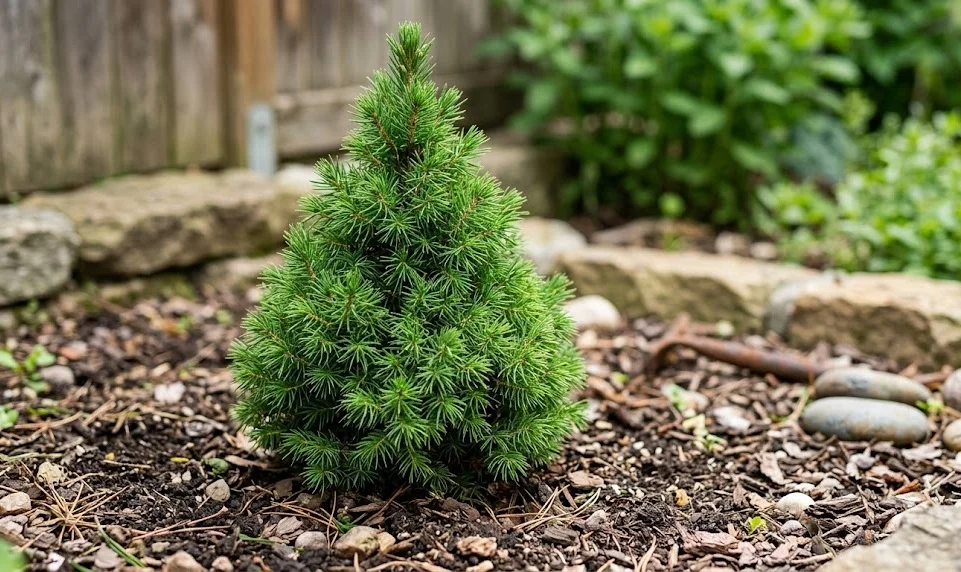

Dwarf Alberta spruce can remain healthy for years, but its dense foliage makes early pest and disease detection essential. Many problems begin inside the crown, where still air, dust, and dryness create favorable conditions for mites and other pests. Browning should never be dismissed as ordinary aging until the plant has been inspected closely. Accurate diagnosis is the difference between saving a stressed plant and applying unnecessary treatments.
Common stress factors behind decline
Many apparent disease problems begin with environmental stress. Heat, drought, poor drainage, reflected sun, deep planting, and winter wind can all weaken the plant. A stressed spruce becomes more vulnerable to mites, aphids, fungal issues, and root decline. Correcting the growing conditions is often as important as treating the visible symptom.
The dense cone shape can hide problems until they are advanced. Interior needles naturally shed with age, but sudden browning, patchy discoloration, or outer needle loss is not normal. One-sided damage often points to sun, wind, reflected heat, or localized root problems. Whole-plant decline suggests a more serious root, trunk, or site issue.
Winter burn is common in exposed locations. It occurs when needles lose moisture during cold weather while frozen soil prevents roots from replacing water. The damage often becomes most obvious in late winter or early spring. Good autumn watering and mulch help reduce the risk.
Poor drainage can create root stress that looks like a foliage disease. Roots need oxygen to function, and saturated soil prevents healthy uptake. A plant with damaged roots cannot support dense evergreen foliage during heat or wind. Before spraying anything, inspect soil conditions and planting depth.
More articles on this topic
Spider mites and their management
Spider mites are among the most important pests of dwarf Alberta spruce. They feed on needles and can cause stippling, dullness, bronzing, webbing, and eventual browning. Infestations often worsen during dry, dusty, or hot conditions. Because the plant is dense, mites may build up before they are easily visible.
A simple scouting method is to hold white paper under a branch and tap the foliage. Tiny moving specks on the paper may indicate mites. Crushing them can leave greenish or reddish streaks depending on the species and stage. Regular monitoring in spring and early summer is especially valuable.
A strong spray of water can reduce mite numbers and remove dust from the foliage. Direct the water into the canopy as well as over the outer surface. Repetition is necessary because one washing rarely solves a developed infestation. This non-chemical approach also helps preserve beneficial predators that naturally suppress mites. ask.extension.org
Chemical treatment should be used carefully. Many broad-spectrum insecticides harm beneficial insects and may allow mite populations to rebound. Some oils and sprays can injure sensitive conifer foliage if applied in heat or at the wrong concentration. Always identify the pest first and follow product directions precisely.
More articles on this topic
Aphids, adelgids, and scale insects
Conifer aphids can feed on shoots and needles, weakening growth and sometimes producing sticky honeydew. They may be noticed when foliage looks dirty, shiny, or sooty. Ant activity can also suggest honeydew-producing insects. Early detection makes control easier.
Adelgids may occur on spruces and can cause distorted growth or white waxy deposits. Their appearance differs from ordinary aphids, so close inspection is needed. Light infestations may be managed by pruning small affected areas or encouraging natural enemies. Heavier infestations may require targeted treatment.
Scale insects can be harder to recognize because they resemble small bumps on stems or needles. They feed by sucking sap and may cause yellowing, thinning, or branch decline. Since scales are protected by coverings during much of their life cycle, timing of treatment matters. The crawler stage is usually the most vulnerable.
Healthy plant culture reduces the risk of severe pest damage. Proper watering, airflow, and spacing make the plant less inviting to pests. Avoid excessive nitrogen, because lush soft growth can attract sap-feeding insects. Inspect the lower and inner branches, where infestations often begin.
Fungal and root-related diseases
Fungal problems are more likely when foliage remains damp and air movement is poor. Dense planting, overhead irrigation late in the day, and crowded beds can all increase risk. Symptoms may include needle browning, twig dieback, or localized branch decline. However, these symptoms overlap with mites and environmental injury, so diagnosis must be careful.
Root rot is a serious concern in poorly drained soil. Affected plants may decline gradually, wilt internally, brown from the top or sides, or fail to respond to watering. Roots may appear dark, soft, or sparse when examined. Improving drainage is essential because fungicides cannot compensate for a bad root environment.
Honey fungus may affect spruces in some regions, particularly where infected woody roots or stumps remain in the soil. It can cause decline, dieback, and root decay. Removing infected material and avoiding susceptible planting sites are important preventive measures. Professional diagnosis may be needed where valuable landscape specimens are involved.
Needle cast and twig blight problems should be separated from normal interior needle shedding. Older interior needles naturally drop as light decreases inside the dense canopy. Disease is more likely when browning is irregular, spreading, or associated with visible fungal structures. Clean tools and removal of dead material help reduce inoculum.
Integrated prevention and response
Prevention begins with the right site. Full sun, well-drained soil, cool roots, and good air circulation reduce most major risks. A plant squeezed into a hot foundation bed may need constant intervention and still perform poorly. Good horticulture is the first pest-management strategy.
Inspect plants at least several times during the growing season. Look for webbing, stippling, honeydew, scale bumps, dead patches, and sudden color changes. Use magnification if necessary, because early mite and scale infestations can be subtle. Record where symptoms appear, because pattern often reveals the cause.
When treatment is needed, choose the least disruptive effective method. Water sprays, pruning of dead twigs, improved irrigation, and better spacing should come before broad chemical use. Targeted products may be appropriate after pest identification. Avoid treating during heat stress unless the product label clearly allows it.
Severely browned plants may not recover if buds and living shoots have been lost. Spruces do not readily regrow from old bare wood. If the entire crown is dead, replacement is usually more practical than rescue. The replacement should be planted only after the original cause of decline has been identified.