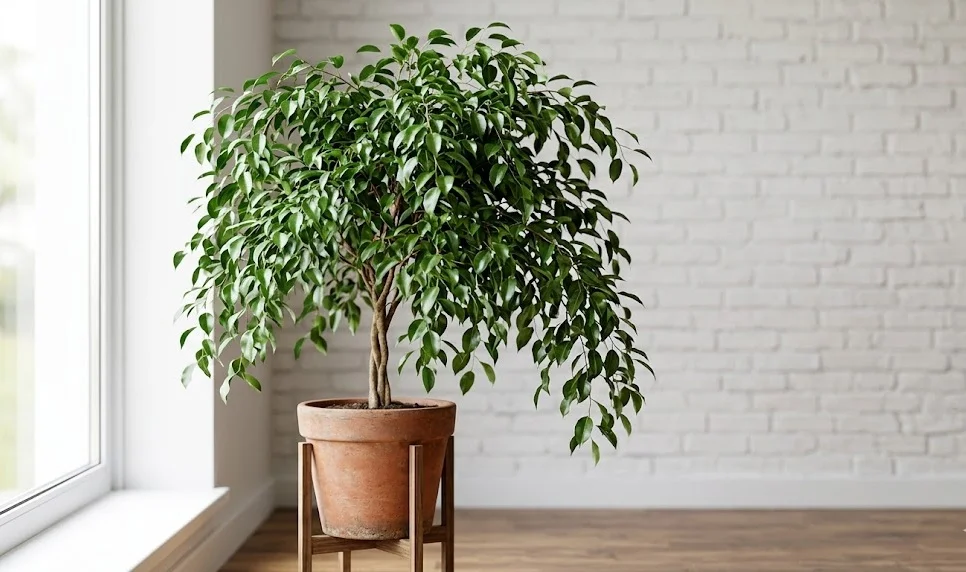

Weeping fig is generally resilient when grown in stable conditions, but it can suffer from pests and diseases when weakened by poor light, overwatering, dry air, or sudden environmental changes. Problems often begin quietly on the undersides of leaves, in branch joints, or below the soil surface. Early diagnosis makes treatment far easier and prevents the plant from losing large sections of its canopy. A professional care routine focuses on prevention, clean growing conditions, and targeted response.
Common signs of plant stress
Leaf drop is the most familiar warning sign, but it is not a disease by itself. The plant may shed leaves after being moved, exposed to drafts, watered incorrectly, or placed in unsuitable light. The pattern of leaf drop helps identify the cause. Sudden widespread loss often points to environmental shock, while gradual yellowing may suggest moisture or root issues.
Yellow leaves can result from both overwatering and underwatering. In overwatered plants, yellowing is often accompanied by soft soil, weak roots, or a sour odor. In underwatered plants, leaves may become dry, curled, or brittle before falling. Checking the soil and roots is more reliable than reacting to color alone.
Brown leaf edges and tips may indicate dry air, salt buildup, irregular watering, or heat stress. A plant near a radiator or in direct sun through glass may develop scorched areas. If damage appears mostly on the sun-facing side, light intensity should be reviewed. If it appears throughout the crown, watering and root conditions should be checked.
Sticky residue on leaves or nearby furniture usually suggests sap-feeding insects. Scale insects, aphids, and mealybugs can excrete honeydew, which may encourage sooty mold. The sticky surface is not just a cosmetic problem because it signals active feeding. Close inspection should begin immediately when honeydew appears.
More articles on this topic
Scale insects, mealybugs, and aphids
Scale insects often appear as small brown, tan, or gray bumps attached to stems and leaf veins. They can be mistaken for natural bark marks, which allows infestations to grow unnoticed. Heavy scale feeding weakens the plant and causes yellowing, sticky leaves, and branch decline. Manual removal and repeated treatment are usually necessary.
Mealybugs look like small white cottony clusters, especially in leaf axils and branch joints. They prefer sheltered areas and can spread quickly on stressed plants. Their waxy coating makes them harder to control with a single treatment. Repeated cleaning with alcohol on a cotton swab or suitable insecticidal soap can reduce populations.
Aphids are less common indoors than scale or mealybugs, but they can appear on soft new growth. They feed in groups and may distort young leaves. Because they reproduce quickly, early removal is important. Gentle washing and insecticidal soap are often effective when infestations are caught early.
Treatment must be repeated because eggs and hidden insects often survive the first cleaning. A weekly inspection cycle over several weeks is more effective than one aggressive treatment. Severely infested twigs can be pruned out if this improves control. The plant should also be isolated from other houseplants during treatment.
More articles on this topic
Spider mites and dry-air pests
Spider mites thrive in warm, dry indoor air. They are tiny and may not be noticed until fine webbing, speckled leaves, or dull foliage appears. The undersides of leaves are the most important inspection area. A white sheet of paper tapped under a branch can reveal moving specks.
Damage from spider mites appears as pale stippling because the pests pierce leaf cells and remove contents. Over time, leaves may turn bronze, dry out, and fall. The plant can decline quickly if the infestation is ignored. Dry winter rooms are especially favorable for mite outbreaks.
Raising humidity moderately can make conditions less favorable for spider mites. Regular leaf cleaning also removes dust and some pests. However, humidity alone will not eliminate an established infestation. Washing foliage thoroughly and using appropriate mite treatments may be needed.
Repeated treatment is essential because mites reproduce rapidly. The plant should be checked every few days during an outbreak. Nearby plants should also be inspected because mites spread easily. Long-term prevention depends on reducing dust, avoiding severe dryness, and keeping the plant healthy.
Root rot and soil-related diseases
Root rot is usually linked to excessive moisture, poor drainage, compacted soil, or an oversized pot. The first visible symptoms may be yellowing leaves, wilting despite wet soil, or sudden decline. Roots affected by rot often become brown, soft, and unpleasant-smelling. Healthy roots should be firm and pale to tan.
Prevention is far easier than rescue. A free-draining potting mix, drainage holes, and careful watering are the foundation of disease control. Water should never remain in a saucer or decorative container after irrigation. The soil should be allowed to dry slightly between waterings.
If root rot is suspected, the plant may need to be removed from the pot and inspected. Rotten roots should be trimmed with clean tools, and the plant should be repotted into fresh, airy medium. The new pot should not be too large. After repotting, watering must be conservative until recovery begins.
Fungal leaf spots can also occur, especially when foliage remains wet in poor air circulation. Affected leaves may show dark spots, yellow halos, or irregular lesions. Removing damaged leaves and improving air movement can reduce spread. Overhead wetting should be avoided if leaf disease is present.
Integrated prevention and recovery
The strongest defense against pests and disease is stable, correct care. A weeping fig under stress is more vulnerable to insects and pathogens. Proper light, balanced watering, suitable humidity, and clean leaves all reduce risk. Prevention is more sustainable than repeated chemical treatment.
New plants should be inspected before being placed near established specimens. Many pest problems enter a collection on newly purchased plants. A short isolation period allows hidden insects to reveal themselves. This habit is especially valuable in homes with many indoor plants.
When treatment is needed, it should be matched to the problem. Fungicides will not solve scale insects, and fertilizer will not repair root rot. Correct diagnosis prevents wasted effort and further stress. A calm, step-by-step response is better than applying multiple products at once.
Recovery can take time because weeping fig rebuilds its canopy gradually. After a pest outbreak or disease issue, the plant should be given stable conditions and gentle care. Heavy pruning, repotting, and strong fertilizing should not all happen together unless absolutely necessary. Once new healthy growth appears, the plant is usually on the path back to strength.