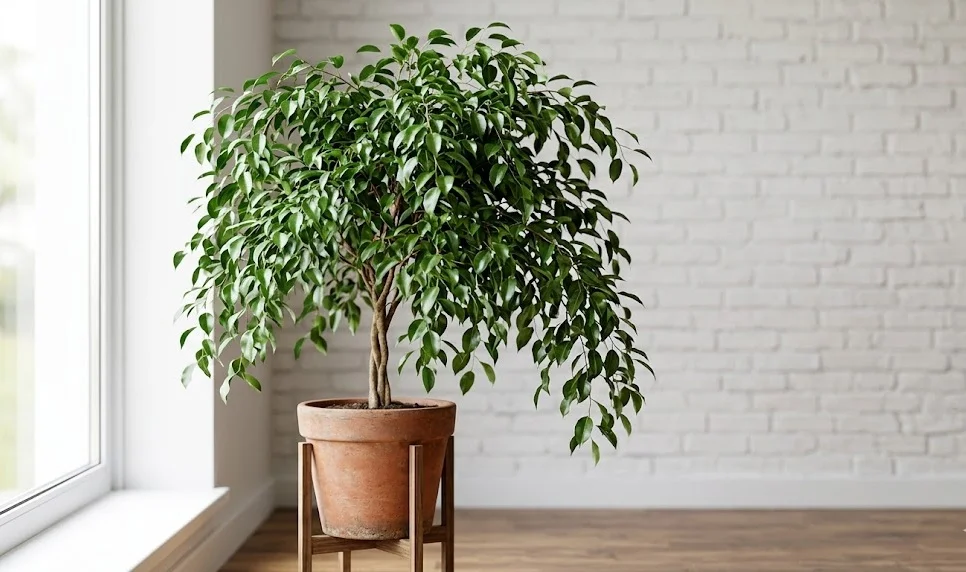

Pruning weeping fig is both a horticultural task and a design decision, because every cut influences the future outline of the tree. The aim is not to force a rigid shape, but to guide the natural drooping habit into a balanced, healthy canopy. Correct pruning improves light penetration, removes weak growth, and keeps the plant proportionate to its indoor space. Poor timing or excessive cutting, however, can cause stress and unnecessary leaf drop.
When and why to prune
The best time for most pruning is during active growth, usually in spring or early summer. At this stage, the plant has enough energy to seal wounds and produce new shoots. Pruning in winter is possible only for dead or damaged growth. Heavy winter pruning can slow recovery because light and growth are limited.
Pruning may be needed to control height, improve symmetry, remove dead twigs, or reduce congestion. Indoor weeping figs can become dense on the outside while losing leaves inside the crown. Selective thinning allows light and air to enter the canopy. This supports healthier foliage and reduces pest-friendly hiding places.
A plant that has grown too tall should be reduced gradually. Removing too much at once can shock the plant and ruin its natural form. Cutting back selected leaders is better than shearing the whole canopy. A thoughtful approach preserves elegance while restoring proportion.
Pruning should always begin with observation. The plant should be viewed from several angles before any cuts are made. Branches that cross, rub, grow inward, or disrupt the outline can be identified first. Planning cuts before starting prevents uneven or excessive pruning.
More articles on this topic
Practical pruning technique
Clean, sharp tools are essential. Dull blades crush stems and create ragged wounds. Tools should be disinfected before use, especially if the plant has pest or disease issues. Clean cuts heal more efficiently and reduce the risk of infection.
Cuts should be made just above a leaf node or side branch. This encourages new growth from a useful point rather than leaving long dead stubs. The angle should be neat and controlled. Random cuts in the middle of internodes often produce unattractive dieback.
Thinning cuts are often more natural than uniform trimming. Removing selected branches at their origin opens the canopy without creating a clipped appearance. This is especially suitable for older plants with dense crowns. The result looks lighter, healthier, and more tree-like.
After pruning, the plant should be kept in stable conditions. It should not be moved, repotted, and heavily fertilized all at the same time. Moderate watering and bright filtered light support recovery. New shoots will usually appear once the plant resumes active growth.
More articles on this topic
Cutting back stressed or overgrown plants
An overgrown weeping fig can often be renovated, but the process should be gradual. If the plant is healthy, stronger pruning can be tolerated during the growing season. If it is already stressed, root health and light conditions should be corrected first. Cutting a weak plant too hard may worsen decline.
Bare branches should be examined carefully before removal. If the wood is still alive, it may resprout under improved light and care. A simple scratch test can reveal green tissue beneath the bark. Dead, brittle branches should be removed cleanly.
Large reductions should be divided over time when possible. Cutting one section, allowing recovery, and then refining the shape later is safer than a single severe session. This staged method also allows the grower to see where new growth develops. The final shape becomes more natural.
Pruning is most successful when it works with the plant’s biology. Good light encourages compact regrowth, while poor light produces weak replacement shoots. Balanced watering prevents stress after cutting. With patience and precision, a weeping fig can be kept graceful, healthy, and beautifully suited to its indoor setting.