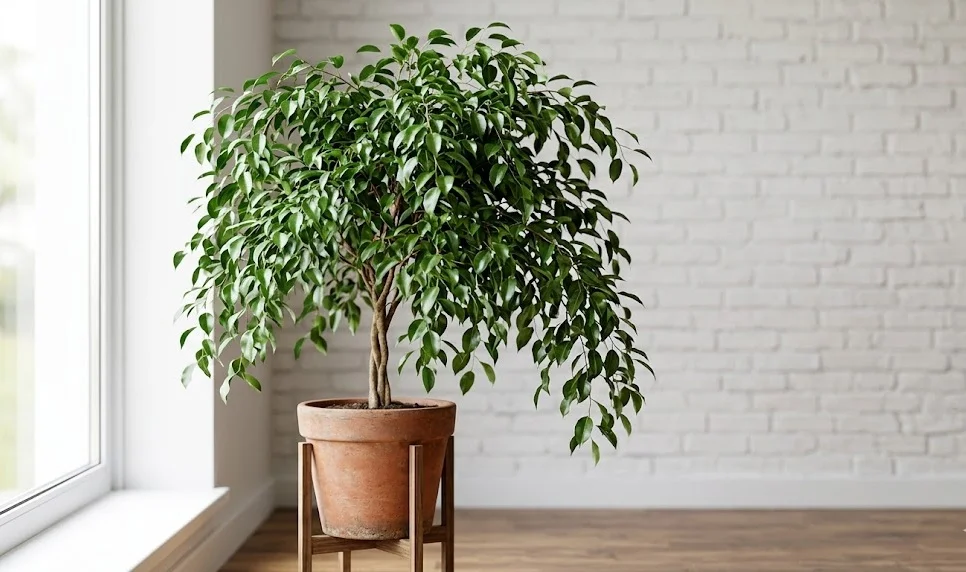

Overwintering weeping fig is mainly a matter of stability, because the plant must cope with shorter days, dry heated air, and cooler window zones at the same time. Many winter problems are caused not by cold alone, but by the combination of low light, excessive watering, and indoor drafts. A well-prepared plant can pass through the season with only minor leaf shedding. The goal is to slow care down without neglecting the plant.
Preparing for the darker season
Preparation should begin before winter conditions fully arrive. As daylight decreases in autumn, the plant naturally reduces its growth rate. Watering and feeding should be adjusted before the plant becomes stressed. Waiting until leaves begin to fall often means the plant has already reacted to imbalance.
The plant should be checked for pests before winter. Scale insects, mealybugs, and spider mites often become harder to manage in heated indoor air. Cleaning the leaves and inspecting branch joints helps reduce hidden populations. A pest-free plant enters winter with a much better chance of staying healthy.
If the plant spent summer outdoors, it should be brought inside before nights become cold. The transition should be gradual whenever possible. A sudden move from bright outdoor conditions to dim indoor light can trigger heavy leaf drop. Placing it first in a bright sheltered indoor position helps reduce shock.
Pruning and repotting are usually best avoided just before winter unless there is a serious reason. Both procedures stimulate stress at a time when recovery is slower. Light removal of dead twigs is acceptable, but major shaping should wait for active growth. Winter care should be quiet and conservative.
More articles on this topic
Light and placement in winter
Winter light is weaker and shorter, so the plant may need a brighter position than it uses in summer. A spot near a bright window can be helpful if the leaves do not touch cold glass. The crown should receive as much indirect light as possible. Low light is one of the main causes of winter thinning.
Direct winter sun is often less intense than summer sun, but it still needs monitoring. In many climates, a few hours of gentle winter sun is beneficial. However, strong sun through glass can still heat leaves unevenly on clear days. The plant’s response should guide final placement.
The pot should not stand directly above a radiator or beside a heating vent. Hot dry air rising through the canopy can cause leaf drop and crisp edges. A position slightly away from the heat source is safer. If the room is very dry, humidity support may be needed.
Cold drafts are equally damaging. A plant beside a frequently opened door may experience repeated temperature shocks. Even brief cold air can cause leaves to yellow and fall. Stable warmth is more important than placing the plant in the brightest but draftiest location.
More articles on this topic
Winter watering and feeding
Watering should be reduced in winter because the plant uses less moisture. The soil should be checked before each watering rather than watered by habit. The top layer can dry more slowly in cool, low-light conditions. Overwatering during winter is one of the most common causes of decline.
When watering is needed, it should still be thorough. Small surface sips can leave the lower root ball dry while the upper layer stays damp. Thorough watering followed by a longer drying interval is safer. Excess water should always be emptied from saucers and outer pots.
Fertilizer is usually unnecessary during the darkest part of winter. If the plant is not actively producing new growth, it does not need regular feeding. Nutrients applied during low growth can accumulate as salts in the soil. Feeding can resume gradually in spring when new shoots appear.
The plant should not be forced into growth with heavy feeding under poor light. Weak winter growth is often pale, soft, and more attractive to pests. It is better to maintain the plant steadily until natural light improves. Strong spring growth will follow a well-managed rest period.
Managing winter leaf drop
Some leaf drop in winter can be normal, especially from the inner canopy. Older shaded leaves may fall as the plant adjusts to reduced light. This is not alarming if the outer canopy remains healthy and stems stay firm. The important point is to distinguish normal adjustment from ongoing stress.
Sudden heavy leaf loss usually indicates a change in conditions. The cause may be a cold draft, relocation, dry heat, overwatering, or insufficient light. Correcting the most likely cause should be done carefully. Multiple drastic changes can create even more stress.
Fallen leaves should be removed from the soil surface promptly. Decaying leaves hold moisture and can encourage fungus gnats or mold. A clean pot surface also helps with moisture assessment. Winter hygiene is simple but important.
Once spring arrives, the plant often begins to replace lost foliage if the branches remain healthy. Patience is necessary because regrowth may not be immediate. Gradual improvement in light, cautious feeding, and correct watering support recovery. A weeping fig that has overwintered well usually becomes noticeably more vigorous as days lengthen.