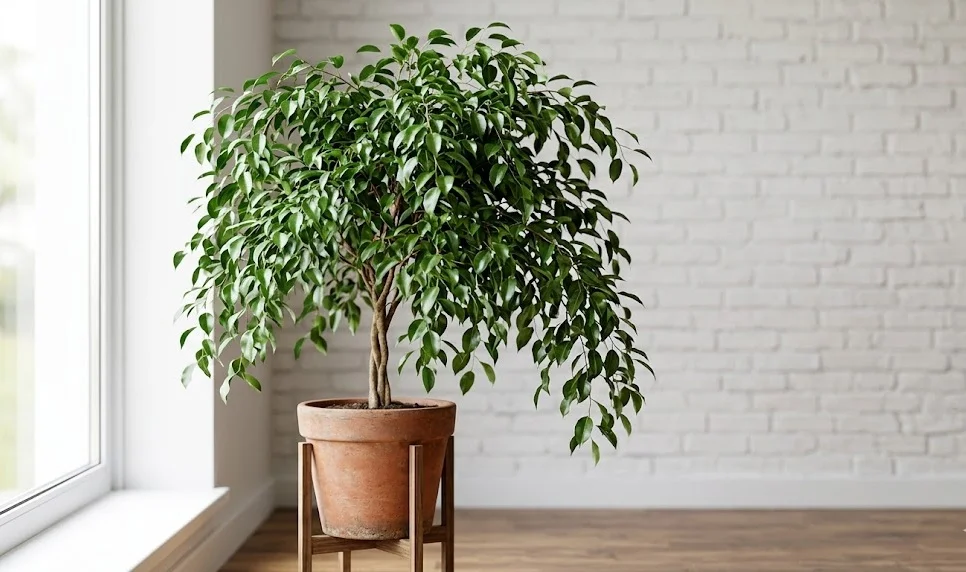

The weeping fig is one of the most graceful indoor trees, valued for its arching branches, fine leaves, and calm architectural presence. It rewards consistent care rather than dramatic intervention, which is why small habits matter more than occasional rescue efforts. In homes, offices, conservatories, and bright interior gardens, it can live for many years when its environment remains stable. Good care begins with understanding that this plant reacts strongly to sudden change, especially in light, temperature, watering, and air movement.
Understanding the natural growth habit
The weeping fig grows as a woody evergreen tree with a dense crown and flexible, lightly drooping branch tips. Indoors, it usually remains much smaller than it would in a tropical landscape, but it still keeps the instincts of a tree. Its roots, trunk, branches, and leaves all respond to seasonal changes in light and indoor climate. Treating it as a long-term woody plant, rather than as a short-lived decorative pot plant, leads to better results.
Leaf drop is one of the most common reactions people notice, yet it is not always a sign of serious decline. A weeping fig may shed leaves after being moved, rotated, repotted, chilled, overwatered, or exposed to dry drafts. The plant uses leaf loss as a way to rebalance itself when conditions change too quickly. The key is to identify the cause calmly and correct the environment without making several new changes at once.
Its elegant appearance depends on steady, even growth rather than fast, lush expansion. Rapid growth caused by excessive fertilizer or weak, stretched growth caused by poor light often produces a less attractive plant. The best specimens develop gradually, with firm stems, compact foliage, and a balanced canopy. Patience is a real horticultural advantage with this species.
A healthy weeping fig should have firm, flexible twigs and leaves that feel smooth, fresh, and evenly colored. Older leaves may naturally yellow and fall from the inner canopy, especially where light no longer reaches them. This is normal as long as new growth continues and the overall crown remains full. Widespread yellowing, sticky leaves, dark root odor, or sudden heavy defoliation require closer attention.
More articles on this topic
Choosing the right indoor position
The most important decision is where the plant will stand for months or years. Weeping fig dislikes frequent relocation, so the first placement should be chosen thoughtfully. A bright position near a window with filtered light is usually ideal. Once the plant has adapted, it should be moved only when there is a clear horticultural reason.
A spot close to an east-facing window is often excellent because it provides gentle morning light. South- or west-facing rooms can also work if the plant is protected from harsh midday or afternoon sun by a curtain or some distance from the glass. North-facing rooms may be too dim unless the window is large and unobstructed. The plant can survive in moderate light, but it rarely thrives in deep shade.
Air movement also matters because indoor trees are sensitive to drafts. Avoid placing the pot directly beside a frequently opened door, heating vent, air conditioner, or radiator. Warm dry air can dehydrate the foliage, while cold drafts can trigger sudden leaf drop. Stable air is more valuable than a visually perfect location that exposes the plant to stress every day.
The plant should have enough space around the crown for light to reach all sides. If one side is pressed against a wall or furniture, foliage may thin unevenly. Rotating the pot slightly every few weeks can help maintain symmetry, but large sudden turns can stress a sensitive plant. Gentle, gradual adjustment is always safer than a dramatic repositioning.
More articles on this topic
Temperature and humidity management
Weeping fig grows best in warm, stable indoor temperatures. It prefers conditions that feel comfortable for people, especially when nights do not become sharply colder than days. Sudden temperature drops are more harmful than a slightly cool but stable room. A plant standing near cold glass in winter can suffer even when the room itself feels warm.
Humidity is helpful, but it should not be confused with constant wet soil. In dry heated rooms, leaf edges may become crisp, spider mites may spread more easily, and new growth may emerge smaller. A humidity tray, grouped plants, or a room humidifier can improve the microclimate around the foliage. Misting gives only brief relief and should not be relied on as the main humidity strategy.
Good humidity supports leaf quality, but air must still circulate gently. Stagnant, damp air around a dense canopy can encourage fungal problems, especially if leaves remain wet for long periods. The goal is a fresh, moderately humid atmosphere, not a wet enclosure. This balance is particularly important for larger plants with compact crowns.
During seasonal transitions, indoor temperatures often change faster than the plant can adapt. Autumn is especially risky because heating systems begin operating while daylight decreases. Spring can also be stressful if windows are opened on cool nights after warm days. Watching the plant carefully during these periods helps prevent avoidable leaf loss.
Soil, pot, and root environment
The root system needs oxygen as much as moisture. A dense, compacted potting mix keeps roots too wet and encourages root decline. A quality indoor potting medium improved with perlite, fine bark, or another aerating component is usually suitable. The mix should hold enough moisture to prevent drought stress but drain freely after watering.
The pot must have drainage holes because standing water is one of the fastest ways to damage the plant. Decorative outer containers are attractive, but they should never hide water accumulating at the bottom. After watering, excess water should be emptied from saucers or cachepots. Roots sitting in stagnant water lose oxygen and become vulnerable to rot.
Repotting should be done only when the root system genuinely needs more space or the soil has deteriorated. Many weeping figs perform better when slightly root-confined than when placed into a much larger pot. An oversized container stays wet too long and makes watering harder to control. Moving up by one modest pot size is usually enough.
The best time to repot is during active growth, when the plant can recover quickly. Late spring and early summer are usually safer than winter. After repotting, some leaf drop may still occur, but stable warmth and careful watering reduce the shock. Fertilizer should be withheld briefly until new growth shows that the roots are functioning well.
Routine cleaning and observation
Dust on leaves reduces light absorption and makes the plant look dull. Regular cleaning with a soft damp cloth keeps the foliage attractive and allows better photosynthesis. Large plants can also be rinsed gently in a shower if the soil is protected from excessive saturation. Clean leaves also make pest problems easier to notice early.
Observation is one of the most underrated parts of plant care. A quick weekly check can reveal yellow leaves, sticky residue, webbing, dry soil, waterlogged soil, or weak shoots before the problem becomes severe. Looking at the underside of leaves is especially important because many pests hide there. Early action is almost always simpler than recovery after a large infestation.
Removing fallen leaves from the soil surface helps reduce fungal activity and pest shelter. Dead leaves may seem harmless, but in a warm indoor pot they can hold moisture and decay quickly. Clean soil surfaces also make it easier to judge moisture levels. A tidy pot is not only decorative but also healthier.
The trunk and branch structure should also be inspected from time to time. Cracks, soft spots, scale insects, or areas of dieback can indicate deeper stress. Light pruning of dead twigs keeps the canopy clean and prevents unnecessary energy loss. This small maintenance routine supports both health and appearance.
Seasonal care through the year
In spring, the plant usually begins stronger growth as light levels increase. This is the best period to adjust care gradually, resume fertilizing, and consider repotting if necessary. New leaves may appear brighter and softer at first, then harden as they mature. Care should support this growth without forcing it too aggressively.
Summer care focuses on consistent moisture, bright filtered light, and protection from heat stress. The plant may use water faster during hot weather, especially in a small pot or a warm room. However, watering should still be based on soil condition rather than a fixed calendar. Strong sun through glass can scorch leaves, so direct exposure should be monitored.
Autumn requires a gradual reduction in watering and feeding. As daylight shortens, the plant’s growth naturally slows, even if indoor temperatures remain warm. Continuing summer-level fertilizer can produce weak growth that is more vulnerable to pests. A calmer care rhythm helps the tree enter the darker months without stress.
Winter is mainly about stability. The plant should be kept away from cold drafts, hot radiators, and sudden changes in position. Watering intervals often become longer because the plant uses less water in reduced light. Even in winter, the root ball should not be allowed to dry so severely that leaves wilt and fall.
Long-term shaping and plant vitality
A mature weeping fig can become a striking indoor focal point when its shape is managed carefully. Pruning should preserve the natural elegance of the drooping branches while preventing the canopy from becoming too dense. Thinning selected shoots is often better than cutting everything back evenly. This keeps the tree airy, balanced, and visually refined.
Strong structure begins with good light and steady care. Weak, elongated shoots often develop when the plant reaches toward insufficient light. Cutting these shoots may improve shape temporarily, but the same problem returns if light remains too low. Correcting the growing conditions is always more effective than repeated corrective pruning.
A long-lived specimen benefits from a consistent care record. Noting when it was repotted, fertilized, pruned, or moved can help identify patterns in growth and leaf drop. Professional growers often rely on observation records because plants respond slowly and causes are not always obvious immediately. Even simple notes can prevent repeated mistakes.
The weeping fig is not a plant that enjoys constant attention, but it does appreciate reliable care. Its beauty comes from regularity, clean foliage, balanced moisture, and a stable environment. When these basics are respected, it becomes a durable and elegant part of the indoor landscape. With time, it can feel less like a houseplant and more like a living piece of interior architecture.