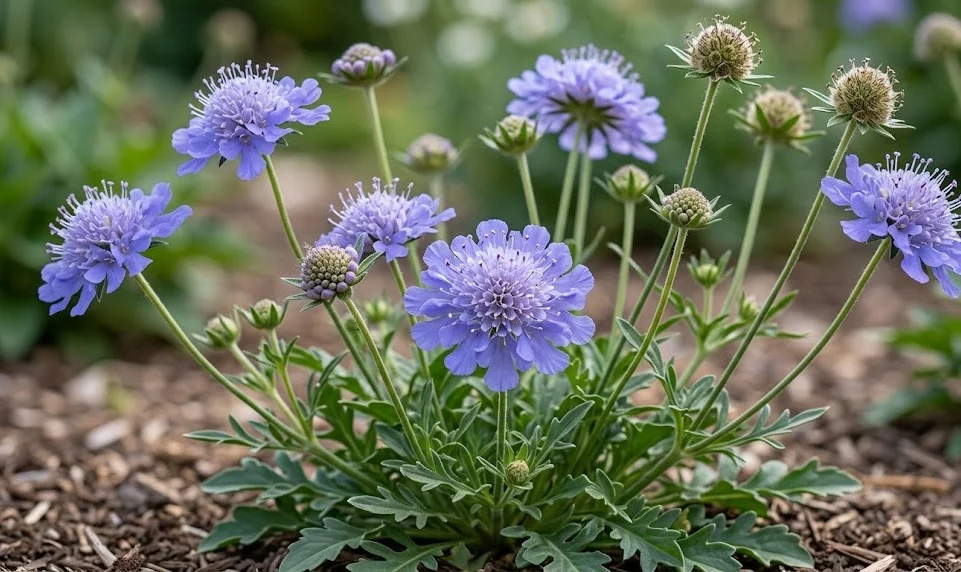

The first major pruning task for the Caucasian pincushion flower occurs in the early spring as the plant begins to wake from its winter sleep. You should start by removing any dead, damaged, or diseased foliage that was left over from the previous year to make room for new growth. This “clearing of the decks” allows light and air to reach the center of the plant, which is essential for a healthy start to the season. Use a pair of sharp, clean hand pruners to make clean cuts near the base of the plant without damaging the emerging green shoots.
As the new growth begins to fill in, you can take the opportunity to shape the basal rosette of leaves for a more organized appearance. If the plant has become too dense or is overlapping with its neighbors, you can selectively thin out some of the older, outer leaves. This improves the overall airflow around the crown, which we have already established is vital for preventing fungal issues like mildew. A little bit of early-season maintenance goes a long way in setting the stage for a successful and beautiful display of flowers later in the year.
If your plants are several years old and have developed a woody or sparse center, a more aggressive spring pruning might be necessary. You can cut the entire plant back quite hard to encourage a flush of fresh, vigorous growth from the very base of the crown. This rejuvenation pruning can “reset” the plant and often results in more numerous and higher-quality flower spikes during the summer. Professional gardeners use this technique to keep their perennial borders looking young and vibrant even after many years of growth.
Always remember to sanitize your pruning tools before and after working on your plants to prevent the accidental spread of any lingering pathogens. A simple wipe with a bit of rubbing alcohol or a mild bleach solution is all it takes to keep your garden hygiene at a professional level. Taking these small, disciplined steps during the spring cleanup ensures that your Caucasian pincushion flowers remain healthy and productive throughout the entire growing cycle. Consistency and attention to detail are the hallmarks of an expert approach to perennial plant care.
Summer deadheading and flower maintenance
During the peak of the flowering season, deadheading is the most important pruning task you will perform to keep your plants looking their best. Deadheading is the process of removing spent or fading flowers before they have a chance to develop seeds and drain the plant’s energy. By cutting the flower stalks back to a set of healthy leaves, you are signaling to the plant to produce more buds for a continuous display. This simple task can significantly extend the period of bloom, sometimes by several weeks or even a month or more.
More articles on this topic
You should check your Caucasian pincushion flowers at least once a week during the summer to identify any blossoms that are past their prime. Use your pruners to cut the stem just above the point where it meets the next set of leaves or a side bud. If the entire stalk has finished blooming, you can cut it all the way down to the basal foliage to keep the plant looking tidy. This practice not only encourages more flowers but also prevents the plant from looking messy or neglected as the season progresses.
Cutting flowers for indoor arrangements is essentially a form of deadheading that rewards you with beautiful bouquets for your home. You should harvest the flowers in the early morning when they are at their freshest and most hydrated for the longest-lasting display. Be sure to use the same sharp, clean tools you use for garden pruning to ensure the health of the remaining plant tissue. The more you “pick” your pincushion flowers, the more the plant will work to replace them, creating a virtuous cycle of beauty.
In the height of summer, some of the older foliage at the base of the plant may begin to look a bit tired or yellowed. You can selectively remove these leaves to maintain a fresh, green appearance and continue to facilitate good air movement. This minor “grooming” helps the plant focus its resources on the active flower production and the health of the newest, most efficient leaves. A well-maintained plant is more resilient to the stresses of heat and drought that often characterize the middle of the growing season.
Autumn cleanup and preparing for dormancy
As the growing season comes to a close in late autumn, your pruning strategy should shift toward preparing the plant for the winter months. Once the flowering has finally ceased and the foliage begins to turn yellow or brown after the first frosts, it is time for the final cutback. You should remove all the remaining flower stalks and cut the foliage back to within a few inches of the ground. This creates a clean, compact mound that is much less likely to harbor pests or diseases over the winter.
More articles on this topic
Removing the dead material also makes it much easier to apply winter mulch and see exactly where the crown of the plant is located. You should dispose of all the clippings in the trash or a professional green waste bin rather than leaving them on the ground. This prevents the buildup of organic debris that can trap moisture against the crown and lead to rot during the cold, wet winter. A thorough autumn cleanup is a professional-grade step that ensures your garden is ready for a quick and healthy recovery in the spring.
If you want to collect seeds for propagation, you can leave a few of the latest flower heads on the plant to fully ripen and dry. Once the seed heads are brown and brittle, you can harvest them and store the seeds in a cool, dry place until you are ready to sow them. However, be aware that allowing the plant to set seed will take energy away from the root system, so only do this on a few selected stems. For most of the plant, a clean cutback is the better choice for long-term health and vigor.
Finally, take a moment to inspect the crown of the plant for any signs of damage or disease before you finish your autumn pruning tasks. If you see any soft or rotten areas, carefully remove them and treat the site to prevent further spread of the issue. This proactive approach to plant health is what separates an expert gardener from a casual observer of nature. With a final tidy and a layer of protective mulch, your Caucasian pincushion flowers will be perfectly prepared for their winter rest.