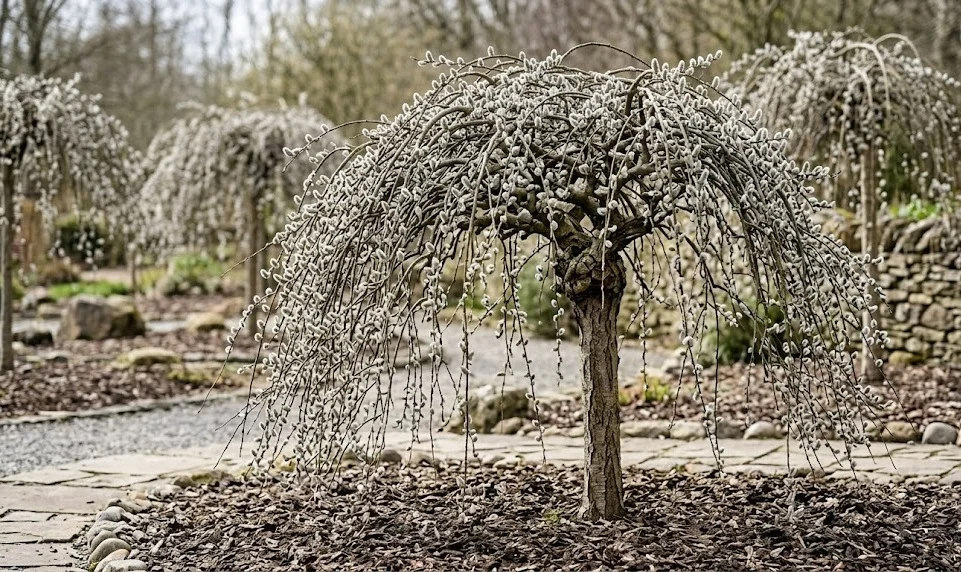

A weeping pussy willow is a hardy ornamental tree, but winter care still matters, especially for young, newly planted, or container-grown specimens. Cold temperatures are not usually the main problem; drying winds, frozen pots, waterlogged soil, and sudden temperature changes often cause more damage. Preparing the plant properly in autumn helps it enter dormancy in good condition. With sensible protection, the tree can produce a strong catkin display when spring returns.
Preparing the plant before winter
Autumn preparation begins with reducing stress before cold weather arrives. The plant should enter winter with healthy roots, firm shoots, and adequate soil moisture. If autumn is very dry, deep watering before the ground freezes can be beneficial. A dehydrated plant is more vulnerable to winter wind and frost damage.
Late fertilization should be avoided. Feeding too late can encourage soft new growth that does not mature before winter. This tender tissue is more easily damaged by cold weather and may die back in spring. Nutritional support should be concentrated in spring and early summer instead.
The mulch layer should be checked and refreshed if necessary. Organic mulch insulates the root zone and moderates freeze-thaw cycles. It also helps prevent winter moisture fluctuations, especially in exposed sites. The mulch should remain away from the trunk to avoid bark problems.
Diseased leaves and dead shoots should be removed before winter. This reduces overwintering sites for pests and fungal spores. Clean garden hygiene is particularly important if the tree had leaf spots, rust, or mildew during the growing season. A clean base gives the plant a healthier start in spring.
More articles on this topic
Protecting roots and grafted structure
The root zone is the part most likely to suffer in severe winter conditions. In open ground, mulch usually provides enough protection for established plants. Newly planted trees benefit from a wider mulch ring because their roots are still close to the original planting area. The soil should be moist but not saturated going into winter.
The graft union should remain visible and healthy. It should not be buried under soil, mulch, or protective wrapping. Moist material pressed against the graft can encourage decay and create shelter for pests. Regular checks are useful after strong wind or heavy snow.
Heavy snow can bend or break the weeping branches. The pendant crown may collect wet snow, especially if the shoots are dense and tangled. Snow can be gently shaken off by hand, but branches should not be forced when frozen and brittle. Structural pruning after flowering in spring helps reduce future snow load.
Wind exposure can dry stems and buds during cold weather. Young trees in open gardens may benefit from temporary wind protection. A breathable screen is safer than plastic wrapping, which can trap moisture and cause temperature swings. Protection should reduce stress without enclosing the plant too tightly.
More articles on this topic
Winter care for container plants
Container-grown weeping pussy willows need more winter attention than plants in the ground. Roots in pots are exposed to sharper temperature changes because they are surrounded by air rather than insulating soil. A large, frost-resistant container is much safer than a thin or fragile pot. The pot should also drain freely throughout winter.
Move container plants to a sheltered position before severe cold arrives. A spot near a wall, under light overhead protection, or away from strong wind is often suitable. The plant should still receive light and airflow, so it should not be sealed in a dark, damp corner. Shelter should protect the roots and crown without encouraging fungal problems.
The container can be wrapped with insulating material if temperatures are expected to drop sharply. Bubble wrap around the pot, hessian, fleece, or straw-packed protection can reduce root freezing. The wrapping should protect the container rather than smother the crown. The top of the compost can also be mulched lightly.
Watering should continue occasionally in winter, but only when needed. Pots can dry out during windy or mild periods, even when the plant is dormant. At the same time, constantly wet compost is harmful in cold weather. Check the compost and water lightly on frost-free days if it becomes dry.
Spring recovery after winter
In early spring, inspect the plant carefully as buds begin to swell. Some minor twig dieback can occur after a harsh winter and is not always alarming. Dead, brittle, or damaged shoots can be removed after the main risk of severe frost has passed. The most important pruning is usually done after flowering.
The catkin display may vary from year to year. A stressful previous summer, late pruning, winter bud damage, or poor light can reduce flowering. If the plant produces fewer catkins, improve care during the coming season rather than assuming the tree is failing. Stable moisture and good light are especially important for future performance.
Check the base of the trunk and graft union after winter. Frost cracks, animal damage, rubbing ties, or trapped moisture can cause problems. Any support ties should be loosened if they are tight. A healthy graft area is essential for the ornamental crown.
Once growth resumes, remove any unnecessary winter protection. Leaving wraps or screens in place too long can trap heat and moisture. Refresh the mulch, begin normal watering as needed, and apply a modest spring feed if the plant is established. This gradual return to active-season care helps the tree recover cleanly and grow with strength.