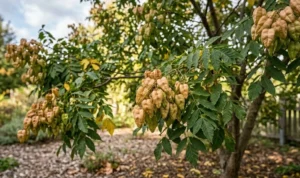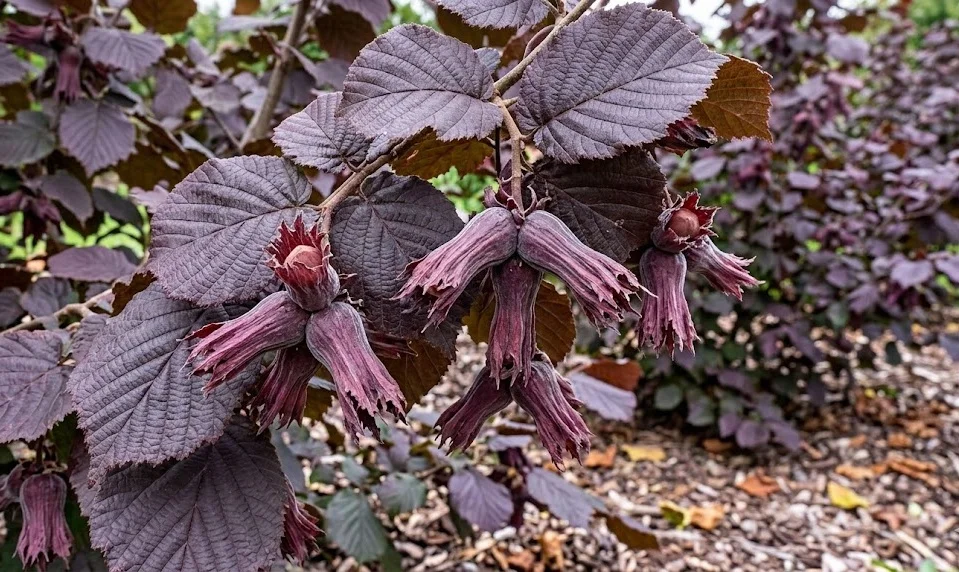

Watering and fertilizing purple-leaved filbert should be based on steady support rather than extremes. The plant performs best when soil moisture remains consistent, nutrients are released gradually, and root health is protected. Overwatering, drought stress, and excessive nitrogen can all reduce foliage quality and weaken long-term growth. A balanced routine produces stronger shoots, richer leaf color, and better seasonal resilience.
Understanding water needs
Purple-leaved filbert has moderate water requirements. It does not behave like a bog plant, but it also dislikes prolonged drought. The broad leaves lose water during hot weather, especially in windy or exposed gardens. Moisture management is therefore most important from late spring through summer.
Young plants need more attention than established shrubs. Their roots are still limited to a smaller soil volume, so they dry out faster. Regular deep watering helps roots move outward and downward. This creates a stronger plant that later tolerates short dry periods more effectively.
Established shrubs should be watered according to weather and soil conditions. Rainfall may be enough in some seasons, while dry spells require intervention. The surface can look dry even when deeper soil remains moist, so checking below the mulch is useful. Watering decisions should be based on actual soil moisture, not only on habit.
The quality of watering matters as much as frequency. A slow soak allows water to penetrate into the active root zone. Fast surface watering often runs away or evaporates quickly. Deep watering encourages deeper rooting and better drought resistance.
More articles on this topic
Seasonal watering practice
In spring, watering supports new shoots, leaf expansion, and flowering processes. If rainfall is regular, additional irrigation may not be necessary. If spring is dry, young plants should not be allowed to wilt. Early drought can reduce the vigor of the whole growing season.
Summer watering should be more deliberate. Heat, wind, and long days increase water demand. Mulched soil remains cooler and loses less moisture, making irrigation more efficient. During heat waves, a thorough watering in the morning helps the plant cope better.
Autumn watering helps the shrub recover from summer stress. It also supports root activity before dormancy. Dry autumn weather can leave plants weakened before winter, especially in exposed sites. A final deep watering before the soil cools can be valuable where rainfall is insufficient.
Winter watering is rarely needed in open ground unless the season is unusually dry and the soil is not frozen. Container-grown specimens are more vulnerable because their root volume is limited. They may need occasional watering during mild dry periods. The key is to avoid both desiccation and waterlogging.
More articles on this topic
Fertilizing for steady growth
Purple-leaved filbert benefits most from moderate, balanced nutrition. Rich organic matter supports growth without forcing weak shoots. Compost applied in spring provides slow nutrient release and improves soil structure. This is often the best foundation for fertilization.
A balanced fertilizer may be used if growth is poor or soil fertility is low. Early spring is the best time, because the plant can use nutrients during active growth. Fertilizer should be spread broadly over the root zone. Concentrating it near the stems can damage roots or create uneven uptake.
Nitrogen must be used carefully. Some nitrogen is needed for foliage and shoot growth, but too much causes soft, lush growth. Soft shoots are more attractive to pests and may not harden properly before winter. Excess nitrogen can also reduce the natural compactness of the shrub.
Potassium supports wood ripening, stress tolerance, and overall plant strength. Phosphorus supports root development, though many garden soils already contain enough. Trace elements also matter, especially where pH affects availability. A soil test is the best guide when deficiency symptoms persist.
Organic amendments and mulch
Compost is one of the most useful amendments for purple-leaved filbert. It feeds soil organisms, improves moisture retention, and reduces nutrient leaching. A thin annual layer around the shrub is usually enough. Thick, wet layers should be avoided because they can restrict air movement at the soil surface.
Mulch works together with compost but should be managed correctly. Organic mulch suppresses weeds and protects shallow roots from temperature extremes. It gradually breaks down and contributes to soil fertility. Replenishing mulch annually maintains these benefits.
Leaf mold is especially suitable because hazels naturally grow well in woodland-edge conditions. It creates a soft, moisture-retentive surface without being overly rich. Composted bark is also useful where longer-lasting mulch is preferred. Fresh, uncomposted material should be used carefully because it can temporarily tie up nitrogen at the soil surface.
Manure should only be used when fully matured. Fresh manure is too strong and can burn roots or introduce excess salts. Well-rotted manure can improve poor soils when applied modestly. It should be mixed into surrounding soil before planting or used as a light surface dressing.
Recognizing imbalance and correcting it
Drought stress often appears as wilting, scorched leaf edges, dull color, or premature leaf drop. These symptoms can resemble nutrient problems, so soil moisture should be checked first. Fertilizing a dry, stressed plant can make the situation worse. Water balance must be restored before feeding.
Overwatering may cause yellowing leaves, weak growth, and root decline. The soil may smell sour or remain wet for too long after rain. In such cases, reducing irrigation is not enough if drainage is poor. Soil structure and planting height may need improvement.
Nutrient deficiency usually develops gradually. Leaves may become pale, shoots may shorten, and overall vigor may decline. However, poor light, root damage, and compacted soil can cause similar symptoms. A careful assessment prevents unnecessary fertilizer use.
The best correction is usually gradual. Improving mulch, compost, watering depth, and soil biology often solves mild problems. Strong chemical intervention should be reserved for clearly diagnosed deficiencies. Purple-leaved filbert responds best to steady care rather than dramatic treatment.