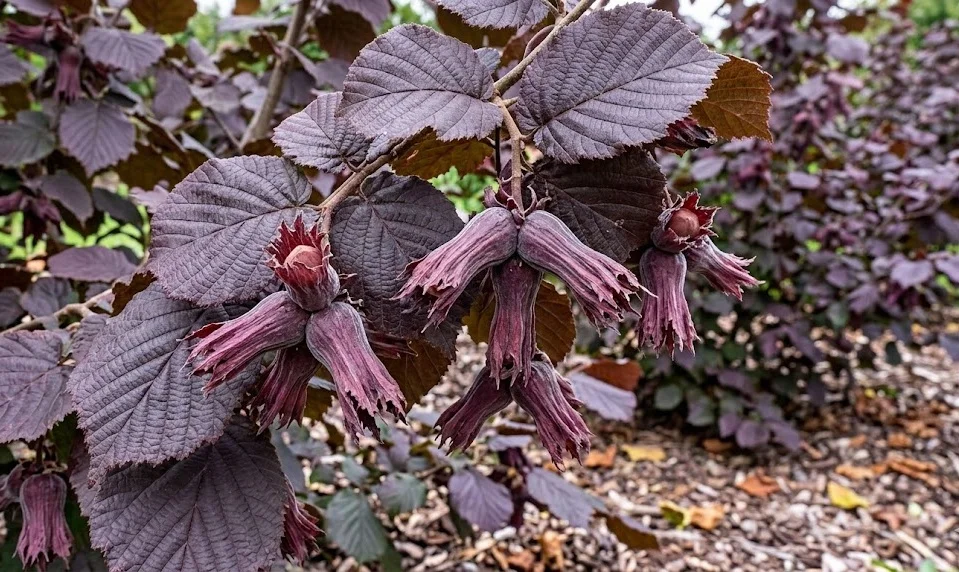

Purple-leaved filbert is generally a sturdy ornamental shrub, but it can suffer from pests and diseases when conditions favor stress or poor air circulation. Most problems begin with weakened growth, overcrowding, drought, waterlogging, or neglected hygiene. Early recognition is essential because minor symptoms are much easier to correct than advanced decline. A healthy plant in a suitable site is always the first and strongest defense.
Fungal and leaf-related diseases
Leaf spots may appear during humid periods, especially when foliage stays wet for many hours. Small brown, dark, or irregular marks can spread across leaves if conditions remain favorable. Severe infections may cause premature leaf drop. Good air movement and careful watering reduce the risk significantly.
Powdery mildew can also affect hazels in warm, dry days followed by humid nights. It appears as a pale, powdery coating on leaves and young shoots. Although it may not immediately kill the plant, it reduces ornamental quality and can weaken repeated flushes of growth. Avoiding dense canopies helps limit its development.
Blight diseases are more serious when shoots, buds, or branches begin to die back. Affected tissues may darken, collapse, or show sunken areas. Dead material should be pruned out promptly and removed from the garden. Cutting tools should be cleaned between cuts when disease is suspected.
Fungal disease management depends strongly on prevention. Overhead watering should be avoided where leaf diseases are frequent. Fallen infected leaves should be collected rather than left to overwinter under the plant. Repeated disease pressure may require approved fungicidal treatment, but cultural correction remains essential.
More articles on this topic
Root and collar problems
Root stress is often linked to poor drainage. Purple-leaved filbert roots need oxygen, and saturated soil excludes it. When roots decline, the top of the plant may show yellowing, wilting, or sparse growth. These symptoms are sometimes mistaken for drought or nutrient deficiency.
Collar rot can occur when mulch or soil is piled against the base of the stems. Constant moisture around the collar encourages decay. The stem base should remain visible and dry enough to breathe. A mulch-free ring around the plant is a simple preventive measure.
Compacted soil also harms the root system. Roots struggle to expand through dense, airless soil, and water movement becomes uneven. The plant may grow slowly even if it receives fertilizer. Improving soil structure and reducing foot traffic can restore root function over time.
Container plants face special root risks. Pots can dry out quickly in summer but remain too wet in cold weather. Drainage holes must remain open, and potting mix must be free-draining. Regular repotting may be needed when roots fill the container completely.
More articles on this topic
Insect pests
Aphids are among the most common pests on young hazel shoots. They gather on tender growth and feed on sap, causing distortion, sticky honeydew, and reduced vigor. Natural predators often control them if broad-spectrum insecticides are avoided. Strong water sprays or soft soap treatments can help when colonies are heavy.
Scale insects may appear on stems and branches. They look like small fixed bumps and can weaken plants by sucking sap. Infestations often build slowly and may go unnoticed at first. Pruning out heavily affected shoots and encouraging plant vigor are important parts of control.
Caterpillars and leaf-feeding insects may chew holes in foliage. Light damage is mostly cosmetic and does not require aggressive treatment. Severe defoliation, however, can reduce energy production. Hand removal or targeted biological control may be suitable in smaller gardens.
Nut pests can affect crop quality where fruiting is important. Larvae may develop inside nuts and cause premature drop or damaged kernels. Garden hygiene and monitoring fallen nuts can reduce carryover. In productive plantings, pest control should be timed carefully and based on accurate identification.
Wildlife and environmental damage
Birds and small mammals may feed on nuts before they fully mature. This is not a disease, but it can reduce harvest dramatically. Netting is possible for smaller shrubs, though it must be installed safely to prevent wildlife entanglement. In ornamental gardens, some nut loss is often accepted as part of the ecosystem.
Deer or rabbits may browse young shoots in some areas. Damage is most serious on newly planted shrubs. Protective guards or fencing may be necessary until the plant is well established. Browsing can also distort the natural shape of the shrub.
Weather damage may resemble disease. Late frost can blacken tender new leaves or damage young flowers. Sun scorch during heat waves can brown leaf margins, especially when soil moisture is low. Wind exposure can tear leaves and dry young shoots.
Chemical injury is another possible cause of symptoms. Herbicide drift can twist leaves, stunt shoots, or cause unusual discoloration. Fertilizer burn can damage roots and leaf edges. Accurate diagnosis depends on remembering recent treatments and environmental events.
Integrated prevention and treatment
Integrated care begins with the right site. Good light, drainage, spacing, and soil structure reduce most disease and pest pressure. A crowded, stressed shrub is always more vulnerable. Prevention is more reliable than rescue treatment.
Regular inspection should become part of routine maintenance. Leaves, shoot tips, stems, and the base of the plant should be checked during the growing season. Early aphid colonies, small leaf spots, or minor dieback can be managed quickly. Waiting until the whole shrub looks poor limits the available options.
Pruning tools should be sharp and clean. Diseased wood must be cut back to healthy tissue. Removed material should not be composted if the disease is persistent or severe. Clean disposal helps break the cycle of reinfection.
Treatment should always match the identified problem. Fungicides, insecticides, or biological products are useful only when they target the correct organism and are used at the right time. Overuse harms beneficial insects and can disturb garden balance. Strong plant health, careful monitoring, and precise intervention give the best results.