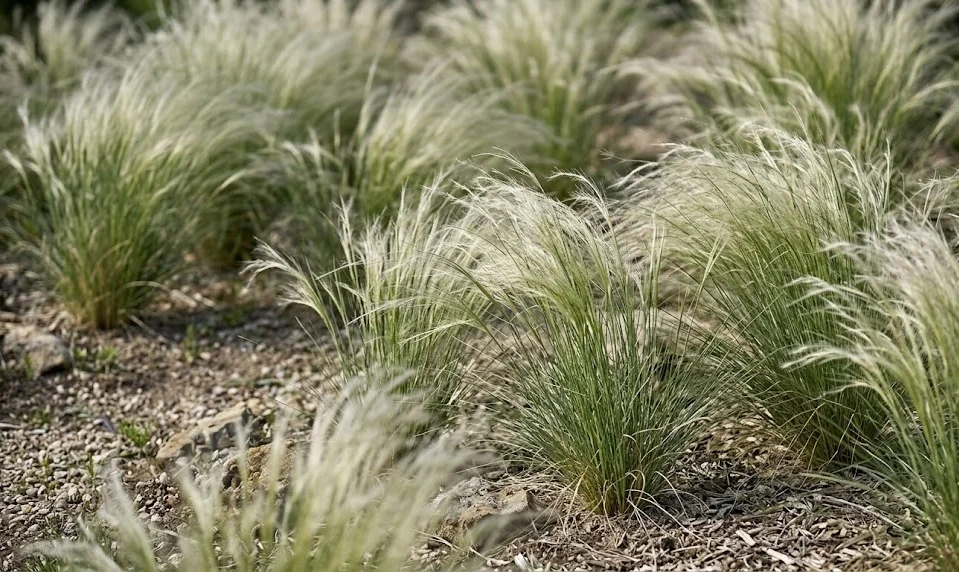

Mexican feather grass can survive winter well when its crown remains dry, airy, and protected from prolonged saturation. Cold alone is not always the greatest danger; winter wetness often causes more losses than frost. The plant’s fine foliage may turn pale or straw-colored, but this seasonal change is normal and can remain attractive for months. Proper overwintering focuses on drainage, timing of cleanup, and avoiding unnecessary disturbance during dormancy.
Preparing plants before winter
Preparation begins in late summer and early autumn. Stop heavy feeding well before cold weather arrives so growth can mature naturally. Soft, late-season growth is more vulnerable to winter damage. A lean plant usually enters dormancy in better condition.
Check that the crown is not buried by mulch, fallen leaves, or debris from nearby plants. Organic material packed around the base can hold water and encourage rot. Gently clear the immediate crown area while leaving the root zone protected. The goal is ventilation, not bare exposure of the roots.
Avoid cutting the plant hard in autumn in colder climates. The old foliage can help protect the crown from temperature swings and winter moisture. It also provides valuable structure and movement when many perennials have disappeared. Severe autumn cutting may leave the crown more exposed.
If the plant is growing in a pot, move it to a sheltered but bright position. A wall, cold frame, or covered porch can reduce excess rain while allowing air circulation. The container should still drain freely. Protection from constant wetting is often more important than wrapping the leaves.
More articles on this topic
Managing winter moisture
Winter moisture management is critical for this grass. Soil that remains wet for weeks can suffocate roots and damage the crown. Raised beds, slopes, gravel gardens, and free-draining soils offer the best overwintering conditions. Low, compacted sites are risky.
Do not water established garden plants during winter unless conditions are unusually dry and mild. In most regions, rainfall is more than enough. Additional irrigation during dormancy can create problems because the plant is using little water. Dryness is usually safer than wetness at this stage.
For containers, check moisture occasionally but avoid routine watering. Pots under cover may dry slowly, while exposed pots may become saturated after storms. Water only when the mix is dry well below the surface and temperatures are not freezing. After watering, make sure excess moisture drains away completely.
A mineral mulch can help reduce surface wetness near the crown. Gravel allows rain to pass through quickly and prevents muddy splash. It also reflects winter light and keeps the planting visually clean. Avoid thick, damp organic mulches directly against the base.
More articles on this topic
Winter appearance and protection
Mexican feather grass often remains ornamental through winter. The foliage and seed heads can fade to pale gold, beige, or silver tones. These dry textures catch frost beautifully and add motion to dormant borders. Leaving them in place supports winter garden structure.
Snow is not necessarily harmful if it melts and drains away. Problems arise when snow, rain, and compacted soil keep the crown constantly wet. Heavy snow can flatten the clump, but it often lifts again partly after thawing. Wait until spring before judging the final shape.
In very cold regions, a light, breathable protection may help newly planted specimens. Use dry leaves or straw loosely around the root zone, not tightly packed into the crown. Remove protective material during mild spells if it becomes wet and compacted. Protection should reduce stress, not create a damp blanket.
Wind exposure can dry foliage and make it look ragged, but established plants usually tolerate it. In exposed containers, wind may dry the pot while the crown remains cold. Place pots where they are sheltered from the worst gusts but not deprived of light. Good overwintering balances shelter with airflow.
Spring recovery after winter
Spring care should begin only when the worst cold has passed and new growth is visible. At that point, remove dead foliage by combing or lightly trimming. Be careful not to damage fresh shoots emerging from the crown. Gentle grooming is often enough to restore the plant’s shape.
If the clump looks completely dry, inspect the base before removing it. Living crowns are firm and may show small green shoots near the center. Dead crowns are often soft, hollow, or loose in the soil. Waiting a little longer can prevent accidental removal of a slow but living plant.
After winter, avoid strong fertilizer as a rescue measure. A stressed plant needs drainage, light, and time more than heavy feeding. If growth resumes weakly, a very light spring feed may be used in poor soil. Overfeeding a recovering plant can create soft growth before roots are fully active.
Replace plants only after assessing why they failed. If winter wetness was the cause, improve drainage before replanting. If shade increased as nearby shrubs grew, choose a brighter position. Overwintering success improves each year when the site is adjusted to the plant’s real needs.