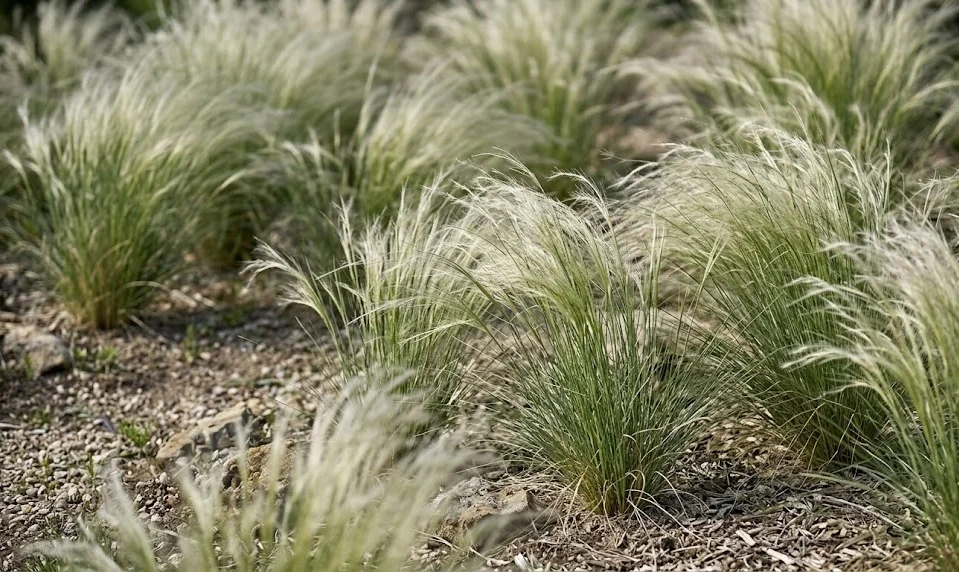

Mexican feather grass is generally a resilient ornamental grass, but it is not completely immune to problems. Most diseases and pest issues appear when the plant is grown in unsuitable conditions, especially wet soil, poor air movement, excessive shade, or overly rich feeding. Prevention is therefore more important than treatment. A healthy clump in full sun and sharp drainage usually needs very little intervention.
Crown and root problems
Crown rot is one of the most serious issues for Mexican feather grass. It usually develops when moisture remains around the base for too long. The crown may become soft, dark, or unpleasantly scented, and foliage may pull away easily. Once rot is advanced, recovery is unlikely.
Poor drainage is the main cause of crown and root decline. Heavy clay, compacted soil, and deep organic mulch can all hold too much water at the base. Winter wetness is especially dangerous because the plant is not growing strongly enough to recover quickly. A raised planting position often prevents more problems than any chemical treatment.
Early symptoms can include thinning growth, yellowing leaves, and a clump that fails to renew in spring. These signs are sometimes mistaken for drought or nutrient deficiency. Before watering or feeding, check the soil and crown carefully. Adding water or fertilizer to a rotting plant only makes the problem worse.
Prevention starts at planting. Set the crown at the correct depth, avoid wet pockets, and keep mulch away from the base. Remove dead material that traps dampness inside the clump. If a plant repeatedly declines in one location, move replacements to a drier, sunnier site.
More articles on this topic
Fungal leaf and stem issues
Leaf spotting is not usually common on well-grown Mexican feather grass, but it can appear in humid or crowded conditions. Spots may be brown, tan, or gray and can spread when leaves remain wet for long periods. Dense surrounding vegetation increases humidity around the clump. Poor air circulation makes minor fungal problems more persistent.
Overhead watering can contribute to leaf diseases. Water landing repeatedly on the foliage, especially in the evening, keeps the leaves damp overnight. If irrigation is needed, apply water to the soil rather than spraying the plant. Morning watering is safer because foliage dries more quickly during the day.
Remove badly affected foliage during seasonal grooming. Do not compost diseased material if the problem is severe or recurring. Clean cutting tools after working on infected plants, especially in dense plantings. Good hygiene helps prevent disease from moving through a border.
Fungicides are rarely necessary for this grass in home gardens. Correcting the growing conditions is usually more effective and more sustainable. Increase spacing, reduce watering frequency, and improve sunlight where possible. A plant that dries quickly after rain is much less likely to suffer from fungal issues.
More articles on this topic
Common pests and minor feeding damage
Mexican feather grass is not a favorite target for most major garden pests. Its narrow leaves are less attractive to many chewing insects than broad, soft foliage. Occasional feeding damage may appear as small notches, pale streaks, or ragged tips. In most cases, this damage is cosmetic and does not threaten the plant.
Aphids may occasionally gather on young stems or seed heads. They feed by sucking sap and can cause slight distortion if numbers are high. Natural predators such as ladybirds, lacewings, and hoverfly larvae often control them. A strong jet of water can remove light infestations without chemicals.
Spider mites can become a concern in hot, dry, dusty conditions, particularly on container plants. Fine webbing, speckled foliage, and a dull appearance may indicate their presence. Improving plant hydration and rinsing dusty foliage can reduce pressure. Severe cases may require repeated non-harsh treatments suitable for ornamental plants.
Slugs and snails are usually not major pests of mature clumps. However, they may damage young seedlings or newly divided plants in damp conditions. Keep propagation areas clean, avoid excessive moisture, and remove hiding places near young plants. Protecting small plants early prevents uneven establishment.
Environmental stress mistaken for disease
Many problems that look like disease are actually environmental stress. Browning tips may result from drought, wind exposure, old foliage, or natural seasonal aging. Yellowing can come from shade, waterlogged roots, or transplant shock. Correct diagnosis prevents unnecessary treatment.
Sun scorch is less common in this sun-loving grass, but sudden exposure can stress plants grown under shade cloth or greenhouse conditions. Newly purchased plants may need gradual acclimatization before entering a hot, exposed border. Temporary stress usually improves once roots establish and growth hardens. Avoid overreacting with fertilizer during this transition.
Cold damage can also resemble disease. After harsh winter weather, foliage may look bleached, collapsed, or brittle. Wait until spring growth begins before deciding whether the plant is dead. Premature cutting or digging can damage crowns that might otherwise recover.
Nutrient excess can create weak, disease-prone growth. Soft leaves collapse more easily and dry more slowly after rain. This provides better conditions for fungal problems and crown stress. Balanced, restrained care creates tougher tissue and fewer apparent disease symptoms.
Integrated prevention in the garden
The best pest and disease strategy is integrated prevention. Start with the right site, provide full sun, and ensure drainage before planting. Space plants so air can move between clumps. Avoid treating Mexican feather grass like a moisture-loving perennial.
Seasonal cleaning also reduces problems. Remove accumulated dead leaves that hold dampness inside the clump. Cut or comb at the right time so new shoots are not damaged. Dispose of suspicious material rather than leaving it in place.
Monitor the plant regularly but avoid unnecessary intervention. A few brown leaves or minor insect marks are normal in a living garden. Constant chemical treatment can disturb beneficial insects and rarely solves underlying cultural problems. Observation, restraint, and good growing conditions are usually enough.
When a plant fails repeatedly, replace it only after correcting the cause. Planting another clump into the same wet, shaded soil will produce the same result. Improve drainage, reduce irrigation, or choose a more suitable species for that location. Healthy Mexican feather grass begins with a site that matches its nature.