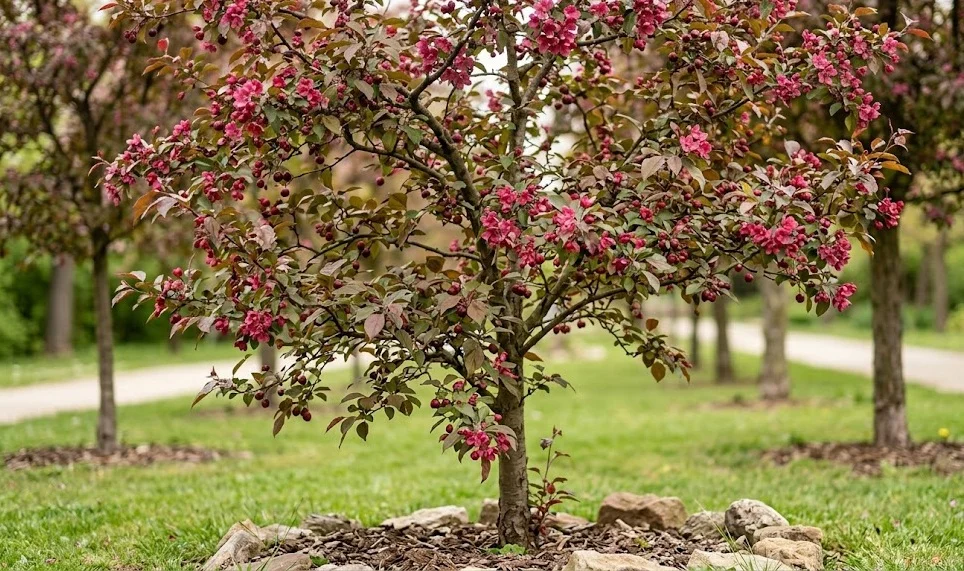

The relationship between a purple leaf crabapple and the sun is the most important factor in determining its aesthetic success and health. Sunlight is the primary driver of photosynthesis, but for this specific tree, it also plays a critical role in pigment development. Without the correct amount and quality of light, the tree will fail to produce its signature deep purple foliage and prolific spring blossoms. Understanding how light interacts with the tree’s biology allows you to place and manage it for maximum visual impact.
While most crabapples are described as full-sun plants, the purple-leaved varieties are especially demanding in this regard. The dark pigments, known as anthocyanins, require high light intensity to remain vibrant throughout the growing season. If the tree is placed in a spot with too much shade, these pigments will break down, and the leaves will gradually turn a dull, muddy green. Maintaining the ornamental value of the tree is entirely dependent on meeting these specific light requirements.
Light also influences the structural growth and disease resistance of the tree in several indirect ways. A well-lit tree will have a more compact and sturdy branching habit compared to one that is reaching for the light in a shaded location. Furthermore, sunlight helps dry the foliage quickly after rain, which is the most effective natural defense against common fungal pathogens like apple scab. Professional placement focuses on balancing the need for light with the practicalities of the garden layout.
Environmental factors like neighboring trees, buildings, and even the orientation of your property can change the light profile of a site over time. A spot that was once in full sun may become shaded as other plants mature or as new structures are built. Regularly evaluating the light levels in your garden ensures that your purple leaf crabapple continues to get what it needs to thrive. A professional approach involves both careful initial selection and ongoing management of the surrounding landscape.
Full sun advantages
Achieving the characteristic deep wine-red or purple color of the foliage is only possible when the tree receives at least six to eight hours of direct sunlight daily. This intensity of light triggers the production of the pigments that make these trees so desirable in the landscape. In full sun, the leaves will maintain their rich color from the moment they emerge in the spring until they fall in the autumn. For the best results, the tree should be placed where it receives unobstructed light during the peak hours of the day.
More articles on this topic
The quantity and quality of the spring blossoms are also directly tied to the amount of light the tree received during the previous growing season. Sunlight provides the energy necessary for the tree to set a large number of flower buds for the following year. A tree grown in full sun will be a literal cloud of pink or red flowers in the spring, creating a stunning focal point. In contrast, a shaded crabapple will produce fewer flowers, and the blooming period will often be much shorter and less impactful.
Growth habit and structural strength are significantly improved when a purple leaf crabapple is grown in an open, sunny location. The branches will grow more horizontally and develop thicker wood, resulting in a balanced and attractive silhouette. Trees that struggle for light often become “leggy,” with long, thin branches that are more prone to breaking under snow or wind loads. Full sun ensures that the tree develops a natural, sturdy form that requires less corrective pruning over time.
Finally, a sunny location is the most important cultural control for preventing the fungal diseases that often plague this species. Rapid drying of the leaves is essential for stopping the germination of fungal spores like scab and mildew. Sunlight also acts as a natural disinfectant, keeping the canopy environment less hospitable to many common pathogens. By providing the tree with plenty of light, you are giving it the best possible chance to stay healthy without heavy reliance on chemical treatments.
Partial shade limitations
When a purple leaf crabapple is planted in a location that receives only partial shade, the most immediate change will be in the color of the leaves. The vibrant purple will begin to fade, often starting from the interior of the canopy where the light levels are lowest. Over time, the entire tree may take on a greenish-brown appearance that lacks the dramatic impact of a healthy, sun-grown specimen. This “greening out” is a clear physiological signal that the tree is not receiving enough light to maintain its pigment levels.
More articles on this topic
The overall vigor of the tree also declines in partial shade, as it has less energy available for growth and defense. You may notice that the tree grows more slowly and that the new shoots are thinner and more fragile. Over several years, this lack of energy can make the tree more susceptible to pests and environmental stressors that it would normally be able to handle. While the tree may survive in partial shade, it will rarely reach its full ornamental potential or long-term health.
Flower and fruit production are among the first processes to be sacrificed by a tree that is struggling with low light levels. You may find that the tree blooms only on the side that receives the most sun, or that the flowers are smaller and paler than expected. The resulting fruit will also be less abundant and may not develop the same rich colors that characterize the variety. For a tree that is prized for its seasonal interest, these limitations represent a significant loss of value in the landscape.
If you must plant in a spot with less-than-ideal light, choose a variety that is known for its exceptional vigor and disease resistance. Some modern cultivars are slightly more tolerant of lower light levels, though they still prefer full sun for the best color. You can also help the tree by ensuring that other maintenance tasks, like watering and fertilization, are performed perfectly to reduce overall stress. However, professional gardeners will always recommend a sunny site as the foundation for success with this specific tree.
Urban light management
In urban and suburban gardens, the light environment is often complicated by structures, fences, and the shadows cast by neighboring properties. When planning a location for a purple leaf crabapple, it is important to consider how these shadows move across the garden throughout the year. A spot that is sunny in the height of summer may be in deep shade during the spring when the tree is most active. Using a light meter or observing the site at different times of day can help you make a more professional and accurate placement decision.
Reflected light from light-colored walls or fences can sometimes be used to supplement the direct sunlight reaching the tree. This can be a helpful strategy in smaller gardens where space is limited and full sun is hard to find. However, be cautious of excessive reflected heat, which can stress the tree and lead to leaf scorch during the hottest parts of the summer. Balancing light and temperature is a key consideration when managing ornamental trees in confined urban spaces.
The height of surrounding vegetation must also be managed to ensure that the crabapple is not gradually shaded out over the years. Periodic thinning or height reduction of neighboring trees can help maintain the necessary light levels for your ornamental specimen. This “light management” is a continuous process that requires a long-term view of how the entire garden will evolve. Keeping a clear window to the sky is essential for the long-term success of any sun-loving ornamental tree.
If a tree has already become too shaded, you may need to consider more drastic measures to restore its health and beauty. This could involve removing the source of the shade or, in some cases, transplanting the crabapple to a sunnier location. While transplanting a mature tree is a significant undertaking, it may be the only way to save a specimen that is failing due to lack of light. Professional consultation can help you weigh these options and choose the best path forward for your landscape.