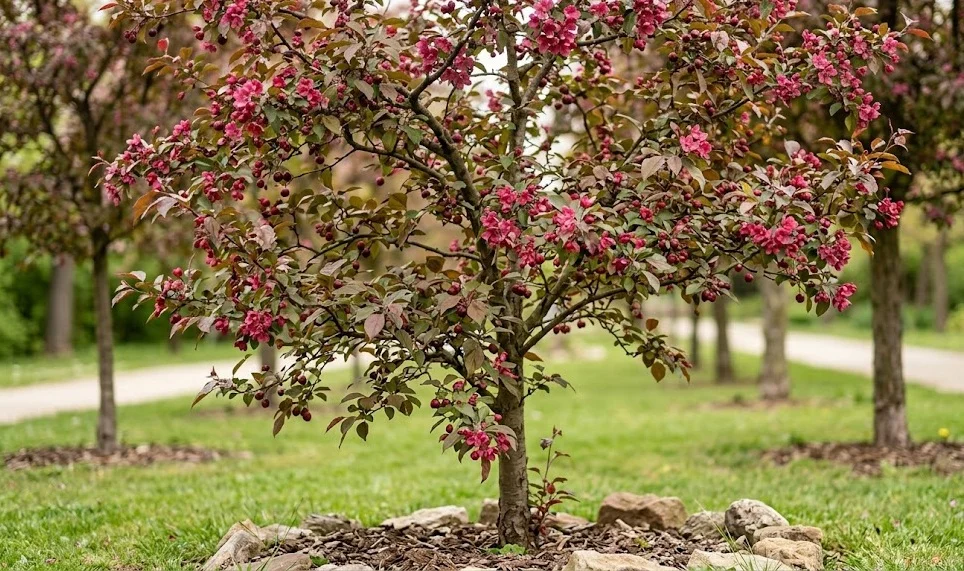

Establishing a purple leaf crabapple in your landscape begins with a carefully executed planting process and an understanding of its reproductive potential. These trees are prized for their adaptability and striking appearance, but their early stages of growth are critical for long-term success. Success starts with selecting a healthy specimen and placing it in an environment where it can truly flourish without constant intervention. By following professional standards for planting and propagation, you can ensure your tree becomes a centerpiece of the garden.
The timing of planting is one of the most important decisions a gardener can make to ensure the tree’s survival. Early spring or late autumn are generally considered the best windows for transitioning a young crabapple into its permanent home. During these periods, the cooler temperatures and increased rainfall reduce the stress on the root system as it adjusts to the new soil. Avoiding the extreme heat of midsummer gives the tree a better chance to establish itself before the next growing season.
Propagation allows for the creation of new plants that carry the unique characteristics of the parent tree. While many crabapples can be grown from seed, specific ornamental varieties like the purple leaf types are usually propagated through vegetative methods. Techniques such as grafting or taking cuttings ensure that the resulting trees will have the same leaf color and flower quality. Mastering these skills opens up new possibilities for expanding your collection or sharing plants with other enthusiasts.
Preparing the site correctly is a task that pays dividends for the entire life of the tree. The goal is to create an inviting environment for roots to expand quickly and deeply into the surrounding native soil. This involves more than just digging a hole; it requires thoughtful consideration of soil structure, drainage, and available space. A professional approach to site preparation minimizes the risk of transplant shock and sets the stage for rapid, healthy growth.
Site preparation and selection
Before a single shovel of dirt is moved, the landscape must be evaluated to find the most suitable location for the crabapple. These trees require a spot that receives full sun for at least six to eight hours a day to develop their best foliage color. Poorly lit areas will result in leggy growth and a fading of the characteristic purple hue to a dull green. Additionally, the site should have well-draining soil to prevent the roots from sitting in water for extended periods.
More articles on this topic
Checking for underground utilities and overhead obstructions is a safety requirement that should never be ignored during the planning phase. The mature height and spread of the purple leaf crabapple must be accounted for to avoid future conflicts with power lines or structures. Giving the tree ample room to grow ensures that its natural form can develop without the need for restrictive pruning. A well-placed tree is a safe tree that adds value to the property without creating maintenance headaches.
Improving the soil in the entire planting area is often more effective than just amending the soil within the planting hole. By incorporating organic matter into a wide radius, you encourage the roots to grow outward rather than circling within the amended hole. This practice leads to a much more stable and drought-tolerant tree in the long run. Professional landscapers often till the soil deeply in the surrounding area to break up any existing compaction before planting.
Water availability at the site must also be considered, especially for the first few years of the tree’s life. While established crabapples are somewhat drought-tolerant, young saplings need consistent hydration to develop a strong root system. Ensuring that a hose or irrigation system can easily reach the site will make the task of watering much more manageable. Strategic placement near a water source reduces the likelihood of the tree suffering from neglect during dry spells.
Professional planting techniques
Digging the planting hole to the correct dimensions is a fundamental step that dictates the early health of the tree. The hole should be at least two to three times wider than the root ball but no deeper than the height of the root system. This wide, shallow basin allows the lateral roots to move easily into the loosened soil as they begin to expand. Ensuring the bottom of the hole is firm prevents the tree from settling too deep over time.
More articles on this topic
The depth at which the tree is planted is arguably the most critical factor in its long-term survival. The root flare, which is the area where the roots begin to spread out from the trunk, should be slightly above the soil surface. Planting too deep can lead to trunk rot and suffocated roots, while planting too shallow can cause the roots to dry out. Finding this sweet spot requires careful observation and may involve removing some excess soil from the top of the nursery pot.
When placing the tree in the hole, it is important to handle it by the root ball rather than the trunk to avoid damage. Any circling or girdling roots should be gently teased outward or pruned to encourage them to grow into the surrounding soil. Once the tree is positioned and straight, backfill the hole with the native soil that was removed, tamping it down lightly to remove large air pockets. Avoid using heavy fertilizers in the planting hole, as this can burn tender new roots.
Immediately after planting, the tree should be thoroughly watered to settle the soil and provide much-needed hydration. A slow, deep soak is more effective than a quick splash, as it ensures the water reaches the bottom of the root zone. Applying a layer of mulch around the base, as discussed in care guides, will help retain this moisture and protect the roots. Ongoing monitoring during the first few weeks is essential to ensure the tree is recovering well from the transition.
Propagation methods and strategies
Grafting is the most common professional method for propagating specific cultivars of purple leaf crabapples. This process involves joining a scion, which is a piece of the desired tree, onto a hardy rootstock that provides a strong foundation. This technique ensures that the new tree will exhibit the exact foliage and floral characteristics of the parent plant. Successful grafting requires precise cuts and careful aftercare to ensure the union heals properly and remains strong.
Softwood cuttings taken in early summer provide another way to create new plants from an existing specimen. These cuttings are taken from the current season’s growth while the wood is still flexible and the leaves are fully expanded. They must be kept in a high-humidity environment with consistent moisture to encourage root development. While more challenging than grafting for some varieties, it allows for a tree to be grown on its own roots without a graft union.
Growing crabapples from seed is a rewarding but unpredictable process for ornamental varieties. Because these trees are often hybrids, the seeds may produce offspring that look significantly different from the parent. However, this variability can lead to interesting new forms and is a great way to explore the genetic potential of the species. Seeds typically require a period of cold stratification to mimic winter conditions before they will successfully germinate in the spring.
Regardless of the method chosen, young propagated plants require a protected environment as they develop their first set of roots. A nursery bed or a greenhouse provides the controlled conditions necessary to shield them from extreme weather and pests. Regular monitoring for hydration and early signs of disease is critical during this vulnerable stage of life. Patience is a virtue in propagation, as it may take several years for a new plant to reach a size suitable for the landscape.
Post planting establishment
The first two years after planting are considered the establishment phase, during which the tree focuses most of its energy on root growth. During this time, the tree may not show significant top growth, which is a normal part of its development. Consistent watering is the most important task for the gardener during this period to prevent the roots from drying out. Even if it rains, the soil should be checked regularly to ensure the moisture is reaching the appropriate depth.
Avoid the temptation to prune the tree heavily during its first year in the ground. The leaves are the primary source of energy for the tree, and removing too many can slow down the establishment process. Only dead, damaged, or crossing branches should be removed to maintain basic health and safety. Allowing the tree to keep its full canopy helps it build the energy reserves needed to survive the winter and grow vigorously in the spring.
Monitoring for pests and diseases is especially important for young trees that are still adapting to their new environment. Stressed trees are often more attractive to insects like aphids or borers, which can cause significant damage to tender tissues. Early intervention with organic or mechanical controls can prevent these issues from becoming established in the garden. Keeping the area around the base free of weeds also reduces competition and eliminates hiding spots for potential pests.
As the tree begins to show signs of vigorous new growth in its second or third year, the maintenance routine can be gradually adjusted. The frequency of watering can be reduced as the root system expands into a larger volume of soil. A light application of balanced fertilizer can be introduced in early spring to support the increasing canopy size. Reaching the end of the establishment phase marks a significant milestone in the life of the purple leaf crabapple.