
Pruning is a vital horticultural practice that shapes the form, enhances the health, and maximizes the fruit production of the Chinese beautyberry. Because this shrub produces its spectacular purple berries on the current season’s growth, the timing and technique of your cuts are of paramount importance. A professional approach to pruning ensures that the plant remains vigorous and does not become a tangled mess of old, unproductive wood. By understanding the biological response of the shrub to pruning, you can guide its development to suit your specific aesthetic goals.
The primary objective of pruning the beautyberry is to encourage the growth of strong, new stems that will carry the weight of the autumn berries. Over time, older branches can become woody and less productive, leading to a sparse and unattractive display of fruit. By systematically removing a portion of this old wood each year, you stimulate the plant to produce a fresh flush of growth from the base or from lower nodes. This cycle of renewal keeps the shrub looking youthful and ensures a consistent crop of berries every single year.
In addition to fruit production, pruning is also used to maintain the structural integrity and air circulation within the canopy of the plant. A dense, overgrown shrub can trap humidity and provide a breeding ground for pests and fungal diseases like powdery mildew. By thinning out the center of the plant, you allow light and air to reach the inner branches, promoting a healthier and more resilient specimen. A well-pruned beautyberry has a graceful, arching form that looks beautiful even in the winter when the leaves are gone.
Safety and sanitation are also key considerations during the pruning process, as clean cuts are less likely to become entry points for pathogens. You should always use sharp, high-quality bypass pruners or loppers to ensure the bark is not crushed or torn during the cut. Disinfecting your tools with alcohol between plants is a professional habit that prevents the spread of diseases throughout your garden. Taking the time to do the job correctly is an investment in the long-term health and beauty of your Chinese beautyberry.
Timing for optimal results
The best time to prune the Chinese beautyberry is in the late winter or very early spring, just before the new growth begins to emerge. Pruning during the dormant phase allows you to see the structure of the plant clearly without the distraction of leaves and berries. It also ensures that the plant’s energy is directed into the new buds that will form the season’s fruiting stems. Avoid pruning in the late autumn or mid-winter, as the open wounds can be more susceptible to damage from extreme cold or desiccation.
More articles on this topic
If you miss the early spring window, you can still perform some light pruning in the late spring, but you should be aware that this may reduce the number of berries for that year. The plant begins to develop its flower buds quite early in the season, and cutting them off will obviously impact the autumn display. For this reason, major structural pruning or rejuvenation should always be done while the plant is still fully dormant. A little patience and proper timing go a long way in achieving the best possible results.
Dead, damaged, or diseased wood can and should be removed at any time of the year as soon as it is identified. Removing these problematic branches helps the plant focus its resources on healthy growth and prevents the spread of decay. If a branch is broken during a summer storm, prune it back to a clean node or the main stem immediately to facilitate quick healing. Regular maintenance throughout the season keeps the plant looking its best and reduces the workload during the main pruning period.
Understanding the local climate is also important for determining the exact timing of your pruning tasks. In regions with long, cold winters, you may want to wait until the very end of the season to ensure that you are not pruning back wood that has already been killed by the frost. Conversely, in warmer climates, the plant may break dormancy earlier, requiring a more proactive approach in late February or early March. Professional gardening is about being in tune with the unique rhythms of your specific environment.
Rejuvenation and maintenance techniques
For a Chinese beautyberry that has become overgrown or unproductive, a hard rejuvenation prune can breathe new life into the specimen. This technique involves cutting the entire shrub back to within six to twelve inches of the ground in the early spring. While this may seem drastic, the plant is remarkably resilient and will quickly push out a flush of vigorous new stems from the base. This “reset” results in a more compact, tidy shrub with an abundance of large, healthy berry clusters in the following autumn.
More articles on this topic
If you prefer a more gradual approach, you can practice “renewal pruning” by removing about one-third of the oldest stems each year. You should cut these stems back to the ground or to a strong lateral branch near the base of the plant. This method maintains the overall size and shape of the shrub while constantly introducing new wood into the canopy. Over a period of three years, the entire plant will have been refreshed without the dramatic visual impact of a hard prune.
Routine maintenance pruning involves thinning out the center of the shrub and removing any crossing or rubbing branches. You should also look for “suckers” or very thin, weak stems that are unlikely to produce significant fruit and remove them to save the plant’s energy. Shortening the remaining stems by about one-third can also help to maintain a more controlled and aesthetically pleasing form. This careful shaping allows the natural arching habit of the beautyberry to be the star of the show.
Always make your cuts at a 45-degree angle about a quarter-inch above an outward-facing bud. This encourages the new growth to move away from the center of the plant, further improving air circulation and light penetration. If you cut too close to the bud, you might damage it; if you leave too much of a stub, it can die back and become an entry point for rot. These small details are what separate a professional pruning job from a casual trim and lead to a much healthier plant.
Shaping for aesthetic impact
The way you prune your beautyberry should reflect the role it plays in your overall garden design and landscape. If the shrub is part of an informal woodland border, you may want to use a light touch to preserve its natural, wild appearance. In this case, focus on removing only the dead wood and thinning out the densest areas to keep the plant healthy. A more relaxed pruning style highlights the graceful way the berry-laden branches dip toward the ground in the autumn.
In a more formal garden or a smaller space, you might choose to prune the beautyberry more heavily to maintain a specific size and shape. You can use pruning to create a more rounded or upright form that fits perfectly into a structured planting bed. However, even with formal shaping, it is important to remember the plant’s natural habit to avoid a look that is too stiff or artificial. The goal is to enhance the plant’s inherent beauty rather than fighting against its natural growth patterns.
For those with limited garden space, the beautyberry can even be pruned into a small, multi-stemmed tree form by removing the lower branches. This “limbing up” technique creates space underneath the shrub for smaller perennials or groundcovers, adding another layer of interest to the garden. This style requires more frequent maintenance to keep the trunk clear of new shoots, but the resulting look is very sophisticated and architectural. Professional pruning is a creative tool that allows you to customize your plants to fit your vision.
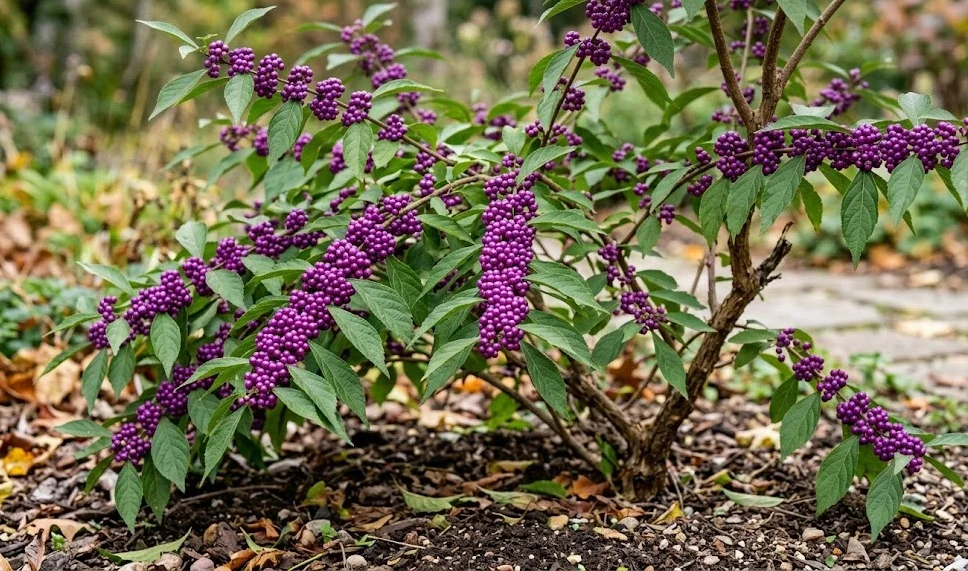
Regardless of the style you choose, the ultimate reward of proper pruning is the stunning display of berries that arrives in the fall. A well-maintained Chinese beautyberry will produce long, elegant stems that are completely encrusted with vibrant purple fruit. These branches are also excellent for cutting and using in indoor floral arrangements, where they can last for several weeks. Your skill with the pruners is directly responsible for the quantity and quality of this unique garden treasure.
Aftercare and observation
Once the pruning is complete, it is a good professional practice to provide the plant with a little extra care to support its recovery. Applying a balanced fertilizer and a fresh layer of mulch in the spring gives the plant the nutrients and moisture retention it needs for the upcoming growth spurt. Watering the shrub thoroughly after pruning also helps it manage the stress of the cuts and prepare for the new season. These simple follow-up steps ensure that the energy stimulated by pruning is put to good use.
Observing the plant’s reaction to your pruning over the following months will provide valuable feedback for your future gardening tasks. You should see a flush of new, green growth emerging from the nodes and base of the plant within a few weeks of the arrival of warmer weather. If the growth is very slow or the plant seems to be struggling, you may need to adjust your watering or feeding routine. Learning how each individual specimen responds to pruning is a key part of becoming a true expert in the garden.
Keep a record of how much you pruned and which techniques you used to track the long-term effects on fruit production and plant health. You may find that some varieties of beautyberry respond better to certain types of pruning than others. This personalized knowledge is more valuable than any general guide, as it is tailored to your specific plants and growing conditions. Gardening is a lifelong learning process, and every cut you make is a lesson in the science and art of horticulture.
Ultimately, pruning is an act of partnership between the gardener and the plant, aimed at achieving the best possible outcome for both. By providing the Chinese beautyberry with a professional level of care, you ensure it remains a healthy, productive, and beautiful member of your garden community. The satisfaction of seeing the vibrant purple berries each year is a direct reflection of the thoughtful work you put in during the quiet days of early spring. Enjoy the process of shaping your garden, and the results will speak for themselves for many years to come.