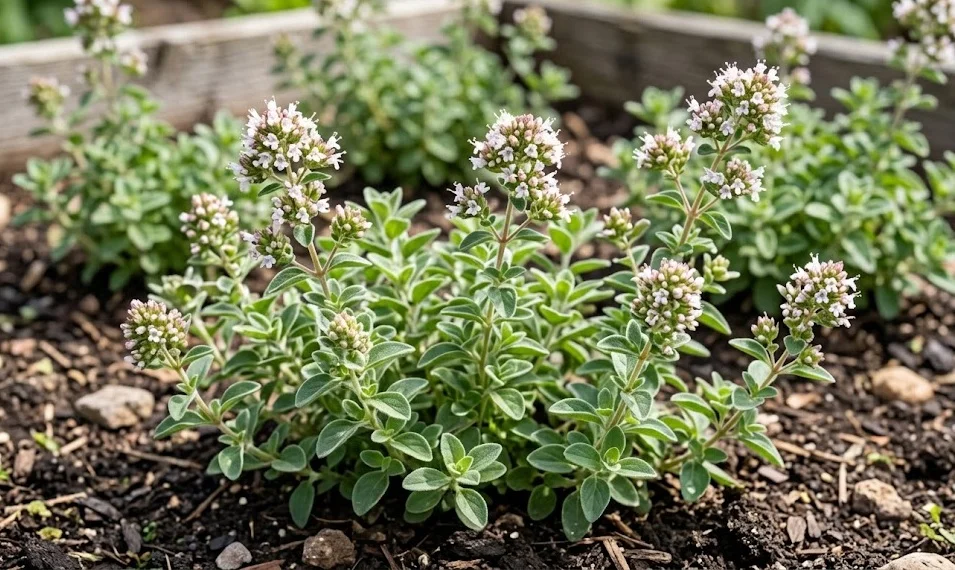

Mastering the irrigation of this Mediterranean herb requires a delicate balance between moisture and drainage. Overwatering remains the most common cause of crop failure in commercial herb production. The plant naturally thrives in arid environments and exhibits a high tolerance for temporary drought. Implementing a thoughtful watering schedule ensures healthy foliage without compromising the aromatic essential oils.
Assessing soil moisture before initiating any irrigation event is absolutely critical. The top few centimeters of the soil profile should feel completely dry to the touch. Digging slightly deeper reveals whether the root zone actually requires supplemental hydration. Relying on visual wilting as an indicator often means the plant is already severely stressed.
Deep and infrequent watering encourages the development of a resilient and expansive root system. Shallow, daily sprinkling only promotes weak surface roots that are highly vulnerable to heat. When irrigation is applied, it should thoroughly saturate the entire root profile. Allowing the soil to dry out between applications prevents suffocating the crucial root hairs.
The timing of irrigation significantly impacts the overall health of the foliage. Morning watering is highly recommended to allow the leaves to dry completely before sunset. Lingering moisture on the canopy during the night invites devastating fungal pathogen outbreaks. Drip irrigation systems offer the best solution by delivering water directly to the soil surface.
Irrigation systems and technology
Implementing efficient irrigation technology dramatically reduces water waste and improves crop uniformity. Drip tape installations represent the gold standard for large-scale agricultural herb production. These systems minimize evaporation and keep the valuable foliage completely dry during operation. Precision agriculture relies heavily on such targeted water delivery mechanisms.
More articles on this topic
Soil moisture sensors provide invaluable quantitative data for optimizing irrigation schedules. Placing these technological devices at various depths gives a comprehensive view of water infiltration. Automated controllers can trigger watering events based strictly on these objective moisture readings. This eliminates human error and prevents both overwatering and underwatering scenarios.
Overhead sprinklers are generally discouraged but may be necessary in specific field conditions. If utilized, they must be calibrated to deliver water rapidly to minimize canopy wetness duration. Sprinkler irrigation is primarily useful during the initial establishment phase of direct-seeded crops. Once the plants mature, transitioning to subsurface irrigation is strongly advised.
Evaluating water quality is an overlooked aspect of agricultural irrigation management. High salinity levels in the water source can severely damage the sensitive root systems. Periodic laboratory testing ensures the irrigation water meets the specific requirements of the crop. Adjusting the pH of the water may also be necessary to optimize nutrient availability.
Nutritional requirements
Marjoram possesses relatively low nutritional demands compared to other intensive agricultural crops. Excessive fertilization actually proves detrimental to the culinary quality of the harvested herb. High nitrogen levels stimulate rapid, lush vegetative growth at the expense of aromatic oil concentration. A conservative approach to nutrient management yields the most flavorful and commercially valuable product.
More articles on this topic
Conducting a comprehensive soil analysis establishes a scientific baseline for any fertilization program. This test identifies specific macronutrient deficiencies and current soil pH levels. Agronomists utilize these results to formulate highly customized amendment recommendations. Guesswork in fertilization inevitably leads to resource waste and potential environmental pollution.
Organic matter serves as the primary foundation for a healthy soil ecosystem. Incorporating well-rotted compost before planting improves soil structure and provides a slow-release nutrient source. This natural approach enhances the biological activity of beneficial soil microorganisms. Chemical fertilizers should only be utilized to address acute and verified nutritional deficiencies.
Phosphorus and potassium are vital for strong root development and overall stress resistance. These elements contribute significantly to the plant’s ability to survive harsh environmental conditions. A balanced, low-concentration organic fertilizer applied once in the spring is usually sufficient. Mid-season feeding is rarely required unless the plants show explicit signs of severe yellowing.
Application methods for fertilizers
Delivering nutrients effectively requires selecting the appropriate application methodology. Broadcasting granular organic fertilizers across the field is a standard pre-planting procedure. These granules must be lightly tilled into the topsoil to ensure proper integration. Moisture is then required to break down the materials and make the nutrients plant-available.
Side-dressing involves applying fertilizer directly alongside the established rows of plants. This targeted approach minimizes nutrient waste and prevents feeding competing weed populations. Care must be taken to avoid direct contact between concentrated fertilizers and the plant stems. Subsequent irrigation is necessary to wash the nutrients down into the active root zone.
Liquid fertilizers offer a rapid solution for correcting sudden nutritional deficiencies. These soluble nutrients are immediately available for uptake by the distressed root system. Foliar feeding, while occasionally useful, is generally avoided to prevent leaf burning and residue accumulation. Liquid applications are best integrated directly into the drip irrigation system through fertigation.
Fertigation represents the pinnacle of modern agricultural nutrient management. Injecting dissolved fertilizers into the irrigation water ensures highly uniform distribution across the entire crop. This method allows for micro-dosing nutrients precisely when the plant needs them most. It requires sophisticated equipment but dramatically improves overall fertilizer efficiency.
Managing nutrient imbalances
Recognizing the visual symptoms of nutrient imbalances is crucial for timely agricultural intervention. Nitrogen deficiency typically manifests as a generalized yellowing of the older, lower leaves. Conversely, phosphorus deficiency often causes the foliage to develop an unnatural purplish tint. Potassium shortages result in scorched leaf margins and weakened stem structures.
Iron chlorosis is a common issue when cultivating herbs in highly alkaline soils. The leaves turn pale yellow while the veins remain distinctly dark green. This occurs because the elevated pH renders iron chemically unavailable to the plant roots. Applying chelated iron directly to the soil provides a temporary and rapid correction.
Correcting the underlying soil pH is the only permanent solution for micronutrient lockouts. Incorporating elemental sulfur gradually lowers the pH to a more optimal, slightly acidic level. This biological process requires several months to significantly alter the soil chemistry. Continuous pH monitoring prevents the recurrence of these frustrating nutritional disorders.
Excessive fertilization poses a far greater threat than mild nutritional deficiencies. Salt accumulation from synthetic fertilizers severely damages roots and stunts plant growth. Leaching the soil with heavy, pure water irrigation is required to flush out these toxic salts. Adopting conservative, organic feeding practices entirely prevents this destructive agricultural scenario.