
Effective water management and a balanced nutrient strategy are the twin pillars that support the rapid growth and high biomass of stubble turnips. These plants are incredibly efficient at converting resources into succulent roots and leafy greens, but they require consistent support from the grower. You must understand that their fast-paced life cycle means there is little room for error when it comes to hydration and feeding. A professional approach involves a deep understanding of the soil’s capacity to hold water and the plant’s specific mineral requirements at different growth stages.
Watering should be viewed as a tool for maintaining steady growth rather than a reactive measure to visible wilting in the field. You should aim to keep the soil moisture levels consistent, particularly during the transition from leaf development to root swelling. If the plants experience alternating periods of extreme drought and heavy saturation, the roots may crack or develop a bitter flavor profile. Monitoring the weather and soil moisture levels allows you to provide the right amount of water at the right time for optimal results.
Fertilization is not about applying as much as possible, but rather about providing a precise balance of nitrogen, phosphorus, and potassium. You should base your nutrient applications on a recent soil test to avoid over-application, which can lead to environmental runoff and wasted resources. Nitrogen is particularly important for early leaf development, while potassium supports the structural integrity and sugar storage in the developing roots. A targeted fertilization plan ensures that the crop has everything it needs to reach its full nutritional potential.
The method of application can be just as important as the quantity of fertilizer used in the field. You should ensure that nutrients are placed where the roots can easily access them without causing salt damage to the delicate young tissues. Incorporating fertilizers into the seedbed before planting or using timed top-dressings are both effective strategies for maintaining nutrient availability. By managing the delivery of these inputs, you can maximize the efficiency of your fertilization program and promote healthy, vigorous growth.
Irrigation strategies and timing
Irrigation should be scheduled based on the specific evaporative demand of the environment and the current growth stage of the turnips. You should pay close attention to the soil’s moisture tension to determine when the plants are starting to struggle for water. In the height of summer, this might mean frequent light applications to keep the top layer of soil from drying out completely. During cooler periods, you can reduce the frequency while ensuring that the root zone remains adequately hydrated for continued growth.
More articles on this topic
The time of day when you apply water can significantly influence the efficiency of the irrigation and the health of the foliage. You should ideally water in the early morning hours to allow the leaves to dry quickly as the sun rises, which reduces the risk of fungal diseases. Evening watering can leave the plants damp overnight, creating a perfect environment for pathogens like downy mildew to flourish. Professional water management is as much about protecting the plant from disease as it is about providing hydration.
Uniformity of water distribution is a technical goal that ensures every plant in the field has an equal opportunity to thrive. You should check your irrigation equipment regularly for clogged nozzles or uneven pressure that could create dry spots or waterlogged areas. Uneven watering leads to a variable crop that is difficult to manage and harvest efficiently, as plants will mature at different rates. Investing in high-quality irrigation infrastructure is a key step toward achieving professional results in stubble turnip cultivation.
During the final weeks before harvest, you may want to gradually reduce the amount of water provided to the crop. This slight reduction in moisture can encourage the plant to concentrate its sugars and improve the storage life of the harvested roots. However, you must be careful not to trigger a severe stress response that could cause the plants to lose their nutritional value. Finding the right balance during this final phase is a sophisticated part of the watering strategy for expert growers.
Nitrogen management for leaf growth
Nitrogen is the primary driver of the lush, green canopy that stubble turnips are famous for in the agricultural world. You should apply nitrogen in a way that supports early vegetative growth without causing the plants to become overly succulent and prone to physical damage. Too much nitrogen late in the season can lead to excessive leaf growth at the expense of root development, which may not align with your harvest goals. A split application strategy often provides the best results by supplying the plant with nitrogen exactly when it is needed most.
More articles on this topic
The source of your nitrogen can also affect how quickly the plants respond and how long the nutrient remains available in the soil. You should consider using a mix of quick-release and slow-release forms to provide both an immediate boost and a sustained supply of nutrition. Organic sources like well-rotted manure or compost can provide a steady stream of nitrogen while also improving the overall soil structure. Selecting the right nitrogen source is a strategic decision that depends on your soil type and the length of your growing season.
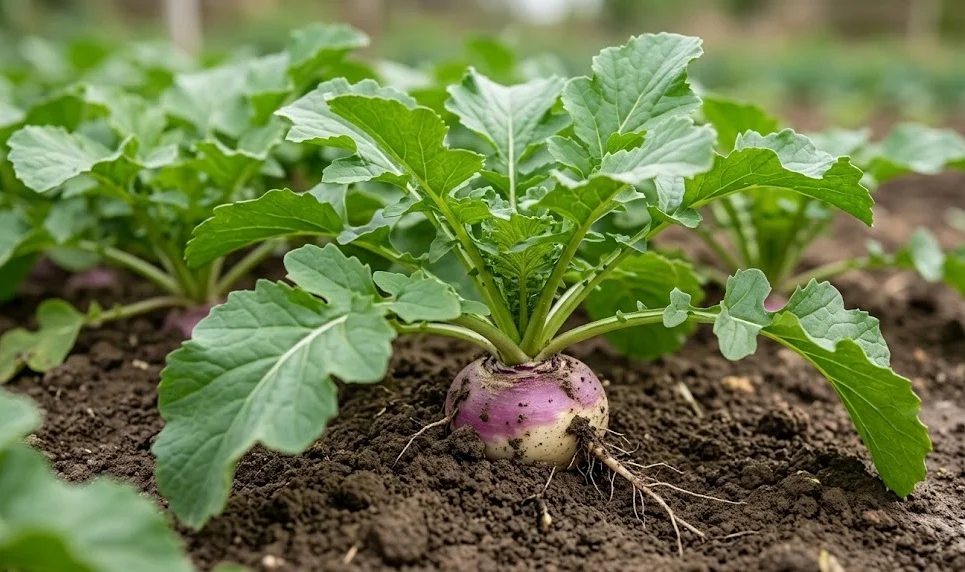
Monitoring the color of the leaves is a simple but effective way to gauge the nitrogen status of your stubble turnip crop. You should look for a deep, vibrant green that indicates healthy chlorophyll production and active photosynthesis across the field. If the leaves begin to take on a pale or yellowish tint, it is often a sign that the nitrogen reserves in the soil have been depleted. Responding quickly to these visual cues can prevent a temporary deficiency from becoming a permanent limit on the crop’s yield.
Environmental stewardship must be a central part of your nitrogen management plan to prevent leaching into groundwater or nearby streams. You should avoid applying nitrogen immediately before heavy rain events that could wash the nutrients away before the plants can absorb them. Using cover crops or maintaining a healthy soil microbial community can help sequester nitrogen and keep it within the root zone. A professional fertilization program balances the needs of the crop with the responsibility to protect the surrounding ecosystem.
Potassium and phosphorus requirements
Phosphorus is essential for the early development of a strong root system and the overall energy transfer within the turnip plant. You should ensure that there is adequate phosphorus available in the seedbed to support the rapid cell division that occurs during germination and establishment. Since phosphorus does not move easily through the soil, placement near the seed is often the most effective way to ensure the young plants can find it. A lack of phosphorus can lead to stunted growth and a general lack of vigor that the crop may never fully recover from.
Potassium plays a critical role in regulating water movement within the plant and enhancing its natural resistance to environmental stress. You should provide sufficient potassium to help the turnips maintain their turgor pressure and protect themselves against fluctuations in temperature and moisture. This nutrient is also vital for the synthesis of carbohydrates and the transport of sugars from the leaves down into the developing roots. A well-fed plant is much more resilient and produces a higher quality of forage or storage roots.
The balance between potassium and other cations in the soil is a sophisticated consideration for the expert grower who wants to maximize nutrient uptake. You should be aware of how high levels of one mineral can sometimes interfere with the plant’s ability to absorb others, leading to induced deficiencies. Regular soil and tissue testing can provide the detailed data needed to fine-tune these balances and ensure optimal plant health. This level of precision is what separates a professional operation from a more casual approach to fertilization.
Applying these minerals in the right proportions helps create a crop that is not only large but also physically robust and nutritionally dense. You will notice that plants with adequate potassium and phosphorus levels have stronger stems and more resilient leaves that can withstand the rigors of the field. This structural integrity is especially important if the crop is intended for late-season grazing in challenging weather conditions. Comprehensive mineral nutrition is a foundational requirement for any high-performing stubble turnip crop.
Micro-nutrients and trace elements
While needed in smaller quantities, micro-nutrients like boron, sulfur, and manganese are vital for the complex biochemical processes of the stubble turnip. You should be aware that brassicas are particularly sensitive to boron deficiency, which can cause hollow hearts or dark spots inside the roots. Sulfur is another key element that supports the production of specific proteins and the characteristic flavors and compounds found in turnips. Identifying and addressing these minor needs ensures that the crop is healthy from the inside out.
Trace element deficiencies often manifest as subtle changes in leaf texture or patterns of discoloration that can be easily missed without careful inspection. You should look for signs like interveinal chlorosis or distorted leaf edges that might suggest a lack of a specific micro-nutrient in the soil solution. Because these elements are needed in such tiny amounts, foliar applications are often a highly effective way to provide a quick fix if a deficiency is detected. This targeted approach allows you to correct problems without affecting the overall chemical balance of the soil.
The availability of these micro-nutrients is often heavily influenced by the soil pH and the presence of organic matter in the field. You should maintain your soil within the optimal pH range to ensure that these trace elements remain soluble and accessible to the plant’s root hairs. Improving the organic content of the soil can also act as a buffer and a reservoir for these essential minerals, providing a more stable environment for growth. Understanding these interactions is part of the deep expertise required for professional agricultural management.
A comprehensive fertilization strategy includes a plan for monitoring and replenishing these trace elements over multiple growing seasons. You should not wait for deficiency symptoms to appear before taking action to maintain the mineral health of your land. By including micro-nutrients in your regular fertilization program, you create a more resilient and productive system that can handle the demands of intensive cropping. This long-term view of soil health is essential for the sustained success of any professional farming operation.
Integrating water and nutrient cycles
The most successful stubble turnip crops are those where the watering and fertilization programs are perfectly integrated to support one another. You should recognize that water acts as the vehicle for nutrient transport, making the timing of irrigation and feeding absolutely critical. When you apply fertilizer, you must ensure there is enough moisture to dissolve the minerals and carry them into the root zone where they can be absorbed. Without proper hydration, even the most expensive fertilizer program will fail to deliver the desired results for the crop.
Conversely, excessive watering can wash away mobile nutrients like nitrogen before the plants have a chance to utilize them effectively. You should manage your irrigation to avoid deep leaching that moves nutrients beyond the reach of the turnip’s relatively shallow root system. This requires a careful understanding of your soil’s infiltration rate and its capacity to hold both water and minerals. Finding the “sweet spot” where both water and nutrients are maximized is a hallmark of an expert grower who understands the dynamics of the field.
You should also consider how the temperature affects the plant’s metabolic rate and its subsequent demand for both water and nutrients. During hot, sunny periods, the plant’s transpiration rate increases, requiring more water and a corresponding adjustment in nutrient availability. In cooler weather, the metabolic processes slow down, and you should reduce inputs to avoid waste and potential environmental impact. Adapting your management to these natural rhythms ensures that you are working with the plant’s biology rather than against it.
Ultimately, the goal of watering and fertilization is to create a predictable and high-quality harvest that meets all your agricultural objectives. You should feel a sense of pride as you see the crop respond to your careful management with a lush canopy and solid, healthy roots. This integrated approach ensures that the resources you invest are used as efficiently as possible to produce the best possible outcome. Professional management of these two critical factors is the key to mastering the cultivation of stubble turnips.