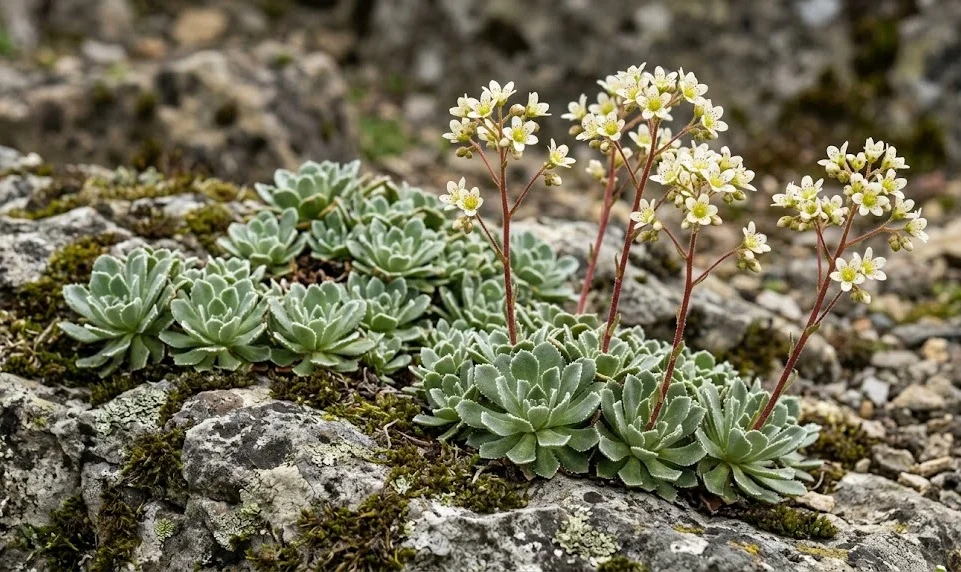

Maintaining the proper moisture balance and nutrient levels is the cornerstone of professional care for the lifelong saxifrage. These alpine specialists are adapted to harsh environments where water is often scarce or drains away almost instantly through rocky crevices. Consequently, their physiological needs are vastly different from those of standard garden plants or even other perennials. A disciplined approach to hydration and feeding will ensure that the rosettes remain compact, healthy, and capable of producing their iconic lime-encrusted foliage.
Understanding the natural water cycle in an alpine habitat is essential for any gardener looking to keep this species thriving. In the wild, these plants receive most of their moisture from melting snow in the spring and occasional high-altitude rainfall. This water moves quickly over the surface of the rocks, leaving the roots moist but never saturated for long periods. Your watering strategy should aim to replicate this “flush and drain” cycle as closely as possible within the garden.
The physical structure of the rosettes also plays a role in how the plant manages its internal water resources. The thick, leathery leaves are designed to minimize evaporation, allowing the plant to survive through periods of intense sun and dry winds. However, this doesn’t mean the plant should be left entirely dry during the hottest months of the year. Finding the sweet spot between drought stress and over-hydration is the key to preventing the rot that often plagues these alpines.
Professionals emphasize the importance of deep, infrequent watering over shallow, daily misting which does little for the roots. When you do water, ensure that the moisture reaches deep into the crevices where the main root mass is located. This encourages the roots to grow downward, making the plant more resilient and better anchored against the elements. Always check the soil moisture levels with your finger or a probe before deciding to add more water to the site.
Principles of hydration and environmental factors
The timing of your watering routine can significantly impact the health of the rosettes and their susceptibility to disease. Watering in the early morning is widely considered the best practice, as it allows the foliage to dry completely before nightfall. Wet leaves in a cool, dark environment are an open invitation for fungal pathogens and bacterial rots to take hold. If the day is expected to be exceptionally hot, a morning soak provides a vital reservoir for the plant to draw upon.
More articles on this topic
Atmospheric humidity is another factor that influences how much water the lifelong saxifrage actually requires from the soil. In humid climates, the plant loses water more slowly through its leaves, meaning you may need to water much less frequently than in arid regions. Conversely, in dry, windy areas, the rosettes can lose moisture rapidly, requiring more vigilant monitoring of the substrate. Always adjust your watering schedule based on the prevailing weather conditions rather than sticking to a rigid calendar.
The type of water used can also affect the plant’s long-term health and the appearance of its distinctive lime deposits. Hard water, which is rich in calcium and magnesium, is perfectly acceptable and even beneficial for this calciphile species. If you only have access to softened water, be cautious, as the salts used in softening processes can be detrimental to alpine plants. Rainwater is always an excellent choice, as it is naturally balanced and free of the chemicals often found in municipal tap water.
Observe the plant’s physical appearance as a primary indicator of its current hydration status and overall health. A well-hydrated saxifrage will have firm, upright leaves that show no signs of wilting or color loss. If the rosettes begin to look slightly shriveled or the leaf edges curl inward, it is usually a sign that the plant is thirsty. However, if the leaves become soft and yellow, it is more likely a sign of overwatering and poor drainage which requires immediate attention.
The critical role of drainage in moisture management
Drainage is not just a secondary consideration; it is the most important part of moisture management for lifelong saxifrage. Without a way for excess water to escape the root zone, the plant will quickly succumb to root rot, regardless of how carefully you water. The substrate should be so porous that water poured onto the surface disappears almost instantly into the grit. If you see water pooling around the base of the rosettes, your drainage is insufficient and must be corrected.
More articles on this topic
Using a top dressing of gravel or stone chippings is a professional technique that helps manage moisture at the soil surface. This layer prevents the lower leaves from resting on damp soil, which is a major cause of crown rot in many alpine species. It also helps to break the impact of heavy rain, preventing the soil from becoming compacted and losing its essential aeration. A stone mulch also helps to keep the roots cool by reflecting a portion of the sun’s heat.
When planting in containers or troughs, the choice of vessel and the number of drainage holes are vital factors to consider. Use pots made of porous materials like terracotta or stone, which allow for a small amount of evaporation through the walls. Ensure there are multiple large drainage holes at the bottom and never use a saucer that might trap standing water. A layer of coarse crocks or large pebbles at the base of the pot further ensures that the water can flow out freely.
If you are dealing with a particularly wet season, you may need to take active steps to protect the plants from excessive rainfall. Temporary covers can be used to deflect the worst of the rain while still allowing for plenty of air circulation around the rosettes. In the garden, creating a slight mound or planting on a slope naturally encourages water to run off rather than soak in. Remember that a saxifrage can survive a drought far better than it can survive a flood.
Fertilization strategies for high-altitude specialists
Fertilizing lifelong saxifrage requires a “less is more” philosophy to prevent the plant from becoming lanky and losing its compact form. In their natural mountain homes, these plants survive on very low levels of nutrients washed down from the rocks above. Providing too much nitrogen will result in soft, bloated growth that is more susceptible to pests, diseases, and winter damage. The goal of fertilization should be to support steady, healthy growth rather than rapid expansion.
A single application of a balanced, slow-release fertilizer in the early spring is usually all that is required for the entire year. Choose a product that is specifically formulated for alpines or one that has a low nitrogen (N) ratio relative to phosphorus (P) and potassium (K). Phosphorus is particularly important for root development and flower production, while potassium helps strengthen the plant’s cellular structure. Avoid high-nitrogen lawn fertilizers or general-purpose feeds that promote excessive green leaf growth at the expense of plant health.
Organic options, such as a thin layer of well-rotted leaf mold or a sprinkle of bone meal, can provide a gentle source of nutrients. These materials break down slowly over time, mimicking the natural accumulation of organic debris in rocky crevices. Be careful not to pile organic matter directly against the rosettes, as this can trap moisture and encourage rot. A light dusting around the perimeter of the colony is sufficient to provide the necessary boost for the growing season.
If the plant is growing in a very lean, purely mineral substrate, it may occasionally benefit from a very dilute liquid feed. Apply this during the peak growing season, but only when the plant is already well-hydrated to avoid burning the roots. Never fertilize a plant that is under stress from drought or extreme heat, as this can do more harm than good. A professional gardener observes the growth rate and leaf color to determine if the plant truly needs supplemental nutrition.
Maintaining the balance of nutrients and minerals
Because this species is a calciphile, the presence of calcium in the soil is more important than standard fertilizers. If your soil is naturally acidic, the plant may struggle to take up other nutrients effectively, even if they are present. Adding crushed limestone or dolomite to the substrate provides a steady source of calcium and magnesium while maintaining the desired alkaline pH. This mineral balance is essential for the formation of the iconic silver lime deposits on the leaf margins.
Over-fertilization can often be identified by a lack of the characteristic white lime crust on the leaves. If the plant is getting too many nutrients, it may grow so fast that it doesn’t bother with its natural mineral excretion processes. The rosettes might also become larger and greener, losing the attractive silvery-grey hue that makes them so unique. If you notice these changes, stop all feeding immediately and consider flushing the soil with clean water to remove excess salts.
The relationship between watering and nutrient availability is something every expert gardener should keep in mind. Water acts as the vehicle that carries dissolved minerals and nutrients to the plant’s roots for uptake. However, excessive watering can also leach away these essential elements, especially in a very gritty, fast-draining substrate. Striking the right balance ensures that the plant always has access to the minimal amount of food it needs to stay healthy.
Regularly refreshing the stone mulch or top dressing is another way to indirectly manage the mineral levels around the plant. As the stones slowly weather over time, they release tiny amounts of minerals into the soil below. Using limestone chippings specifically provides a continuous, low-level supply of the calcium that the lifelong saxifrage craves. This natural, slow-release method is often safer and more effective than using concentrated chemical fertilizers.
Seasonal adjustments for water and food
As the seasons change, so too must your approach to watering and feeding your lifelong saxifrage collection. In the spring, as new growth begins, the plant has its highest demand for both moisture and nutrients. This is the only time of year when a cautious application of fertilizer is truly appropriate and beneficial. Ensure the soil remains consistently moist but not wet during this period to support the development of flower stalks and new offsets.
During the height of summer, the primary goal shifts from supporting growth to ensuring survival through the heat. Watering should be focused on preventing the root zone from completely drying out during prolonged droughts. Feeding should be stopped entirely during the hottest weeks, as the plant’s metabolism slows down to conserve energy. If the plant enters a semi-dormant state due to heat, adding fertilizer can actually be toxic to the stressed root system.
Autumn is a period of transition where you should gradually reduce the frequency of watering to prepare the plant for winter. This reduction in moisture helps the plant harden its tissues and concentrate its internal solutes, which acts as a natural antifreeze. Never apply fertilizer in the late summer or autumn, as this would encourage soft new growth that would be killed by the first frost. The goal is to enter the winter with a compact, sturdy plant that has ceased all active growth.
In the winter, supplemental watering is almost never necessary unless the plants are being kept in a completely dry, covered environment. Even then, only a very small amount of water is needed to keep the roots from desiccating entirely. Fertilization is strictly forbidden during the dormant season, as the roots are not active enough to absorb any nutrients. Respecting these seasonal cycles is the hallmark of a professional who understands the rhythms of alpine life.