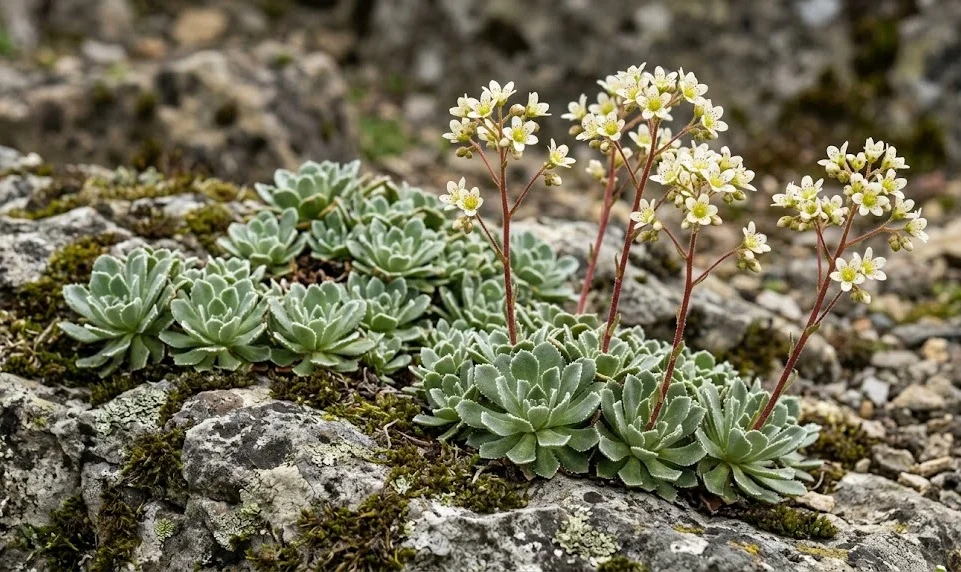

The lifelong saxifrage is a master of cold endurance, having evolved on the high, wind-swept ridges of Europe’s most formidable mountain ranges. In its natural habitat, it survives extreme sub-zero temperatures and months of heavy snow cover without any human intervention. However, the conditions in a typical lowland garden are often very different from the stable, dry cold of the mountains. Successful overwintering in a domestic setting requires a nuanced understanding of how to manage moisture and temperature fluctuations during the dormant season.
One of the most important concepts to grasp is that cold alone is rarely what kills a healthy saxifrage during the winter months. These plants are perfectly comfortable in temperatures that would easily destroy most other garden perennials. The real danger comes from the combination of cold temperatures and excessive soil moisture, which can lead to crown and root rot. In many regions, winter is the wettest time of year, making it a challenging period for any plant that requires impeccable drainage.
As the days grow shorter and the temperatures begin to drop in the autumn, the plant undergoes a series of internal changes to prepare for dormancy. It concentrates sugars and other solutes within its cells, which act as a natural antifreeze to prevent ice crystals from damaging the plant tissues. This “hardening off” process is essential for the plant’s survival and is triggered by the natural environmental cues of the changing seasons. Interfering with this process by providing too much water or fertilizer late in the year can be a fatal mistake.
Professional overwintering strategies are largely focused on moisture control and protecting the plant from the physical stress of repeated freezing and thawing. While the plant can handle being frozen solid, the expansion and contraction of the soil during temperature swings can sometimes lift the rosettes out of the ground. This phenomenon, known as frost heave, exposes the delicate roots to the drying winter winds and can be highly damaging. Monitoring your plants throughout the winter allows you to catch and correct these issues before they cause permanent harm.
Managing the impact of winter moisture and rain
In regions with high winter rainfall, providing some form of overhead protection can be the difference between success and failure. A simple pane of glass or a piece of clear plastic propped up over the plant can deflect the worst of the rain while still allowing for full light and air circulation. It is important that this cover does not touch the plant and remains open on the sides to prevent the buildup of stagnant, humid air. This technique mimics the way snow provides a dry, insulating layer over the plants in the high mountains.
More articles on this topic
The choice of stone mulch or top dressing also plays a vital role in protecting the plant from winter moisture. A layer of coarse grit or stone chippings around the base of the rosettes ensures that water drains away quickly from the most sensitive parts of the plant. It also prevents the lower leaves from being in constant contact with the damp, cold soil surface. This small detail is one of the most effective ways to prevent the onset of crown rot during a long, wet winter season.
If you are growing your lifelong saxifrage in containers, you have the advantage of being able to move them to a more protected location. Placing pots under the eaves of a house or in an unheated greenhouse or cold frame provides excellent protection from excessive rain. However, be careful not to keep the pots entirely dry for the entire winter, as the roots still need a tiny amount of moisture to stay alive. Check the pots once a month and provide a very light watering only if the substrate feels completely bone-dry.
Proper drainage within the planting site itself is your most important long-term insurance against winter losses. If the soil is heavy or poorly drained, even the best overhead protection may not be enough to save the plant from waterlogged roots. Ensuring that your rockery or alpine bed is built on a foundation of rubble or coarse gravel is a professional requirement for success. A well-drained site allows the plant to experience the winter as it would in the mountains: cold, but relatively dry around the roots.
Protecting against frost heave and wind desiccation
Frost heave occurs when the moisture in the soil freezes and expands, physically pushing the plant and its roots upward and out of the substrate. This is a common problem in heavy or silty soils that retain a lot of water near the surface. If you notice that your rosettes are sitting higher than they should be after a hard freeze, gently press them back into the soil as soon as it thaws. Adding a bit more grit or stone mulch around the base can help stabilize the plant and prevent it from happening again.
More articles on this topic
Winter winds can be just as damaging as the cold, as they can quickly strip moisture from the plant’s leaves while the roots are still frozen and unable to replace it. This process of desiccation is a leading cause of “winter burn” where the foliage turns brown and dry despite the low temperatures. Planting your saxifrage in the lee of a large rock or within a crevice provides a natural windbreak that can significantly reduce this stress. A well-placed stone can act as a shield against the prevailing winter gusts, creating a much safer microclimate.
While many gardeners are tempted to cover their alpines with heavy mulches like straw or wood chips, this is generally a bad idea for saxifrages. These organic materials trap too much moisture against the foliage and can lead to immediate rot as soon as the weather turns damp. If you must use a mulch for insulation, choose inorganic materials like large pieces of slate or extra layers of stone chippings. These provide some protection from the elements without the risk of creating a soggy, airless environment around the rosettes.
Maintaining a consistent snow cover is actually the best form of winter protection for most alpine species, including the lifelong saxifrage. Snow acts as an incredibly efficient insulator, keeping the ground temperature near freezing even when the air above is much colder. It also provides a steady, slow supply of moisture as it melts, and its physical weight helps protect the plants from the wind. If you live in a snowy climate, resist the urge to shovel the snow off your rockery; the plants are much happier underneath it.
Observing the dormant state and metabolic changes
During the winter, the lifelong saxifrage enters a state of true dormancy where its metabolic rate drops to almost zero. The leaves may take on a slightly duller or darker appearance, and the rosettes may contract slightly as the plant loses some of its internal water content. This is a perfectly normal response to the cold and should not be mistaken for a sign of ill health or dehydration. The plant is simply conserving its resources and protecting its vital tissues until the return of more favorable growing conditions.
One of the most fascinating aspects of winter biology in these plants is their ability to handle the buildup of lime on their leaf margins even while dormant. These deposits are the result of the plant’s activity during the previous growing season and serve as a physical barrier against moisture loss. In the winter sun, these silver edges reflect light and may help prevent the leaves from heating up too much during brief thaws. Appreciating these subtle changes is part of the joy of growing specialized alpine species throughout the year.
The roots of the plant also remain somewhat active even when the foliage is dormant, provided the ground is not frozen solid. They continue to perform basic maintenance and prepare for the rapid uptake of nutrients that will be required in the spring. This is why a small amount of soil moisture is still necessary, even if the plant is not actively growing. A professional gardener understands that dormancy is a period of quiet preparation rather than a complete shutdown of all biological systems.
As mid-winter approaches, the plant is already beginning to monitor the length of the days and the subtle changes in temperature. It is waiting for the precise environmental cues that will signal it is safe to wake up and begin the next cycle of growth. This internal clock is remarkably accurate and prevents the plant from being fooled by a brief warm spell in the middle of January. Respecting this natural timing is essential, so avoid any attempts to “force” the plant into early growth with artificial heat or light.
Spring transition and awakening from dormancy
As the snow melts and the temperatures begin to stabilize in early spring, the lifelong saxifrage will start its transition back into active growth. This is the most vulnerable time for the plant, as it begins to soften its tissues and pump more water into its cells. A sudden, late hard frost can be more damaging now than it would have been in the middle of winter. Keep a watchful eye on the weather forecast and be prepared to provide some temporary protection if a severe cold snap is predicted after the plant has started to wake up.
The first sign of life is often a brightening of the foliage and a gradual expansion of the central rosettes. This is the perfect time to clear away any dead leaves or winter debris that may have accumulated around the cushion. Gently removing these materials improves air circulation and allows more sunlight to reach the base of the plant where new offsets are forming. It also gives you a chance to inspect the colony for any signs of winter damage or pests that may have overwintered in the crevices.
Once the danger of hard frost has passed, you can begin to gradually increase the frequency of your watering to support the new growth. The plant will also benefit from a very light, balanced fertilization at this stage to provide the energy needed for the upcoming flowering season. Avoid the temptation to do too much too soon; let the plant dictate the pace of its own recovery. A professional approach is to support the natural rhythms of the plant rather than trying to accelerate them.
Overwintering success is a great indicator of how well you have matched the plant to its environment and your own maintenance routine. If your saxifrages emerge from the winter looking healthy and vibrant, it is a sign that your site selection and soil preparation were correct. If you have experienced losses, use the spring as a time for reflection and adjustment to your overwintering strategies for the following year. Every winter is a learning experience that makes you a more skilled and observant gardener.