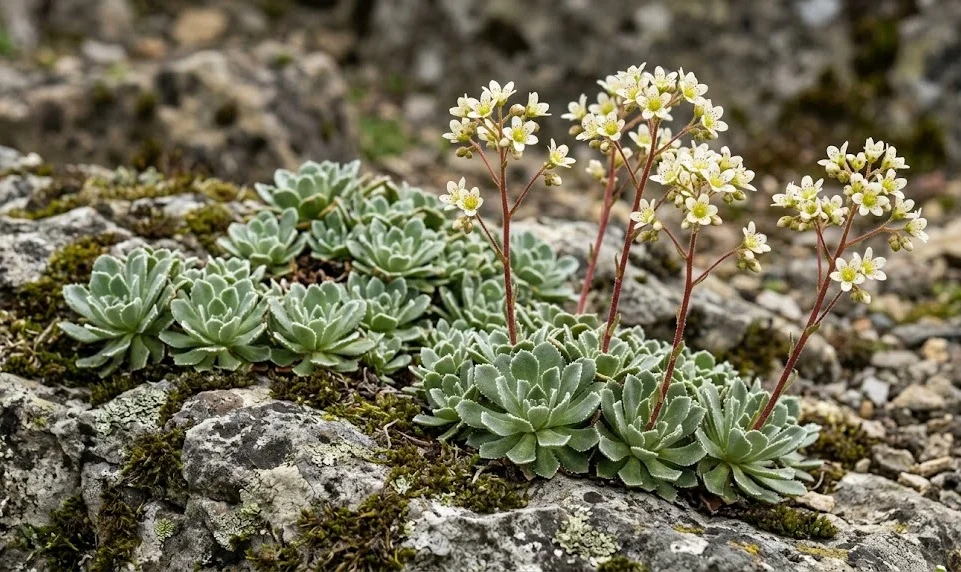

Pruning the lifelong saxifrage is a task that requires a delicate touch and a professional eye for detail. Unlike many garden perennials that require heavy cutting back to stay in shape, this alpine species is naturally slow-growing and maintains its compact form with very little intervention. The primary goal of pruning in this context is to maintain the health and aesthetic appeal of the rosettes by removing spent tissues and encouraging new growth. A well-pruned saxifrage cushion will remain vibrant and attractive for many years, acting as a true long-term centerpiece of the rock garden.
The most common pruning task for this species is the removal of the flowering stems once the blooming period has finished in mid-summer. While the tall, branched stalks are beautiful when in flower, they quickly become untidy and can drain the plant’s energy if left to produce seeds. Removing these stems at their base encourages the plant to redirect its resources back into the development of new rosettes and the strengthening of the root system. This simple act of deadheading is the single most effective way to keep your plants looking their best throughout the second half of the growing season.
In addition to removing flower stalks, occasional maintenance of the foliage mat is necessary to prevent the buildup of dead or decaying material. Over time, the older rosettes in the center of the cushion may naturally die off, leaving small brown patches that can spoil the overall appearance. Gently removing these dead rosettes allows for better air circulation and creates space for younger, more vigorous offsets to fill the gaps. This process of selective thinning helps keep the colony healthy and prevents the onset of fungal diseases that thrive in stagnant, overcrowded cushions.
Professional gardeners approach pruning with a philosophy of “minimal intervention, maximum impact.” Every cut should have a specific purpose, whether it is for health, propagation, or aesthetic improvement. Because the plant grows so slowly, any mistakes made during pruning can take a long time to grow out, so it is always better to be cautious. Using the correct tools and techniques will ensure that your plants recover quickly and continue to thrive in their rocky environment.
Techniques for effective deadheading and stem removal
The best time to remove the flowering stems is just as the individual blossoms begin to fade and lose their color. Using a pair of fine-pointed snips or sharp garden scissors allows you to reach deep into the rosettes without damaging the surrounding leaves. Cut the stem as close to the base as possible, taking care not to nick the living tissue of the mother rosette. This clean cut heals quickly and minimizes the risk of infection by pathogens that might enter through a jagged wound.
More articles on this topic
If you are interested in collecting seeds, you can leave a few of the strongest flower stalks on the plant until they have completely dried. Once the seed pods have turned brown and started to open, you can carefully cut the stalks and shake the tiny seeds into a paper bag. However, keep in mind that this will delay the plant’s recovery and should only be done if you have a specific plan for propagation. For a display plant, removing the majority of the stems is always the preferred professional practice.
After removing the flower stalks, it is a good idea to give the plant a gentle cleaning to remove any fallen petals or debris that may have settled among the rosettes. This material can trap moisture and encourage the growth of gray mold or other fungal issues if left in place. A soft brush or a gentle stream of air can be used to clear the crevices without disturbing the delicate mineral crust on the leaves. This attention to detail is what keeps a professional alpine collection looking pristine and healthy throughout the year.
Regularly deadheading your lifelong saxifrage not only improves its appearance but also has a subtle effect on its long-term longevity. By preventing the plant from putting all its energy into seed production, you are supporting its ability to build strong, resilient rosettes that can better survive the winter. This redirected energy is also vital for the production of the silver-rimmed foliage that is the primary draw of the species. Think of pruning as a way to partner with the plant’s natural growth cycles for the best possible results.
Cleaning and rejuvenating the rosette cushions
As the cushion of lifelong saxifrage matures, it is natural for some of the older, central rosettes to complete their life cycle and die. If these dead parts are not removed, they can become a focal point for rot and may eventually cause the entire mat to decline. Carefully use a pair of tweezers or small snips to extract the brown, dried rosettes from the clump, being careful not to pull up the healthy neighboring plants. This creates “breathing room” within the cushion and encourages the remaining offsets to expand into the empty space.
More articles on this topic
If a colony has become very large and started to look thin or woody in the middle, it may be time for a more significant rejuvenation. This involves lifting the entire mat and dividing it into smaller, healthier sections that can be replanted. While this is more extreme than simple pruning, it is sometimes the only way to save a very old specimen that has lost its vigor. Always perform this type of task in the early spring so the new divisions have the full growing season to establish themselves.
Managing the spread of the mat is another aspect of pruning that may be necessary if the plant is growing near smaller or more delicate neighbors. You can easily remove individual offsets from the perimeter of the colony to keep it within its assigned space in the rockery. These removed pieces don’t have to go to waste; they can be potted up and grown on as new plants for other parts of the garden or to share with friends. Controlling the expansion of the colony ensures that every plant in your rock garden has the space it needs to thrive.
The visual texture of the cushion can also be enhanced by occasional “grooming” to remove any leaves that have become discolored or damaged by weather. While the plant is very tough, a particularly harsh winter or a very hot summer can leave some of the foliage looking less than perfect. Removing these individual leaves by hand or with fine snips helps restore the uniform, silver-grey appearance of the colony. This level of care shows a true commitment to the art of alpine gardening and the specific needs of this unique species.
Tool sterilization and professional timing
One of the most important but often overlooked aspects of pruning is the sterilization of your tools between different plants. Fungal and bacterial diseases can easily be spread from one specimen to another on the blades of your scissors or snips. Wiping your tools with a solution of isopropyl alcohol or a mild bleach solution is a simple step that can prevent a major disease outbreak in your collection. A professional gardener treats every plant as an individual and takes every precaution to keep them safe.
The timing of your pruning tasks should always be aligned with the plant’s natural rhythms and the prevailing weather conditions. Avoid any pruning during periods of extreme heat or drought, as this will only add to the plant’s stress and slow down its recovery. Similarly, don’t do any heavy cleaning or thinning in the late autumn, as the plant needs all its intact foliage to protect itself during the winter. The best windows for maintenance are always in the early spring and immediately following the mid-summer flowering period.
Pruning in high-humidity conditions should also be avoided whenever possible to reduce the risk of fungal spores entering the fresh cuts. Choose a dry, breezy day for your garden maintenance so that the cut surfaces can dry and “callus over” as quickly as possible. If you must prune during a damp spell, consider applying a light dusting of sulfur or another organic fungicide to the cut areas as an extra layer of protection. This proactive approach to plant health is a hallmark of professional horticultural practice.
Finally, remember that the goal of pruning lifelong saxifrage is to support the plant’s natural beauty, not to force it into an artificial shape. The irregular, mat-like growth is part of its charm and should be respected during all your maintenance tasks. By following these simple but effective guidelines, you can ensure that your saxifrage remains a healthy, productive, and stunning part of your garden for decades. Patience, observation, and a gentle hand are the keys to success with this iconic alpine survivor.