
Developing a precise hydration and nutrition strategy is fundamental to the professional management of the Borbás mountain ash. You must balance the specific moisture requirements of this mountain-dwelling species with the need for a targeted fertilization program. Understanding the relationship between soil chemistry and water movement allows you to optimize the growth and health of the specimen. This article details the technical aspects of delivering the right resources to your tree throughout its various developmental stages.
Water is the primary medium through which nutrients are transported from the soil into the vascular system of the tree. You should recognize that the efficiency of your fertilization efforts is directly tied to the consistency and quality of your irrigation. During periods of drought, the tree’s ability to take up minerals is severely limited, even if the soil is rich in nutrients. A professional approach integrates these two pillars of care into a single, cohesive management plan that adapts to the environment.
Nutrient availability is not only about the quantity of fertilizer applied but also the biological and chemical state of the soil. You should aim to create a soil environment that supports a healthy fungal network, which assists the tree in gathering water and phosphorus. Over-fertilization can disrupt this natural balance and lead to a dependency on synthetic inputs that may weaken the tree over time. Professional care focuses on enhancing the soil’s natural capacity to provide for the tree while supplementing where necessary.
Consistency is the hallmark of a successful watering and fertilization routine for the Borbás mountain ash. You should avoid the “boom and bust” cycle of allowing the tree to wilt and then flooding it with excessive water and high-strength chemicals. Such fluctuations cause physiological stress that can manifest as leaf scorch, stunted growth, or increased susceptibility to pests. A steady, measured delivery of resources mimics the stable conditions the tree prefers in its natural highland habitats.
Principles of professional irrigation
The goal of professional irrigation is to saturate the entire root zone while maintaining a healthy level of oxygen in the soil pores. You should employ a deep-watering technique that encourages the roots to grow downward rather than staying near the surface. This is typically achieved by applying a large volume of water slowly over several hours using a soaker hose or drip system. Deep roots provide better stability and access to moisture during the hottest parts of the summer when surface soil dries out.
More articles on this topic
Determining the exact frequency of watering requires a combination of sensory observation and the use of modern moisture meters. You should check the soil at a depth of about four to six inches before deciding to irrigate to avoid the dangers of over-saturation. If the soil at that depth feels cool and damp, the tree likely has enough moisture to sustain its current physiological processes. The frequency will naturally vary based on the season, soil type, and the age of the Borbás mountain ash.
Water quality is an often-overlooked factor that can influence the long-term health of the soil and the tree’s roots. You should be aware that highly alkaline or chlorinated tap water can gradually alter the soil pH and affect nutrient solubility. If possible, collecting and using rainwater is the gold standard for irrigating sensitive mountain species like this one. Rainwater is naturally soft and slightly acidic, which aligns perfectly with the evolutionary preferences of the Borbás mountain ash.
Adjusting your irrigation strategy during the transition into winter is necessary to prepare the tree for dormancy. You should gradually reduce the frequency of watering as the temperatures drop and the leaves begin to change color. However, it is essential to ensure the tree goes into the winter with adequate hydration, especially if the autumn has been particularly dry. A well-hydrated tree is much better equipped to survive the drying winds and freezing temperatures of the winter months.
Nutrient requirements and soil chemistry
The Borbás mountain ash has specific macro and micro-nutrient needs that must be met for it to produce its characteristic berries and foliage. You should focus on a balanced intake of nitrogen, phosphorus, and potassium, commonly referred to as the NPK ratio. Nitrogen supports the growth of healthy green leaves, while phosphorus is critical for root development and the formation of flower buds. Potassium plays a vital role in the tree’s overall water regulation and its ability to resist diseases and environmental stress.
More articles on this topic
Micronutrients such as iron, magnesium, and manganese are required in smaller quantities but are no less important for professional tree care. You should monitor the foliage for signs of chlorosis, where the leaves turn yellow while the veins remain green, indicating a possible iron deficiency. These issues are often related to soil pH rather than a total lack of the mineral in the ground. If the pH is too high, the tree cannot chemically access the iron, requiring you to adjust the soil acidity or use chelated supplements.
Soil testing is the only way to move from guesswork to precision in your fertilization program for the Borbás mountain ash. You should conduct a comprehensive soil analysis every two to three years to track changes in nutrient levels and pH. This data allows you to select a fertilizer that fills the actual gaps in your soil rather than applying unnecessary chemicals. Professional gardeners view soil tests as an investment that prevents the costly mistakes associated with over-fertilization.
Organic matter serves as a slow-release reservoir of nutrients that improves the biological health of the root zone. You should regularly incorporate high-quality compost or leaf mold into the top layer of the soil around the drip line of the tree. This practice not only provides essential minerals but also improves the soil’s structure and its ability to hold onto moisture. A soil rich in organic material acts as a buffer against fluctuations in nutrient availability and environmental conditions.
Timing and application of fertilizers
The timing of fertilizer application should be synchronized with the tree’s natural growth cycles to maximize efficiency and minimize waste. You should apply the primary dose of nutrients in the early spring, just as the buds begin to swell and the roots become active. This provides the energy necessary for the rapid expansion of new leaves and the development of the seasonal flower clusters. Avoid late-summer fertilization, as it can stimulate soft new growth that will not have time to harden before the first frost.
How you apply the fertilizer is just as important as when you apply it to ensure even distribution and avoid root burn. You should spread the granules or liquid solution over the entire area under the tree’s canopy, extending slightly beyond the drip line. This is where the majority of the active feeder roots are located, ready to absorb the dissolved minerals. Always water the area thoroughly after applying granular fertilizer to help the nutrients move into the soil profile and reach the roots.
Foliar feeding can be a useful professional technique for delivering quick-acting micronutrients during periods of peak demand or stress. You should spray a diluted nutrient solution directly onto the leaves during the early morning or late evening to avoid leaf scorch from the sun. This method bypasses the soil chemistry and provides immediate relief for trees showing signs of specific mineral deficiencies. However, foliar feeding should be considered a supplement to, not a replacement for, a robust soil-based nutrition program.
Younger trees and those recently transplanted require a different approach to fertilization compared to established specimens. You should avoid using high-nitrogen fertilizers on new plantings, as this can encourage excessive top growth at the expense of root development. Focus instead on phosphorus-rich “starter” fertilizers that promote a strong and expansive root system in the first year. As the tree matures and stabilizes, you can transition to a more balanced maintenance formula tailored to its growth rate.
Managing the impact of water and nutrients on fruit
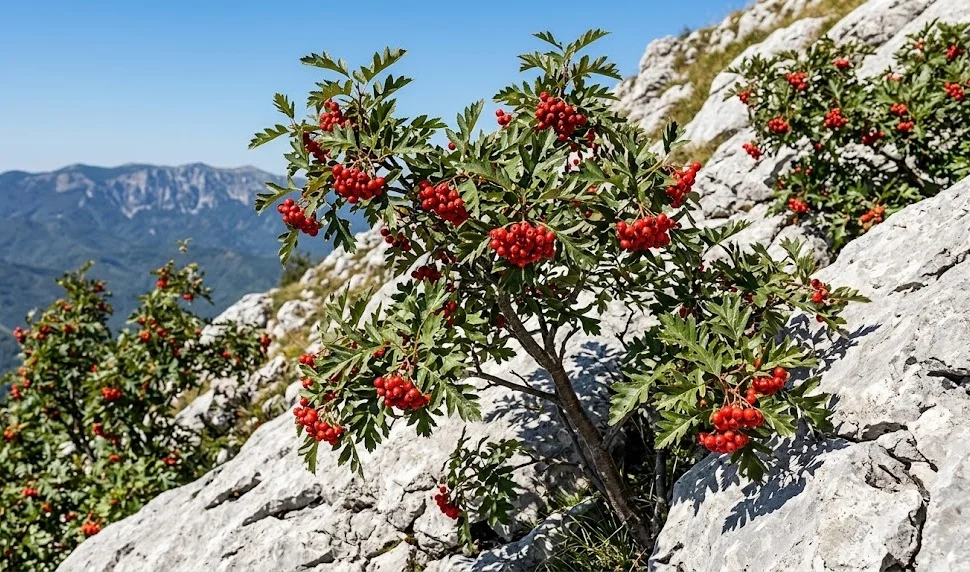
The production of the vibrant orange or red berries is a key feature of the Borbás mountain ash that you can influence through your care. You should ensure that the tree receives consistent moisture during the flowering and early fruit-set stages to prevent premature berry drop. A lack of water during this critical period can cause the tree to shed its developing crop to conserve energy for survival. Professional irrigation during the late spring and early summer is the secret to a heavy and lasting display of fruit.
Potassium levels are particularly important for the development of high-quality berries with intense coloration and a good shelf life for wildlife. You should ensure that your fertilization program provides adequate potassium during the mid-summer as the fruit begins to swell. This mineral aids in the synthesis of sugars and pigments that give the berries their ornamental and ecological value. A well-nourished tree will produce berries that remain attractive and nutritious long into the autumn and winter seasons.
Excessive nitrogen can lead to a trade-off between vegetative growth and fruit production that you may want to avoid. You should be cautious not to over-apply nitrogen-heavy fertilizers if your primary goal is a spectacular berry display. Too much nitrogen often results in lush, dark green foliage but very few flowers or berries, as the tree prioritizes leaf expansion over reproduction. Finding the right balance is a hallmark of an expert gardener who understands the physiological goals for the specimen.
Monitoring the health of the berries can also provide feedback on the effectiveness of your overall watering and fertilization plan. If the berries appear shriveled or fail to reach their full size, it may be a sign of chronic water stress or a lack of essential minerals. Conversely, if the tree is producing an abundance of high-quality fruit, it indicates that your current management strategy is well-aligned with the tree’s needs. The fruit serves as a visual report card for the success of your professional interventions.
Identifying and correcting resource-related stress
Learning to read the physical signs of water and nutrient stress allows you to intervene before the tree’s health is seriously compromised. You should look for wilting or drooping leaves during the day as the first indicator that the irrigation schedule is insufficient. If the leaves remain wilted even after the sun goes down, the moisture deficit in the soil is becoming critical. Immediate but careful rehydration is necessary to stop the progression of tissue damage and prevent branch dieback.
Over-watering manifests in different ways, often through yellowing of the lower leaves and a general lack of vigor in the new growth. You should check the soil for a foul odor or a slimy texture, which indicates anaerobic conditions where the roots are essentially suffocating. If you suspect over-watering, you must stop irrigation immediately and allow the soil to dry out thoroughly before resuming a lighter schedule. Improving the drainage of the site may be a necessary long-term fix if the problem persists during rainy periods.
Nutrient toxicities can be just as damaging as deficiencies and are often the result of an overzealous application of concentrated fertilizers. You should be alert for “salt burn,” which appears as brown, crispy edges on the leaves, especially after a heavy application of granular products. If you see these symptoms, you may need to flush the soil with large amounts of clean water to leach the excess salts away from the root zone. Professional care is characterized by a “less is more” philosophy when it comes to potent chemical inputs.
Adjusting your plan based on the age and size of the tree ensures that you are not wasting resources or causing unintended harm. You should recognize that an older Borbás mountain ash has a much larger and more efficient root system than a young sapling. As the tree reaches its mature size, its demand for supplemental fertilization often decreases as it becomes more integrated into the soil’s natural nutrient cycle. Your goal as a professional is to guide the tree toward self-sufficiency while providing a safety net of support.