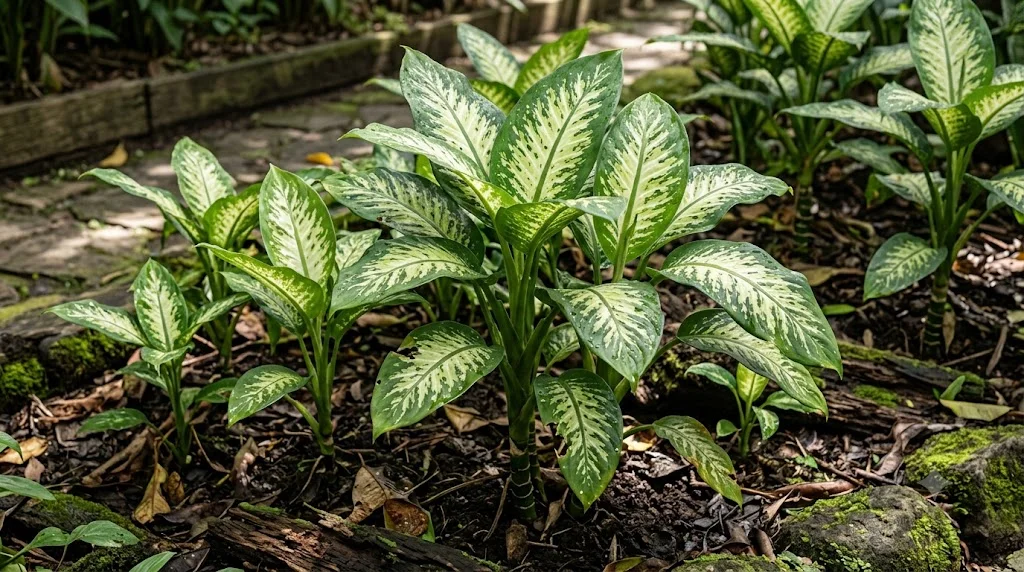

Water and nutrients have a direct effect on the colour, strength, and size of dumb cane leaves. The plant prefers evenly moist compost during active growth, but its roots decline rapidly in stagnant, airless conditions. Feeding must also be moderate because excessive mineral salts can injure root tips and leaf margins. The most reliable routine responds to the plant, the pot, and the season rather than following a fixed calendar.
Recognising when the plant needs water
The surface of the compost is not always a reliable indicator of moisture deeper in the pot. Test the upper two to four centimetres with a finger or wooden stick before watering. When this layer feels slightly dry, the root zone usually has enough air to accept fresh moisture safely. If it remains clearly damp, wait and test again later.
The weight of the container provides another useful guide. A recently watered pot feels noticeably heavier than one approaching dryness. Lifting the pot regularly helps develop an accurate sense of its moisture level. This technique is particularly valuable when the surface is covered with decorative bark or moss.
Leaf posture may offer clues, but it should not be the only watering signal. Mild thirst can cause temporary drooping, yet root rot can produce a similar appearance. Always check the compost before reacting to wilted foliage. Adding water to an already saturated root ball can accelerate serious damage.
Water demand changes as the plant grows. A large specimen with broad leaves usually dries more quickly than a small recently rooted cutting. Warm temperatures, strong filtered light, airflow, and porous pots also increase moisture loss. Cool rooms, low light, and dense compost slow drying considerably.
More articles on this topic
Applying water correctly
Water should be distributed slowly across the entire compost surface. Continue until a small amount begins to flow from the drainage holes. This method moistens the root ball evenly and helps prevent concentrated salt deposits. Allow the pot to drain before returning it to a decorative cover.
Repeatedly giving small sips can leave the lower root zone dry. It may also encourage roots to remain near the surface, where moisture fluctuates rapidly. Thorough watering followed by partial drying promotes a more stable root system. The interval between waterings matters as much as the amount applied.
Water at room temperature to avoid shocking warm tropical roots. Very cold water can temporarily reduce root activity, particularly during winter. Pour gently so the compost does not erode from around the stem. Avoid leaving water trapped in tightly furled young leaves.
Morning watering is generally preferable because the plant remains active during the following daylight hours. Any accidental splashes on foliage have time to dry before night. However, a genuinely thirsty plant should not be left dry merely to wait for morning. Soil condition always takes priority over a rigid time of day.
More articles on this topic
Preventing overwatering and drought stress
Overwatered dumb cane often develops yellow lower leaves before more dramatic symptoms appear. The compost may remain wet for many days and produce a sour or musty smell. Stems can soften near the soil line as decay progresses. Immediate correction is necessary because damaged roots cannot recover in saturated compost.
If overwatering is mild, allow the medium to dry and improve warmth, light, and airflow. Severe cases require the plant to be removed from the pot and the roots examined. Cut away rotten tissue and repot into fresh, airy compost. Water sparingly until new growth confirms that healthy roots are functioning.
Drought stress tends to produce limp leaves, inward curling, dry edges, and rapid drying of the pot. A severely dry root ball may shrink away from the container walls and repel water. Rehydrate it slowly by applying water in stages rather than flooding it once. Ensure that the entire root mass becomes evenly moist.
Repeated cycles of wilting and soaking place unnecessary stress on the plant. They can cause older leaves to yellow and reduce the size of new growth. Consistency is more important than keeping the compost permanently wet. Aim for a slightly moist but well-aerated root environment.
Choosing and using fertiliser
A balanced liquid fertiliser formulated for foliage houseplants is suitable during active growth. Products with similar proportions of nitrogen, phosphorus, and potassium provide broad nutritional support. A slightly nitrogen-focused formula can promote leaves, but excessive nitrogen may produce soft, weak tissue. Trace elements such as magnesium and iron are also important for rich colour.
Dilute the fertiliser more than the maximum rate suggested on the label. Half-strength feeding every three to four weeks is usually safer than infrequent strong applications. Always apply fertiliser to moist compost. Feeding dry roots greatly increases the risk of chemical burn.
Slow-release fertiliser can be used, but it is less flexible than liquid feeding. Nutrient release continues whenever the compost is warm and moist, even if the plant is growing slowly. This may lead to accumulation in winter or in low-light conditions. Use conservative quantities and avoid combining slow-release granules with frequent liquid feeds.
Organic fertilisers can support growth, although their nutrient composition is often less precise. Some may produce odours, encourage fungus gnats, or break down unpredictably indoors. Apply them lightly and monitor the compost carefully. The plant’s response is a better guide than marketing claims.
Adjusting the routine through the year
In spring, increasing light and warmth stimulate stronger root activity. Begin watering slightly more frequently as the compost dries faster. Feeding can restart once new leaves are visibly developing. Increase nutrient input gradually rather than applying a strong dose after winter.
Summer usually brings the highest water demand. Check the pot frequently during warm periods, particularly near bright windows. Do not assume that heat always requires daily watering, because pot size and compost structure still determine drying speed. Continue regular diluted feeding while growth remains vigorous.
Autumn requires a gradual reduction rather than an abrupt stop. Shorter days slow photosynthesis and decrease the plant’s need for water and nutrients. Allow the upper compost layer to dry a little more between waterings. Reduce feeding frequency as new growth becomes slower.
Winter watering should be cautious, especially in cool or dim rooms. The compost may stay wet far longer than expected, creating ideal conditions for root rot. Fertiliser is usually unnecessary unless the plant is growing actively under strong supplemental light. Resume normal feeding only when daylight and new growth clearly increase.