Pruning and cutting back dumb cane

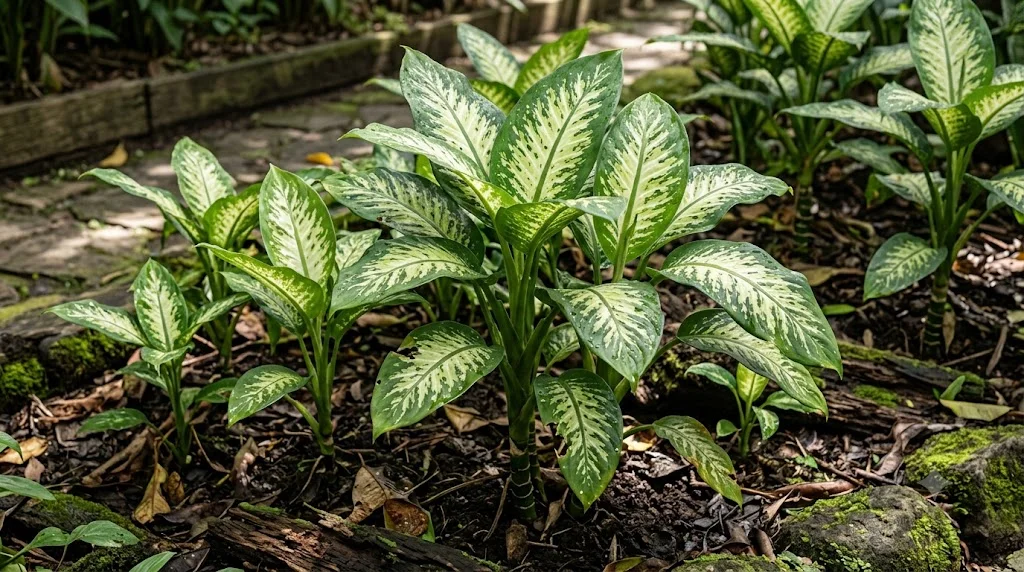
Pruning helps control the height, shape, and density of dumb cane while removing damaged or unhealthy tissue. Mature plants naturally lose lower leaves and may eventually develop long bare stems. Cutting these stems encourages dormant buds to produce fresh shoots and also supplies material for propagation. Because the sap is irritating, every pruning task should be performed with gloves and clean, sharp tools.
Deciding when and why to prune
Spring and early summer are generally the best times for major pruning. Warmth and increasing light allow the plant to replace lost foliage more quickly. Minor removal of dead or badly damaged leaves can be done at any time. Avoid severe cutting during cold, dark winter conditions unless rot must be removed urgently.
Pruning may be needed when a plant becomes too tall for its position. It is also useful when the stem is bare, leaning, damaged, or unable to support heavy foliage. Selective cuts can encourage multiple new shoots and a fuller appearance. The desired final shape should be considered before the first cut is made.
Do not remove healthy leaves unnecessarily. Every leaf contributes energy through photosynthesis and supports root recovery. If only one leaf is damaged, cut that leaf rather than shortening the entire stem. Major structural pruning is most successful on otherwise healthy plants.
Prepare the work area before cutting. Protect surfaces from sap, wear gloves, and keep children and pets away. Disinfect pruning shears or a sharp knife with alcohol. Clean tools reduce the chance of transferring bacteria or fungi into fresh wounds.
More articles on this topic
Making safe and effective cuts
To remove a damaged leaf, follow the leaf stalk to its base and cut it cleanly without injuring the main stem. Do not tear or twist the stalk because ragged wounds heal slowly. If only the tip is brown, it can be trimmed to follow the natural leaf shape. Leave a very narrow brown margin to avoid cutting repeatedly into healthy tissue.
To reduce height, cut the main cane at the desired level above a visible node. A stump of approximately ten to twenty centimetres can often produce several new shoots. The exact height depends on the plant’s condition and the intended shape. Make a clean, slightly angled cut so moisture does not collect on the surface.
A very tall plant can be shortened in stages. Removing too much foliage at once reduces photosynthesis and may slow recovery. First cut the most overgrown stem, then wait for new shoots before pruning additional stems. This approach is especially useful for multi-stemmed specimens.
After pruning, keep the compost only moderately moist. A plant with less foliage uses less water, so the previous watering schedule may become excessive. Maintain warmth and bright indirect light to stimulate dormant buds. Avoid strong fertiliser until active new growth appears.
More articles on this topic
Using pruned material and shaping regrowth
Healthy top sections can be rooted as stem-tip cuttings. Remove the lowest leaves and place the cutting in water or an airy rooting medium. Warm temperatures and high humidity support root formation. Discard any section that is soft, discoloured, or affected by disease.
Bare sections of cane can be divided into shorter pieces. Each section must contain at least one viable node. Plant them upright in the original growth direction or lay them horizontally on moist propagation compost. New roots and shoots may take several weeks to emerge.
As new shoots develop from the pruned base, monitor their spacing and strength. Several shoots can be retained for a bushy appearance, while weak or crowded growth may be thinned later. Support tall stems if necessary until they become firm. Rotate the pot periodically so regrowth receives even light.
Long-term shape depends on light as well as pruning. A plant kept in dim conditions will stretch again even after being cut back. Bright indirect light promotes shorter internodes and stronger stems. Combining correct positioning with selective pruning produces a compact, balanced specimen.