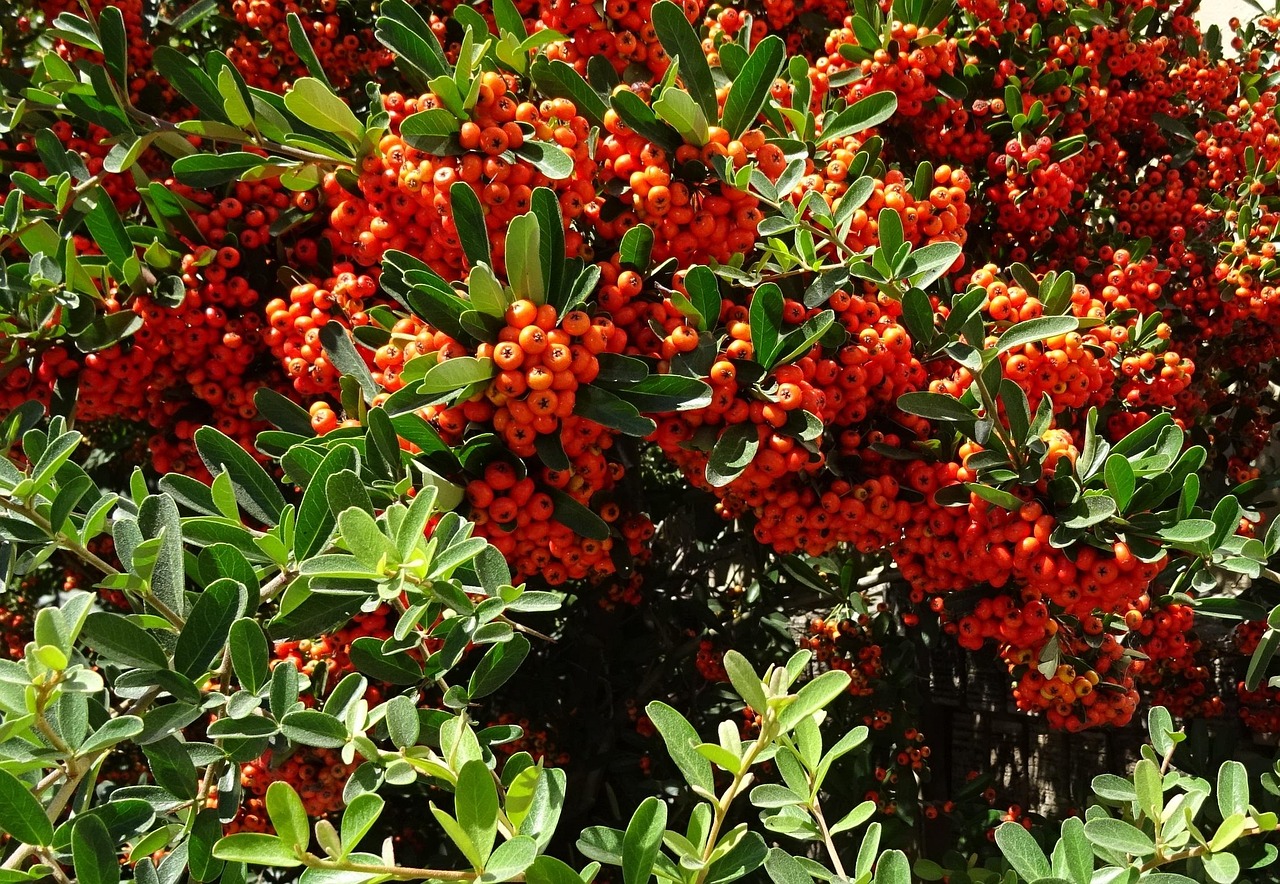

Despite its reputation as a tough and resilient shrub, Pyracantha is not immune to a range of diseases and pests that can affect its health and ornamental appeal. Being able to identify the common culprits is the first step toward effective management and prevention. From the disfiguring effects of fungal diseases like scab and fire blight to the damaging impact of sap-sucking insects such as aphids, these issues can detract from the plant’s vibrant display of flowers and berries. A proactive approach, incorporating good cultural practices and regular monitoring, is key to keeping your firethorn healthy and ensuring it remains a striking feature in the garden.
One of the most serious diseases that can affect firethorn is fire blight. This is a bacterial infection caused by Erwinia amylovora, and it typically strikes during warm, wet weather in the spring. The symptoms are quite distinctive: new shoots and flowers suddenly wilt, turn black, and look as though they have been scorched by fire, giving the disease its name. The infection can spread rapidly down the branches, and if left unchecked, can potentially kill the entire plant. Prompt action is crucial for controlling its spread.
Another prevalent issue is Pyracantha scab, a fungal disease caused by the fungus Spilocaea pyracanthae. This disease manifests as dark, olive-green to black spots on the leaves, stems, and berries. Infected leaves may turn yellow and drop prematurely, and the berries can develop dark, scabby lesions that spoil their decorative effect. While scab is not usually fatal to the plant, a severe infection can significantly weaken it and make it more susceptible to other problems.
Beyond these two primary diseases, firethorn can also be affected by other fungal problems such as sooty mould. This is not a disease of the plant itself but rather a fungus that grows on the sticky honeydew excreted by sap-sucking insects like aphids. While it doesn’t directly harm the plant’s tissues, a thick coating of sooty mould can block sunlight from reaching the leaves, thereby reducing the plant’s ability to photosynthesize and create energy. Therefore, controlling the insect pests is the key to preventing sooty mould.
Common insect pests
Aphids are among the most common pests found on Pyracantha, particularly on the soft, new growth in spring. These small, pear-shaped insects feed by sucking the sap from the plant, which can lead to distorted leaves and weakened shoots. They also excrete a sugary substance known as honeydew, which not only attracts ants but also provides a food source for the growth of black sooty mould. Large infestations can significantly impact the plant’s vigor.
More articles on this topic
Another pest to watch out for is the woolly aphid. These insects are covered in a white, waxy, cotton-like substance that protects them from predators and some insecticides. They tend to cluster in crevices on the bark and at the base of shoots, forming noticeable white patches. Like other aphids, they feed on sap, and their feeding can cause lumpy, gall-like swellings on the branches, which can split open and become entry points for other diseases.
Scale insects can also infest firethorn, appearing as small, limpet-like bumps on the stems and undersides of leaves. These insects have a hard, waxy shell that protects them from predators and makes them difficult to control with contact sprays. They feed on the plant’s sap, and in large numbers, they can cause a general decline in the plant’s health, characterized by yellowing leaves and reduced growth. Like aphids, many species of scale also produce honeydew, leading to sooty mould problems.
Less common, but still a potential issue, are caterpillars of various moth species and leaf-mining insects. Caterpillars can chew holes in the leaves, while the larvae of leaf-mining flies tunnel within the leaf tissue, creating unsightly winding trails or blotches. While minor damage from these pests is often just cosmetic and can be tolerated, severe infestations may require intervention to protect the health of the plant.
Disease prevention strategies
The most effective way to manage diseases in Pyracantha is through prevention, which revolves around good cultural practices. One of the most important strategies is to choose disease-resistant cultivars whenever possible. Plant breeders have developed many varieties of Pyracantha that show excellent resistance to the most common diseases, particularly fire blight and scab. Selecting one of these cultivars from the outset can save a great deal of trouble later on.
More articles on this topic
Proper plant placement and pruning are also key to disease prevention. Planting firethorn in a location with good air circulation helps the foliage to dry quickly after rain or dew, making it a less hospitable environment for fungal spores to germinate. Similarly, regular pruning to thin out dense growth improves air movement through the plant’s canopy. It is also crucial to remove and destroy any dead or diseased wood as soon as it is noticed to prevent it from acting as a source of infection.
Good garden hygiene plays a vital role. Fungal spores, such as those that cause scab, can overwinter on fallen leaves and debris around the base of the plant. Raking up and disposing of these leaves in the autumn can significantly reduce the amount of inoculum present to cause new infections the following spring. When watering, apply water directly to the base of the plant to avoid wetting the foliage, which can also help to limit the spread of fungal diseases.
Finally, avoiding excessive nitrogen fertilization is an important preventative measure, particularly for fire blight. High levels of nitrogen encourage the growth of soft, succulent shoots that are highly susceptible to infection. Using a balanced, slow-release fertilizer or relying on organic compost provides a more steady, controlled rate of growth that is naturally more resilient to disease.
Pest management techniques
Managing pests on firethorn is best approached using an integrated pest management (IPM) strategy, which prioritizes non-chemical methods. One of the simplest and most effective techniques for dealing with aphids is to spray them off the plant with a strong jet of water from a hose. This can dislodge a large number of the pests without harming the plant or beneficial insects. This method is most effective when done early in the morning, a few times a week, as soon as an infestation is noticed.
Encouraging natural predators is a cornerstone of organic pest control. Ladybugs, lacewings, hoverflies, and parasitic wasps are all natural enemies of aphids and other pests. You can attract these beneficial insects to your garden by planting a diverse range of flowering plants, particularly those with small, open flowers like yarrow, dill, and cosmos. Avoiding the use of broad-spectrum chemical pesticides is also crucial, as these will kill beneficial insects just as readily as the pests.
For more persistent infestations of pests like scale insects or woolly aphids, horticultural oils or insecticidal soaps can be effective. These products work by smothering the insects rather than poisoning them and have a lower impact on beneficial species. They must be applied thoroughly, ensuring complete coverage of the pests, and may require repeat applications. The best time to apply them is often during the dormant season for scale insects or directly onto the pests when they are active.
In cases of severe infestation where other methods have failed, chemical insecticides may be considered as a last resort. However, it is important to choose the right product for the specific pest and to apply it strictly according to the label instructions. Systemic insecticides, which are absorbed by the plant and move through its tissues, can be effective against sap-sucking pests. However, it’s important to be mindful of the potential impact on pollinators, and avoid spraying when the plant is in flower.
Specific disease treatments
When fire blight strikes, there is no chemical cure available to home gardeners, so management relies on sanitation. As soon as you spot the characteristic blackened, wilted shoots, they must be pruned out immediately. When cutting, be sure to go at least 30 centimeters back from the visibly infected area into healthy wood to ensure you have removed all of the bacteria. It is absolutely critical to disinfect your pruning tools (secateurs, loppers, or saws) between every single cut, using a solution of rubbing alcohol, household disinfectant, or a 10% bleach solution, to avoid spreading the bacteria to healthy parts of the plant.
For the management of Pyracantha scab, a combination of cultural practices and, if necessary, fungicides is most effective. The first line of defense is to clear away all fallen leaves and berries at the end of the season to reduce the overwintering fungal spores. Pruning to improve air circulation is also very helpful. If the disease has been a persistent problem in previous years, a preventative fungicide program can be initiated in the spring, starting just as the new leaves begin to emerge and continuing at intervals recommended on the product label.
Sooty mould, as mentioned, is a direct result of a pest infestation. Therefore, the treatment for sooty mould is not a fungicide, but rather the control of the pests (aphids, scale, etc.) that are producing the honeydew it grows on. Once the pests have been managed, the sooty mould will eventually weather away. You can speed up this process by washing the affected foliage with a gentle solution of soapy water, which can help to loosen and remove the black coating, allowing the leaves to photosynthesize properly again.
For any disease, early detection is key. Regularly inspecting your firethorn plants, perhaps once a week during the growing season, allows you to spot the early signs of trouble. This enables you to take action, whether it’s pruning out a single blighted branch or washing off a small aphid colony, before the problem becomes widespread and much more difficult to control. A vigilant gardener is the best defense against pests and diseases.
Fire blight (Erwinia amylovora) is a serious bacterial disease that can quickly kill a firethorn if not caught early. Look for blackened, wilted stems and leaves that look like they’ve been scorched by fire. It’s incredibly important to prune out any infected wood as soon as you see it, making sure to cut at least 8-12 inches below the visible damage. You also need to sterilize your pruning shears with a 70% isopropyl alcohol solution between each cut to prevent the disease from spreading. Choosing resistant varieties is the best long-term solution for managing fire blight. Thanks for the detailed information on how to identify and manage this devastating disease!
I lost a beautiful old firethorn to fire blight a few years ago because I didn’t recognize the signs until it was too late. It started with a few blackened tips, and by the end of the summer, the entire shrub was dead. I’ve since replaced it with a ‘Mohave’ variety, which is supposed to be much more resistant to fire blight. It’s been in the ground for three years now and looks incredibly healthy. It just goes to show that proper variety selection and early intervention are key to managing this disease. Thanks for the professional advice and for helping us protect our firethorns from fire blight!
Don’t forget about pyracantha scab! This fungal disease causes unsightly black spots on the leaves and berries and can eventually lead to defoliation. Good air circulation is vital for prevention, so make sure your firethorns aren’t too crowded. If you do spot scab, you can treat it with a fungicide, but it’s much better to focus on cultural practices that discourage the growth of the fungus. I also make a point of cleaning up any fallen leaves and berries around the base of the plant to help reduce the amount of overwintering spores. Thanks for all the great tips and information on how to keep our firethorns healthy and beautiful!
I’ve also had a lot of trouble with pyracantha scab in the past, and I’ve found that a sulfur-based spray can be very effective if used early in the season. I apply it just as the new leaves are starting to emerge and then again after heavy rains. It’s not a perfect solution, but it definitely helps keep the disease under control. I also agree with the importance of cleaning up any fallen debris around the base of the plant. It’s all part of the challenge of maintaining a healthy and beautiful garden! Thanks for the helpful advice on how to manage this pesky disease.