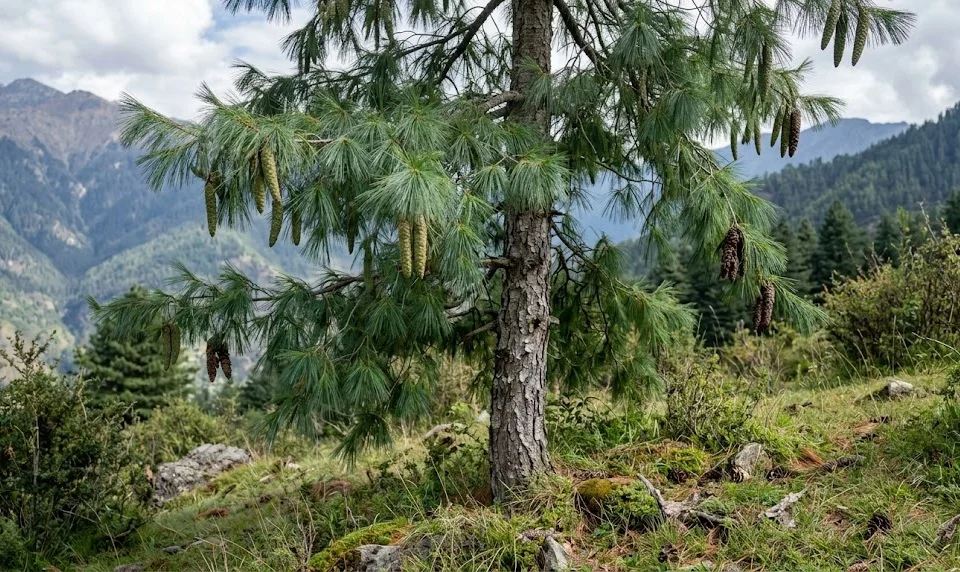

Protecting the Himalayan white pine from biological threats is a critical task for any professional dedicated to its long-term health. While this species is generally robust, it is susceptible to several specific pathogens and insects that can compromise its aesthetic and structural integrity. A proactive approach involving regular inspections and integrated management is far more effective than trying to save a severely infested tree. This article covers the most common diseases and pests that you may encounter and the best strategies for managing them.
Fungal pathogens and needle blight management
Fungal infections are among the most common issues for conifers, especially in environments with high humidity and poor air circulation. You should watch for symptoms like small brown spots on the needles, which can eventually lead to large-scale needle drop. These blights often start on the lower branches where the air is more stagnant and moisture lingers after rain. Early detection is vital, as fungal spores can spread rapidly through the entire canopy during a single wet season.
Dothistroma needle blight is a specific fungal disease that can cause significant defoliation and stress for the Himalayan white pine. You should look for characteristic reddish bands around the needles that appear in late summer or autumn. If left untreated, the affected needles will turn brown and fall off, leaving the tree with a thin and unhealthy appearance. Improving airflow through selective pruning and ensuring the tree is not stressed by drought can help it resist these infections naturally.
Applying preventative fungicides may be necessary in areas where fungal pressure is consistently high due to the local climate. You should choose a product specifically labeled for use on pines and apply it according to the manufacturer’s timing recommendations. Typically, these treatments are most effective when applied in late spring to protect the newly emerging candles from infection. Always wear appropriate safety gear when handling chemicals and follow all local environmental regulations.
Sanitation is a powerful, non-chemical tool that you can use to reduce the spread of fungal diseases in your garden. You should collect and dispose of fallen needles from infected trees rather than leaving them on the ground to serve as a source of new spores. Pruning away heavily infected branches also helps to lower the “pathogen load” and improves the overall health of the specimen. By maintaining a clean environment, you make it much harder for fungal diseases to gain a foothold.
More articles on this topic
Managing the threat of white pine blister rust
White pine blister rust is perhaps the most serious disease affecting five-needle pines like the Himalayan white pine. You should look for orange, blister-like swellings on the branches or the main trunk, which produce large quantities of spores. This fungal disease uses an alternate host, typically plants in the Ribes genus like currants and gooseberries, to complete its life cycle. Understanding this relationship is key to managing the risk in your specific landscape or nursery setting.
The disease enters the tree through the needles and slowly migrates into the stems, eventually creating cankers that girdle and kill the branches. You should regularly inspect the bark for “flagging,” where a single branch turns bright orange or red while the rest of the tree remains green. This is a classic sign that a canker has cut off the flow of water and nutrients to that specific limb. Promptly removing these infected branches can often prevent the disease from reaching the main trunk of the tree.
In many regions, planting resistant cultivars or removing alternate hosts from the vicinity is the best way to prevent the disease entirely. You should check with local agricultural extensions to see if white pine blister rust is active in your area before selecting this species for a project. If the disease is present on the main trunk, the tree is unfortunately unlikely to survive in the long term. Professional management focuses on prevention and early surgical removal of infected tissue to save the overall structure.
Because this disease is so destructive, many professional gardeners prioritize planting sites with good air drainage to keep the needles dry. Fungal spores require moisture to germinate and infect the needles, so anything you do to reduce dampness helps. You should also avoid overhead irrigation, which keeps the foliage wet for extended periods and creates the perfect environment for rust. Resilience starts with choosing the right site and maintaining optimal growing conditions for the tree.
More articles on this topic
Identifying and controlling aphids and sap-suckers
Aphids are small, soft-bodied insects that feed on the sap of the needles and young shoots, often causing distorted growth. You should look for clusters of these pests near the tips of the branches, especially during the peak growing season in spring and early summer. While a few aphids are usually not a major threat, a large infestation can weaken the tree and lead to the growth of sooty mold. This black fungus grows on the sticky “honeydew” that aphids secrete, further reducing the tree’s ability to photosynthesize.
Natural predators like ladybugs and lacewings are your best allies in the fight against aphid populations. You should encourage these beneficial insects in your garden by providing a diverse range of flowering plants that offer them nectar and shelter. In many cases, these natural controls will keep the aphid numbers low enough that no chemical intervention is required. Using broad-spectrum insecticides can actually make the problem worse by killing the predators that were keeping the pests in check.
If an infestation becomes severe, a strong blast of water from a garden hose can physically knock the aphids off the tree. You should focus your efforts on the new growth where the insects are most likely to congregate and feed. For more persistent problems, insecticidal soaps or horticultural oils can be very effective and have a lower environmental impact. These products work by coating the insects and disrupting their breathing, so direct contact with the pests is necessary for success.
Monitoring for ants is another clever way to identify aphid problems before they become obvious to the naked eye. Ants will often “farm” the aphids for their sweet honeydew and will actively protect them from predators like ladybugs. If you see lines of ants traveling up the trunk of your pine, follow them to find the hidden aphid colonies. Managing the ants can sometimes be the first step in allowing natural predators to return and clean up the tree.
Wood-boring insects and bark beetles
Bark beetles and other wood-boring insects represent a more significant threat to the structural integrity and survival of the tree. You should look for tiny “pitch tubes” or small holes in the bark, which indicate that insects are tunneling into the wood. These pests are often attracted to trees that are already stressed by drought, physical damage, or poor nutrition. A healthy, vigorous tree can often “pitch out” the invaders by flooding their tunnels with sticky resin.
The larvae of these insects feed on the cambium layer, which is the vital tissue that transports water and nutrients through the tree. You should be concerned if you see sawdust-like material, known as frass, accumulating around the base of the trunk or in the crevices of the bark. If enough of these tunnels encircle the tree, it can be girdled and killed in a relatively short period. Maintaining high vigor through proper watering and mulching is your best defense against these internal attackers.
Chemical treatments for boring insects are complicated because the pests are protected once they are inside the wood. You should consult with a professional who can apply systemic insecticides that are absorbed by the tree and move through its vascular system. These treatments are most effective when applied as a preventative measure for high-value trees during known periods of insect activity. Once a tree is heavily infested with bark beetles, it may be impossible to save and should be removed to protect nearby specimens.
woodpeckers can sometimes give you an early warning that wood-boring larvae are present in your trees. While the birds themselves can cause some minor damage, their persistent interest in a specific part of the trunk is a clear sign that something is living underneath the bark. You should investigate any areas where woodpeckers are frequently feeding to see if there are other signs of insect activity. Early intervention is the only way to stop these destructive pests before they cause irreversible damage.
Integrated pest management strategies
Integrated Pest Management, or IPM, is a professional philosophy that combines biological, cultural, and chemical tools to manage threats. You should start by ensuring your tree is as healthy as possible, as vigorous plants are naturally more resistant to both pests and diseases. Regular inspections are the backbone of any IPM program, allowing you to catch problems while they are still small and manageable. By understanding the life cycles of common pests, you can time your interventions for maximum effect with minimum environmental impact.
Diversity in the landscape is another key component of a professional pest management strategy. You should avoid planting large monocultures of a single species, which can act as a “buffet” for specialized pests and diseases. By surrounding your Himalayan white pine with a variety of different plants, you create a more balanced ecosystem that supports a wider range of beneficial organisms. This ecological approach reduces the need for constant human intervention and creates a more resilient garden over time.
You should always keep detailed records of any pest or disease issues you encounter, including the date, the symptoms, and the treatments used. This history helps you identify patterns and predict when certain problems might recur in future years. Knowing that aphids usually appear in late May, for example, allows you to be extra vigilant during that window. Professionalism in gardening is often about being one step ahead of the challenges that nature provides.
Finally, you must recognize when a problem is beyond your individual control and requires expert intervention or even tree removal. If a tree becomes a reservoir for a dangerous disease like blister rust, removing it may be the only way to protect the rest of your collection. Making these difficult decisions is part of being a responsible steward of the landscape. Your goal is always the long-term health and beauty of the entire garden, which sometimes requires tough choices.