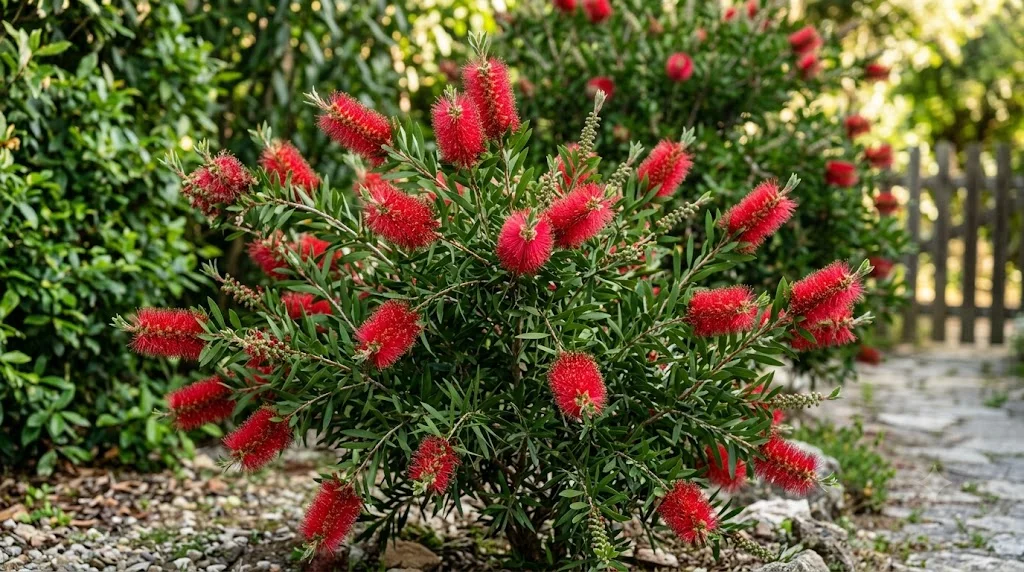

Pruning lemon bottlebrush encourages compact branching, removes damaged wood, and helps maintain a manageable size. The plant responds best to regular light shaping rather than sudden severe cutting into old bare stems. Timing is important because flowers are produced on established shoots and poorly timed pruning may remove developing buds. Clean tools and carefully placed cuts support rapid healing and natural regrowth.
Timing pruning correctly
The main pruning period is usually immediately after the strongest flowering flush. Removing spent flower spikes at this stage encourages new side shoots without sacrificing the following display unnecessarily. The new growth has enough time to mature before winter in most climates. Late autumn pruning should be avoided where frost is likely.
Light removal of dead, broken, or diseased wood can be carried out whenever it is noticed. Damaged stems should be cut back to healthy tissue with clean, sharp tools. If infection is suspected, disinfect the blades between cuts. Prompt sanitation prevents weak tissue from becoming an entry point for further problems.
Spring pruning may be necessary after winter damage. Wait until new growth begins so that living and dead sections can be distinguished accurately. Cut blackened or dry tips back to green wood or a healthy outward-facing bud. Avoid removing undamaged flowering shoots merely to create a perfectly symmetrical outline.
Young plants benefit from early formative pruning. Pinching or shortening vigorous shoots encourages a dense framework close to the base. This is especially important when the goal is a bushy container shrub. Plants intended to become small trees should instead retain a selected leader and have competing stems removed gradually.
More articles on this topic
Shaping shrubs and small trees
For a compact shrub, shorten overextended branches just above a leaf pair or side shoot. Cuts should be distributed through the crown rather than made at one uniform height. This preserves a natural appearance and prevents a dense outer shell from forming. Good light penetration supports healthy foliage inside the plant.
Remove crossing, rubbing, and inward-growing stems first. These branches create congestion and may damage one another during wind. Thinning selected stems from their point of origin is often better than shortening every shoot. The result is a lighter, more open crown with improved air movement.
Training a single-trunk specimen requires patience over several seasons. Select the strongest upright stem and support it loosely while it develops. Remove competing leaders and low side branches in stages so that the trunk thickens naturally. Once the desired height is reached, shorten the leader to encourage formation of the upper crown.
Multi-stemmed forms can be rejuvenated by removing one or two of the oldest stems near ground level. Younger replacement shoots then receive more light and space. This gradual method preserves the plant’s appearance while renewing its framework. Removing all old stems at once can produce weak, uneven regrowth.
More articles on this topic
Renovating and maintaining mature plants
Mature lemon bottlebrush may become too large for its position if left unpruned for many years. Renovation should begin with dead wood, weak branches, and severe congestion. Reduce the overall size gradually over two or three growing seasons. This approach protects the plant’s energy reserves and preserves some flowering wood.
Cutting into old, leafless wood carries a risk because dormant buds may not break evenly. Test the plant’s response by shortening a small number of branches first. Strong, healthy specimens usually recover better than stressed or root-bound plants. Improving light, watering, and nutrition before major pruning increases the chance of successful regrowth.
Large cuts should be made just outside the natural branch collar. Avoid leaving long stubs because they die back and heal poorly. Flush cuts against the trunk are also harmful because they remove tissue involved in wound closure. Smooth, accurately positioned cuts normally require no wound paint.
Routine maintenance after renovation keeps future work manageable. Remove faded flower clusters, shorten awkward shoots, and thin crowded growth each year. Regular inspection also reveals pest colonies and damaged branches hidden inside the crown. Consistent light pruning maintains a healthy structure while preserving the plant’s natural character.