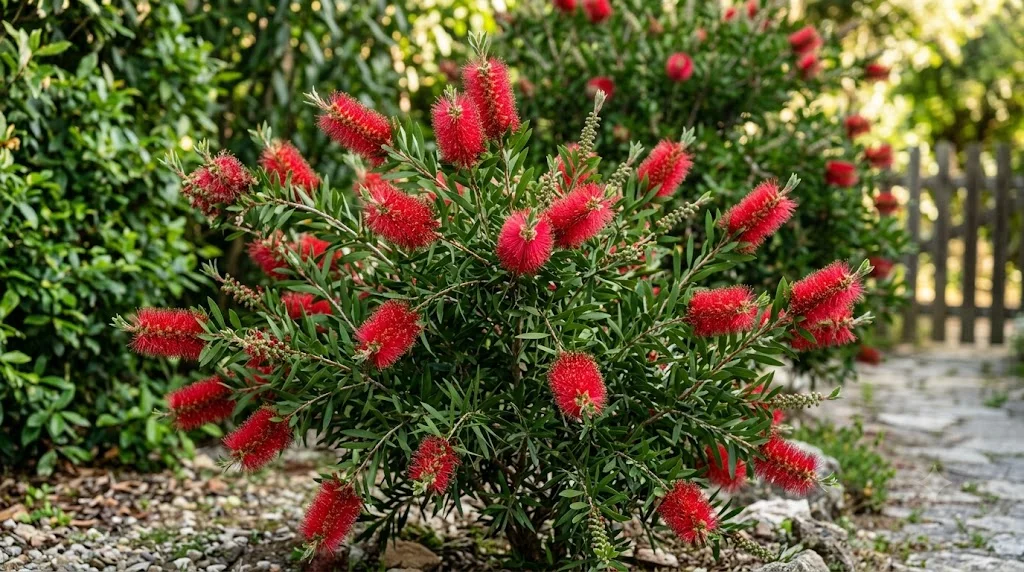

Lemon bottlebrush originates from a relatively mild climate and can suffer when exposed to prolonged frost. Mature plants may tolerate brief periods near freezing, but young growth, container roots, and flower buds are more vulnerable. Successful overwintering depends on protecting the plant while still providing strong light, fresh air, and restrained moisture. Preparation should begin before the first damaging frost rather than after cold injury becomes visible.
Preparing the plant for winter
Reduce fertiliser from late summer onward in regions with cold winters. Continued high-nitrogen feeding produces soft shoots that are easily damaged by low temperatures. Slower autumn growth allows stems to harden and become more resistant. Potassium-rich feeding may support tissue maturity, but it should not be overused.
Inspect the plant carefully before moving it into shelter. Check stems, leaf undersides, and branch joints for scale insects, mites, aphids, and mealybugs. Indoor conditions allow small pest populations to multiply rapidly. Washing the foliage and treating confirmed infestations before relocation prevents larger winter problems.
Remove dead leaves, fallen flowers, and loose debris from the compost surface. Decaying material can shelter pests and retain unwanted moisture. Avoid heavy pruning during autumn because it may stimulate tender replacement shoots. Structural pruning is safer after winter or immediately following flowering.
Gradually reduce watering as temperatures fall. The plant should enter winter with hydrated roots but not with saturated compost. A cold, waterlogged root ball is far more dangerous than slightly dry soil. Always allow excess water to drain completely before the plant is placed in its winter position.
More articles on this topic
Choosing suitable winter accommodation
A cool, bright, frost-free space is ideal for overwintering. Suitable locations include unheated conservatories, enclosed porches, bright garages with windows, and protected greenhouses. Temperatures between approximately 5 and 12 degrees Celsius usually support a natural rest period. Constant warmth is unnecessary and often causes weak growth.
Light remains essential even while growth is slow. A dark basement or windowless room encourages leaf drop and weakens the plant. Place the container as close as practical to a bright window without pressing the foliage against cold glass. Rotate it occasionally so that all sides receive similar exposure.
Warm living rooms are generally less suitable because the air is dry and winter light is limited. The combination of heat and darkness encourages elongated shoots, spider mites, and premature leaf loss. When no cool space is available, use the brightest possible position and maintain good air circulation. Artificial plant lighting may improve results in particularly dark homes.
Avoid sites beside radiators, heating vents, or frequently opened exterior doors. Sudden temperature changes place unnecessary stress on evergreen foliage. The plant should also be protected from cold draughts that strike one side of the crown repeatedly. Stable conditions are more important than achieving one precise temperature.
More articles on this topic
Managing water and humidity in winter
Winter watering should be based on the moisture level in the root ball. Allow the upper layer to dry before applying more water. When watering is necessary, moisten the compost evenly and discard any excess from the saucer. Small, frequent splashes often leave the centre dry while keeping the surface continuously damp.
Cool plants use water slowly, so the interval between waterings may extend considerably. Large containers can remain moist for several weeks under low-light conditions. Lifting smaller pots or using a wooden moisture probe can help assess the situation. Never water simply because a fixed number of days has passed.
Moderate humidity helps prevent excessive moisture loss from evergreen leaves. However, constantly wet foliage and stagnant air encourage fungal spotting. Occasional ventilation on mild days is highly beneficial. Misting is rarely necessary in cool accommodation and should not replace proper environmental management.
Plants wintered in warm rooms may need more frequent moisture checks. Heating dries both foliage and compost, yet overwatering remains possible because light levels restrict growth. A pebble tray can slightly improve local humidity without saturating the roots. Regular pest inspection is especially important under these conditions.
Returning the plant outdoors
Do not move the plant outside permanently after the first mild day. Late frosts can damage tender foliage and emerging shoots. Wait until night temperatures are reliably safe in your region. Temporary daytime exposure can begin earlier when the plant is returned to shelter each evening.
Acclimatise the foliage gradually to stronger sunlight. Begin in a bright, sheltered position with morning sun or light shade. Increase direct exposure over one or two weeks. Immediate placement in intense spring sun can bleach leaves that developed under weaker winter light.
Resume normal watering as active growth accelerates. Feeding should begin only after new shoots are clearly developing. Check drainage because roots may have compacted the compost during winter. Repotting, if necessary, is best completed before the plant enters its fastest growth phase.
Some leaf drop or tip damage may become visible after winter. Wait until new growth begins before deciding which branches are dead. Prune damaged stems back to healthy green tissue after the frost risk has passed. With warmth, light, and careful watering, a well-overwintered plant usually recovers quickly.