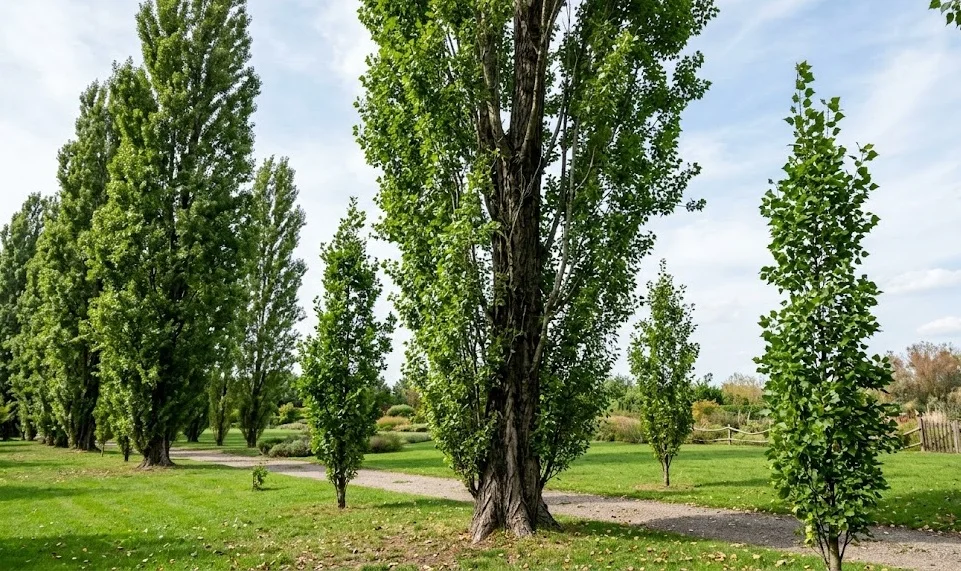

Choosing the right location is the most important step when you decide to add a lombardy poplar to your property. These trees require plenty of space to reach their full height without interfering with nearby structures or power lines. They are known for their narrow growth, which makes them ideal for tight spaces, but their height is significant. A site with full sun exposure is absolutely necessary for the tree to develop its characteristic form.
The soil at the chosen site should be evaluated for its drainage and nutrient content before you begin. Poplars thrive in moist environments, but they do not tolerate standing water for long periods. If the area is prone to flooding, you might need to reconsider the location or improve the drainage. Testing the soil will give you a clear idea of what amendments might be needed for success.
Consider the wind patterns in your area, as these tall trees can be vulnerable to strong gusts. While they are often used as windbreaks, planting them in a row provides collective strength against the wind. Avoid placing them too close to buildings, as their fast-growing roots can be quite aggressive over time. A safe distance ensures that both the tree and your home remain protected.
Access to water is another critical factor to keep in mind when selecting your planting site. Since young trees need frequent watering to establish themselves, having a water source nearby is very helpful. If the site is remote, you must be prepared to transport water to the tree regularly. Proper planning at this stage will save a significant amount of effort during the growing season.
Proper planting techniques
The best time to plant a lombardy poplar is during the early spring or late autumn when the tree is dormant. This allows the root system to settle into the new environment without the stress of supporting active foliage. Dig a hole that is twice as wide as the root ball but no deeper than the container. This encourages the roots to spread out horizontally into the loosened soil for better stability.
More articles on this topic
When placing the tree in the hole, ensure that the top of the root ball is level with the surrounding ground. Planting it too deep can lead to trunk rot, while planting it too high may cause the roots to dry out. Fill the hole with a mixture of native soil and a small amount of organic compost. Gently firm the soil around the base to remove any air pockets that could damage the roots.
Immediately after planting, the tree should be watered thoroughly to settle the soil and provide hydration. A layer of mulch around the base will help retain moisture and keep weeds from competing with the young tree. Make sure the mulch does not touch the trunk directly, as this can encourage fungal growth or rot. This simple step provides a protective barrier that supports the early stages of development.
Staking the tree may be necessary if the site is particularly windy or if the sapling is very tall and thin. Use soft ties that will not cut into the bark as the tree grows and moves in the breeze. The stakes should be removed after the first year once the roots have firmly anchored the tree. Regular checks during the first few months will ensure the tree remains upright and healthy.
Methods for propagation
Propagating the lombardy poplar is surprisingly simple and can be done effectively using hardwood cuttings. This process is best performed during the winter months when the tree is completely dormant. Select healthy, one-year-old stems that are about the thickness of a pencil for the best results. These cuttings have the highest chance of developing a strong and healthy root system.
More articles on this topic
Cut the stems into lengths of about eight to twelve inches, making sure each piece has several buds. The bottom cut should be made just below a bud at a slight angle to increase the surface area. Some gardeners prefer to dip the bottom end into a rooting hormone, although poplars often root well without it. This simple technique allows you to create many new trees from a single parent plant.
The cuttings can be planted directly into a prepared nursery bed or into deep containers filled with potting soil. Insert them into the ground so that only the top two or three buds are visible above the surface. Keep the soil consistently moist but not soggy throughout the late winter and early spring. By the time the weather warms up, you should see new growth emerging from the buds.
Once the cuttings have established a good root system, they can be moved to their permanent locations in the garden. It is often best to let them grow in a protected nursery area for one full season before transplanting. This gives them time to become stronger and more resilient to environmental changes. Propagation is a cost-effective way to create a long privacy screen or a majestic allee.
Supporting young saplings
The first two years are the most critical period for a young lombardy poplar as it establishes itself. Frequent watering is the most important task during this time, especially during dry spells in the summer. The soil should be kept moist at a depth of several inches to encourage deep root growth. Consistent hydration allows the tree to focus its energy on building a strong structural foundation.
Monitoring for pests and diseases is also vital when the tree is young and more vulnerable. Aphids and leaf-eating insects can quickly damage the tender new growth of a sapling. If you notice any signs of infestation, treat the tree immediately with an appropriate organic or chemical solution. Keeping the area around the base free of weeds also reduces the risk of pest problems.
Fertilizing young trees can help them reach their full potential more quickly, but it should be done carefully. A balanced, slow-release fertilizer applied in early spring provides a steady supply of nutrients. Avoid over-fertilizing, as this can lead to excessive, weak growth that is more prone to damage. Follow the manufacturer’s instructions to ensure you are providing the right amount for the tree’s size.
As the sapling grows, you may need to perform minor pruning to maintain its central leader and narrow shape. Remove any competing stems that try to grow vertically alongside the main trunk to keep the tree’s form. This early training ensures the tree develops the iconic columnar silhouette that the variety is known for. With proper support, your young poplar will quickly become a towering feature in your landscape.