
Choosing the right spot for your Caucasian leopard’s bane is the most important decision you will make for its future success. This plant naturally thrives in environments that mimic the cool, moist conditions of its native woodland habitats. You should look for a location that offers partial shade, especially during the peak intensity of the afternoon sun. A site that receives gentle morning sunlight followed by dappled light through the day is often considered perfect.
The soil in your chosen location must be well-draining but also capable of retaining a consistent level of moisture. You should avoid areas where water tends to pool after a heavy rain, as this can lead to serious root issues. On the other hand, a spot that dries out too quickly will cause the plant to wilt and go dormant prematurely. Finding a balance in soil moisture is key to keeping the foliage lush and the flowers vibrant throughout the spring.
Consider the proximity of larger plants and structures when deciding where to place your new leopard’s bane. The plant can be a wonderful companion for early-blooming shrubs or under the canopy of deciduous trees that provide seasonal shade. You must ensure that there is enough space for the plant to reach its full width of about one to two feet. Crowding the plant too much can lead to poor air circulation and a higher risk of disease.
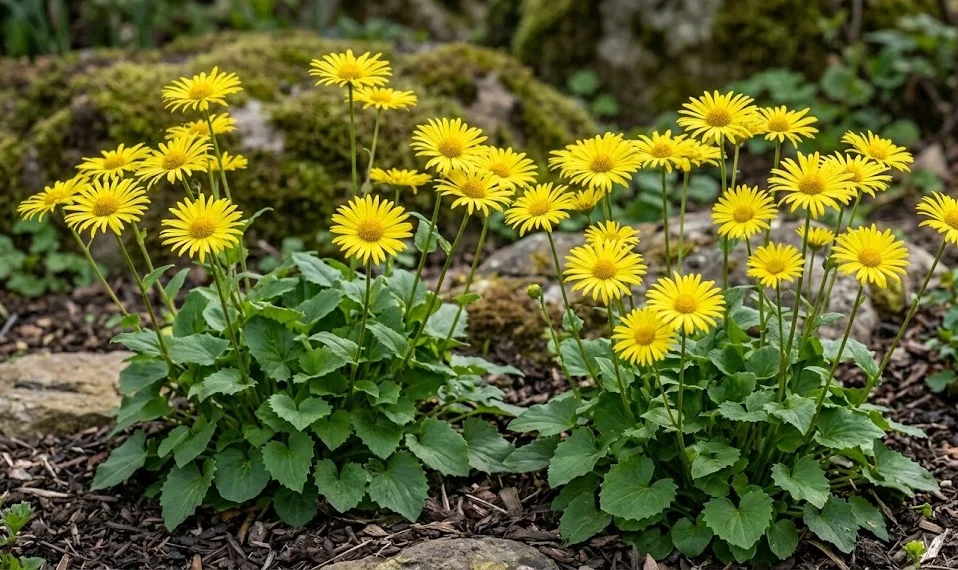
Lastly, think about the visual impact you want to achieve within your garden design when selecting a planting site. The bright yellow flowers are excellent for brightening up darker corners of the garden or adding a pop of color to a woodland border. You might want to plant them in small groups to create a more naturalistic and high-impact display. Planning the layout before you start digging will save you time and effort during the actual planting process.
Soil preparation and planting techniques
Before you bring your Caucasian leopard’s bane to the garden, you should take the time to prepare the soil thoroughly. Start by removing any existing weeds and large stones from the planting area to create a clean environment. You should dig in a generous amount of organic matter, such as well-composted leaves or garden compost, to a depth of at least ten inches. This will provide the nutrients and the moisture-holding capacity that the plant needs to establish itself quickly.
More articles on this topic
The best time to plant this perennial is either in the early spring or during the cool days of early autumn. You should dig a hole that is twice as wide as the root ball but no deeper than the container the plant is currently in. If the roots appear to be circling the pot, gently tease them outward to encourage them to grow into the surrounding soil. Placing the plant at the correct depth is crucial for preventing crown rot and ensuring healthy growth.
After placing the plant in the hole, fill the remaining space with a mix of native soil and the organic amendments you prepared earlier. You should firm the soil gently with your hands to remove any large air pockets that could dry out the roots. Avoid stepping on the root zone with your full weight, as this can compress the soil and make it difficult for water to penetrate. A gentle touch during the planting process will help the plant recover from transplant shock much faster.
Once the planting is complete, give the area a thorough watering to help settle the soil and hydrate the roots. You might also want to apply a thin layer of mulch around the base of the plant, being careful not to let it touch the stems directly. This mulch will help maintain a stable soil temperature and keep the moisture levels consistent during the first few critical weeks. Monitoring the plant daily after planting will allow you to provide extra care if it shows any signs of stress.
Dividing mature clumps for propagation
Propagation through division is one of the easiest and most effective ways to increase your stock of Caucasian leopard’s bane. You should plan to divide your plants every three to four years to maintain their vigor and prevent the center from becoming overcrowded. The best time for this process is in the early autumn after the foliage has started to die back or in the very early spring before growth begins. Dividing the plant allows you to revitalize old specimens while creating new ones for other parts of your garden.
More articles on this topic
To start the division, carefully dig up the entire clump of the plant with a garden fork to minimize root damage. You should lift the mass out of the ground and shake off any excess soil so you can clearly see the structure of the roots and crowns. Using a sharp, clean knife or a dedicated root saw, cut the clump into several smaller sections. Each new division must have at least two or three healthy buds and a good amount of attached roots to survive on its own.
Replant the new divisions immediately into their permanent spots or into temporary pots with high-quality potting soil. You should follow the same planting techniques used for new plants, ensuring they are placed at the correct depth. It is important to keep the new divisions well-watered as they work to re-establish their root systems in the new environment. Within a few weeks, you should see signs of new growth, indicating that the propagation was successful.
Sharing divisions with friends and neighbors is a great way to spread the beauty of this plant and build a gardening community. You can also use the extra plants to experiment with different locations in your own garden to see where they perform best. Since the divisions are genetically identical to the parent plant, you can be sure they will have the same beautiful yellow flowers and foliage. This simple method of propagation is both cost-effective and highly rewarding for any level of gardener.
Growing from seeds and other methods
While division is more common, you can also propagate the Caucasian leopard’s bane from seeds if you have the patience for a longer process. You should collect the seeds from the flower heads once they have turned brown and started to dry out naturally. It is important to sow the seeds while they are still fresh, as their viability can decrease quickly over time. You can sow them directly into a prepared seedbed in the garden during the late summer or early autumn months.
If you prefer more control, you can start the seeds in trays indoors or in a cold frame during the winter. The seeds often require a period of cold temperatures, known as stratification, to break their dormancy and trigger germination. You should use a light, well-draining seed-starting mix and barely cover the seeds with a thin layer of fine soil. Keeping the trays in a cool but protected environment will lead to the best germination rates when the spring arrives.
Once the seedlings have developed their first set of true leaves, you can carefully transplant them into individual small pots. You should continue to grow them in a sheltered spot until they are large and strong enough to handle the conditions in the open garden. Be aware that plants grown from seed may take two or even three years before they are mature enough to produce flowers. This method requires more time but allows you to produce a large number of plants for a very low cost.
You should always label your seed trays and planting areas so you can keep track of different varieties and planting dates. Growing from seed also offers the chance for natural variation, which might lead to slightly different flower sizes or leaf shapes. While the process is slower than division, it provides a fascinating insight into the life cycle of the Caucasian leopard’s bane. For the professional gardener, mastering both methods ensures a constant supply of healthy plants for any landscaping project.