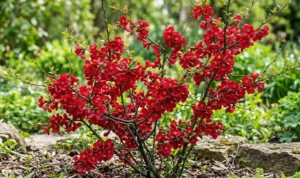
Planting red escallonia carefully gives the shrub the strong foundation it needs for decades of healthy growth. The process involves more than placing the root ball in a hole, because soil preparation, planting depth, spacing, and aftercare all influence establishment. Propagation is equally rewarding and can be achieved from healthy shoots when timing and moisture are managed correctly. With patient handling, young plants develop into dense, flowering shrubs suitable for hedges, borders, and coastal gardens.
Preparing the site before planting
The best planting period is usually spring or early autumn, when the soil is workable and naturally moist. Spring planting is safer in cold districts because the shrub has an entire growing season to establish before winter. Autumn planting works well in mild areas where the ground does not remain saturated. Planting during heat, drought, frost, or waterlogged conditions places unnecessary stress on the roots.
The chosen position should provide good light, shelter from severe winds, and enough space for mature growth. Soil drainage should be tested by observing how quickly water disappears after heavy rain. If water remains for many hours, the ground may need organic improvement, raised planting, or an alternative location. A shrub planted into persistently wet soil rarely performs well, regardless of later care.
The planting area should be cleared of perennial weeds before the soil is prepared. Deep-rooted weeds compete strongly with a young shrub for both moisture and nutrients. Loosening a wide area makes it easier for new roots to move beyond the original root ball. Compost may be mixed into poor soil, but the planting zone should not become dramatically richer than the surrounding ground.
Hedge spacing depends on the desired speed of coverage and the expected mature size. Plants placed too closely may form a quick screen, but they will compete and become congested later. Wider spacing takes longer to fill but usually creates healthier individual shrubs. Accurate alignment can be achieved with a taut line before any holes are dug.
More articles on this topic
Planting at the correct depth
The planting hole should be wider than the root ball but no deeper than the existing root system. Planting too deeply can bury the stem base and reduce oxygen around the upper roots. The original compost surface should generally finish level with, or slightly above, the surrounding soil. In poorly drained ground, a slightly raised position offers additional protection.
Container-grown plants should be watered before removal from their pots. A dry root ball may repel water after planting and remain dry even when the surrounding soil is moist. Circling roots should be gently loosened, especially when they form a dense layer around the outside. Damaged or severely twisted roots can be trimmed cleanly without dismantling the entire root system.
The shrub should be positioned upright and viewed from several angles before backfilling begins. Excavated soil can then be returned gradually and firmed gently to remove large air pockets. Heavy stamping should be avoided because it compresses the soil and damages fine roots. Watering during or immediately after backfilling helps settle soil naturally around the root ball.
A shallow watering basin can be formed around the plant in dry conditions. This directs irrigation toward the root zone instead of allowing it to run away. Mulch should be added after watering, leaving a clear space around the crown. Tall or wind-exposed plants may require temporary support, but ties must not cut into the bark.
More articles on this topic
Establishing newly planted shrubs
The first growing season is critical because the root system is still restricted. Water should reach the full depth of the original root ball whenever the soil begins to dry. Light surface watering may encourage shallow roots and leave the lower root zone dry. A slow, thorough application produces more reliable establishment.
New plants should not be forced into rapid growth with strong fertiliser immediately after planting. Root development is more important than producing long shoots during the early months. A modest organic mulch and naturally fertile soil are usually sufficient at first. Additional feeding can begin once clear new growth shows that establishment is progressing.
Weeds and grass should be kept away from the base of the shrub. Lawn growing directly over the root zone competes heavily for moisture, particularly during warm weather. A weed-free circle also makes watering and inspection easier. Hoeing must remain shallow so that emerging surface roots are not cut.
Wind movement can loosen the root ball and break newly forming roots. The plant should therefore be checked after storms and gently firmed if it has shifted. Stakes can be removed once the shrub remains stable without support. Ties left in place for too long may constrict expanding stems and create weak points.
Propagating from cuttings
Semi-ripe cuttings taken from healthy current-season growth are a practical method of propagation. The selected shoots should be firm at the base but still flexible near the tip. Non-flowering side shoots are generally easier to root than soft, heavily flowering stems. Material should be collected in cool conditions and prepared before it loses moisture.
Each cutting should include several leaf nodes and a clean cut below a suitable node. Lower leaves are removed so that no foliage is buried in the propagation medium. Large upper leaves may be reduced slightly when water loss is excessive, although unnecessary damage should be avoided. Rooting hormone can improve consistency but does not replace good hygiene and suitable moisture.
A free-draining medium helps provide both moisture and oxygen around the developing roots. The cuttings should be inserted firmly enough to maintain contact with the compost without crushing the stem. High humidity limits wilting, but constant dripping condensation may encourage decay. Bright, indirect light and gentle warmth usually support steady root formation.
Rooted cuttings should be hardened gradually rather than moved immediately into exposed conditions. Ventilation can be increased once new growth appears and resistance is felt when a cutting is tugged gently. Young roots are fragile, so each plant should be lifted and potted with care. The new shrubs can be grown on until they are strong enough for permanent planting.