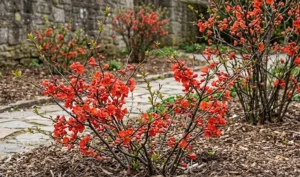
Pruning red escallonia maintains a dense shape, removes damaged growth, and encourages the production of healthy flowering shoots. The shrub responds well to regular light attention, but badly timed or unnecessarily severe cutting can reduce flowers and expose bare wood. Different methods are required for young plants, formal hedges, mature specimens, and neglected shrubs. Clean tools, careful timing, and an understanding of the plant’s growth pattern produce the most reliable results.
Timing routine pruning
Routine pruning is usually carried out after the main flowering display. At this stage, spent flower clusters can be removed together with a small amount of shoot growth. The shrub then has time to produce and mature new branches before winter. Pruning too late may leave tender shoots vulnerable to frost.
Early spring is suitable for removing clearly dead, broken, or frost-damaged wood. Major cuts should wait until severe cold is unlikely. Damaged stems can be traced back to healthy tissue before being shortened. Pruning into living wood prevents dry stubs from remaining within the canopy.
Light trimming may be repeated during the growing season when a formal hedge needs control. Each cut removes some potential flowering growth, so repeated trimming reduces the display. Informal hedges usually flower more freely because their shoots are allowed to develop naturally. The desired balance between neatness and colour should guide the schedule.
Pruning during wet weather increases the chance of spreading disease. Dry conditions allow wounds to begin sealing more quickly. Tools should be disinfected after cutting diseased branches. Blades must also be sharpened regularly so that stems are sliced rather than crushed.
More articles on this topic
Shaping young plants and hedges
Young plants benefit from light tip pruning that encourages branching close to the base. Removing only the soft end of a vigorous shoot stimulates buds below the cut. Repeating this selectively creates a dense framework without delaying establishment severely. Heavy pruning immediately after planting is unnecessary unless stems are damaged.
A hedge should be trained with a broad base and a slightly narrower top. This shape allows sunlight to reach the lower branches. Vertical-sided or top-heavy hedges often become bare near ground level. Once the base is exposed, restoring dense lower growth becomes more difficult.
Long shoots can be shortened to outward-facing side branches. This produces a softer, more natural surface than cutting every stem at one level. Hand pruners provide greater control around flowering shoots. Powered hedge trimmers are efficient for large formal surfaces but may leave torn leaves and coarse cut ends.
The finished hedge should be inspected from both sides. Crossing, inward-growing, or weak stems can be removed selectively after general trimming. Clippings caught inside the canopy should be taken out because they retain moisture. A light watering after pruning is helpful when the soil is dry, but immediate heavy feeding is not required.
More articles on this topic
Renovating overgrown or damaged shrubs
A neglected red escallonia may contain thick old stems, bare inner branches, and flowers only around the outside. Gradual renovation is safer than cutting the entire shrub down at once. One or two of the oldest stems can be removed near their base during each pruning cycle. Younger shoots then receive more light and space.
Remaining branches can be shortened to healthy side growth. Cuts should avoid leaving long, leafless stubs that may die back. The natural framework should remain balanced so that wind pressure does not fall on only one side. Several moderate cuts usually produce a better result than one drastic reduction.
Very hard pruning may be necessary when a shrub has been badly broken or allowed to outgrow its space. Recovery depends on plant health, climate, season, and the presence of living buds on older wood. Some specimens regenerate strongly, while others respond unevenly. The operation should therefore be viewed as a rescue measure rather than routine maintenance.
After renovation, the plant needs consistent moisture and freedom from weed competition. A moderate spring feed can support regrowth once active shoots appear. New branches should be thinned and tipped selectively so that they form a stable structure. Rebuilding a dense, flowering shrub may take more than one growing season.