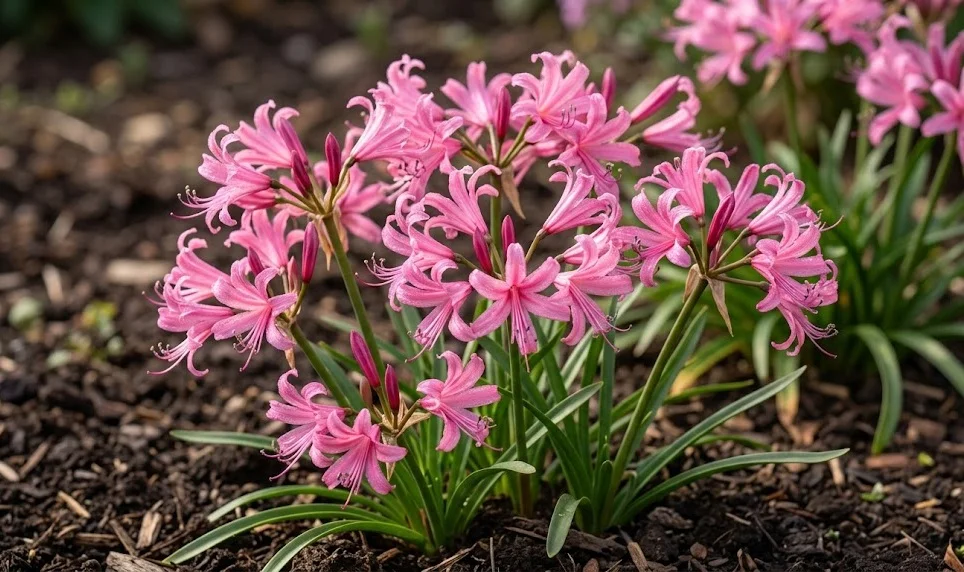

Planting Bowden lily well is the foundation of strong flowering, healthy bulbs, and long-term garden success. This autumn-blooming bulb dislikes being moved repeatedly, so the first decision matters more than with many common perennials. A warm, sunny, sharply drained site gives the bulbs the best chance to establish. Propagation is possible by division or seed, but division is the most practical method for most gardeners.
Selecting and preparing bulbs
Good bulbs should be firm, plump, and free from soft patches. The outer tunics may look dry or papery, but the bulb itself should not feel hollow. Avoid bulbs with mould, damaged basal plates, or a sour smell. These signs often indicate storage stress or early rot.
Larger bulbs usually flower sooner than small offsets. A mature bulb has more stored energy and can establish more quickly. Smaller bulbs are still valuable, but they may need several seasons before flowering. Patience is important when working with young material.
Before planting, inspect the roots and basal plate carefully. Old dry roots can remain attached, but damaged or rotting tissue should be removed cleanly. Do not peel the bulb unnecessarily because the outer layers protect it. Handle bulbs gently, as bruising can create entry points for disease.
If bulbs have been stored dry, planting should be followed by moderate watering. The aim is to wake root growth without saturating the soil. In very wet climates, pre-planting soil preparation is more important than watering. Bulbs establish best when moisture and air are both available around the roots.
More articles on this topic
Planting depth and spacing
Bowden lily is often planted with the neck of the bulb near or slightly above the soil surface. This helps keep the upper part of the bulb dry and warm. In colder gardens, slightly deeper planting may offer protection, but drainage must remain excellent. The correct depth depends on climate, soil, and exposure.
Spacing should allow clumps to develop over time. A distance of about 15 to 20 centimetres between bulbs is usually practical. Closer planting creates a fuller display sooner, but it can lead to congestion later. Wider spacing gives each bulb room to increase naturally.
The planting hole should be wide enough for the roots to spread. Roots should not be forced upward or folded tightly under the bulb. A gritty layer beneath the bulb can improve drainage in heavy soils. However, the whole planting area must drain well, not only the bottom of the hole.
After planting, firm the soil gently. Do not compact it heavily, as roots need oxygen. Water lightly to settle the soil if conditions are dry. Mark the planting area so dormant bulbs are not accidentally disturbed during seasonal maintenance.
More articles on this topic
Propagation by division
Division is the easiest and most reliable method of propagation. Mature clumps produce offsets around the main bulbs. These offsets can be separated and replanted when the plant is dormant or nearly dormant. The best timing is usually after foliage has died back naturally.
Lift the clump carefully with a garden fork rather than a narrow trowel. Work around the plant to avoid cutting through bulbs. Shake or wash away loose soil only as much as needed to see the offsets. Excessive cleaning can damage roots and protective tunics.
Offsets should be separated only when they detach naturally or with gentle pressure. Forcing them apart can wound the basal plate. Larger offsets can be replanted directly into flowering positions. Smaller ones can be grown in a nursery bed or pot until they reach flowering size.
After division, replant promptly. Bulbs should not be left exposed to sun and wind for long periods. Water lightly after planting, then return to the normal seasonal watering pattern. Divided bulbs may take time to flower again, but careful handling reduces the delay.
Propagation by seed
Seed propagation is slower but useful for patient gardeners and plant collectors. Seed-grown plants can show variation in vigour, colour, and flowering habit. Fresh seed usually gives better results than old seed. Viability can decline if seed is stored poorly.
Sow seed in a free-draining compost with added grit or sand. The medium should be moist but never waterlogged. Seeds can be covered lightly or pressed into the surface depending on their size and freshness. Warmth and stable moisture encourage germination.
Seedlings should be grown on without disturbance during their early development. They form small bulbs gradually, and these need time to strengthen. Good light is essential, but harsh midday heat can dry small pots too quickly. Watering must be careful because young bulbs are sensitive to rot.
Flowering from seed may take several years. This long timeline makes seed less practical for quick garden impact. However, it can produce strong plants adapted to local conditions. For gardeners who enjoy long projects, seed propagation adds an interesting dimension to Bowden lily cultivation.