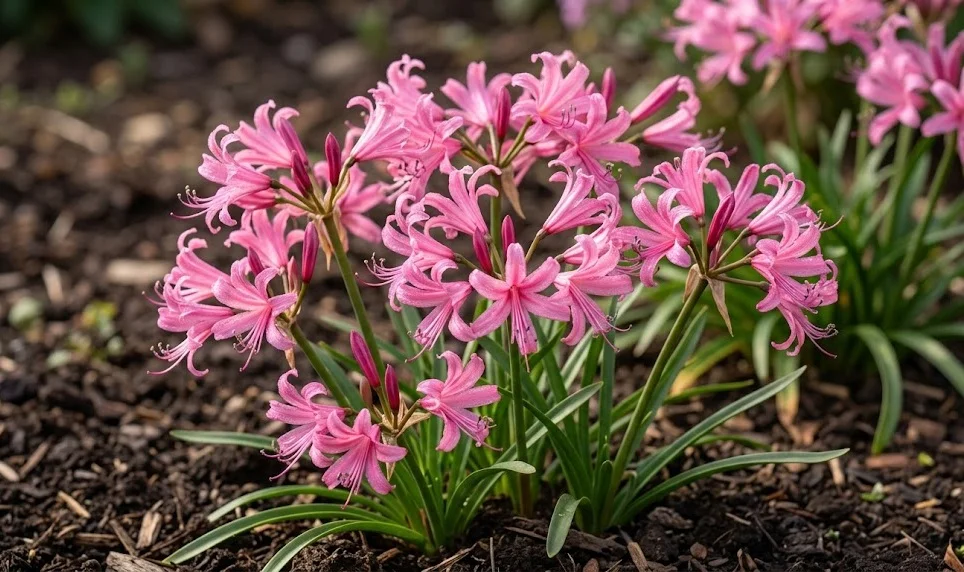

Pruning Bowden lily is simple, but timing is extremely important. The plant does not need shaping like a shrub, and careless cutting can weaken the bulb. Green leaves should remain until they naturally yellow because they feed the bulb for the next flowering season. Most cutting involves removing spent flower stems, dead foliage, and damaged material at the right moment.
Removing spent flowers
After flowering, the stems can be cut if seed production is not wanted. This keeps the plant tidy and directs energy back toward the bulb. Use clean, sharp secateurs to make a neat cut. Avoid pulling the stem because this can disturb the bulb.
Deadheading is especially useful in ornamental borders. It prevents the fading flowers from distracting from late-season planting combinations. The cut stem can be removed near its base, but care should be taken not to damage emerging leaves. New foliage may already be developing when flowers finish.
If seed is desired, leave selected flower heads in place. Seed production uses energy, so it is best reserved for strong, mature plants. Not every stem needs to be left for seed. A balanced approach allows both propagation and bulb recovery.
Spent flowers should not be allowed to rot around the crown. Fallen petals and stems can hold moisture and encourage fungal problems. Removing debris improves hygiene. This is especially important in damp autumn weather.
More articles on this topic
Cutting back leaves
Leaves should be cut only after they have yellowed and begun to collapse naturally. While they are green, they are still photosynthesising. This process replenishes the bulb after flowering and supports next year’s display. Early cutting is one of the easiest ways to reduce bloom.
Untidy foliage can be managed by planting companions nearby. Low grasses, evergreen perennials, or gravel-garden plants can soften the appearance. Do not tie the leaves into knots, as this reduces light exposure. The leaves should remain functional until they finish their work.
When leaves are fully yellow or brown, they can be removed by hand or with clean scissors. If they detach easily, the bulb has already withdrawn much of their energy. Remove the foliage from the garden rather than leaving it to decay around the crown. This reduces pest shelter and disease risk.
Cutting height is not complicated. Dead leaves can be trimmed close to the base without cutting into the bulb neck. Take care in crowded clumps where new growth points may be hidden. A gentle, clean method is better than a fast, rough one.
More articles on this topic
Hygiene and long-term maintenance
Clean tools are important when cutting any bulbous plant. Dirty blades can spread fungal spores or bacteria from one plant to another. Wipe or disinfect secateurs if disease is suspected. This small habit helps protect the whole planting.
Remove damaged or diseased tissue promptly. Leaves that are rotting, badly spotted, or pest-infested should not remain pressed against healthy growth. However, do not remove healthy green foliage just to improve appearance. Plant health should guide every cut.
Established clumps may need occasional thinning, but this is not pruning in the usual sense. If bulbs become overcrowded and flowering declines, division may be required. This should be done during dormancy or near dormancy. Frequent disturbance should be avoided.
The best cutting-back routine is restrained and seasonal. Remove spent flowers after bloom, keep green leaves as long as possible, and clear dead material when growth finishes. Bowden lily responds well to this respectful approach. Proper pruning protects the bulb’s strength and preserves reliable autumn flowering.