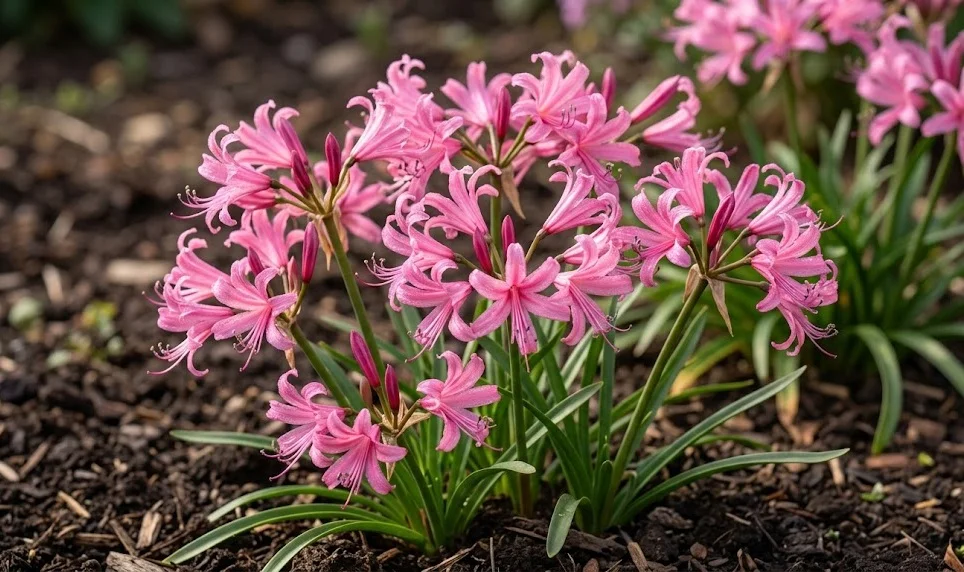

Bowden lily needs strong light to build healthy bulbs and produce dependable autumn flowers. It may survive in partial shade, but flowering is usually weaker when sunlight is limited. The leaves need enough brightness to refill the bulb after bloom. A warm, open position is therefore one of the most important factors in successful cultivation.
Why strong light matters
The leaves of Bowden lily are the plant’s energy factory. They capture sunlight and convert it into reserves stored inside the bulb. These reserves support root growth, flowering stems, and future offsets. Without enough light, the bulb gradually loses strength.
Flowering depends on the bulb reaching a sufficient size and energy level. Shade reduces this process even if the plant appears alive. A shaded plant may produce leaves year after year without many flowers. Survival and good performance are not the same thing.
Strong light also helps ripen the bulb. Warmth and brightness encourage firm growth and better seasonal maturity. Soft, shaded growth is more prone to pests, disease, and winter damage. Sunlight improves both flowering and resilience.
The best position usually receives at least several hours of direct sun. In cooler climates, full sun is strongly preferred. In hot regions, morning sun with light afternoon shade can work well. The goal is brightness without severe heat stress.
More articles on this topic
Recognising poor light conditions
A Bowden lily in too much shade often produces long, floppy leaves. The foliage may look lush but weak. Flower stems may be absent, short, or sparse. This pattern is a strong clue that the plant needs more light.
Shade from shrubs, fences, and buildings can change through the year. A site that looks sunny in winter may be shaded in summer by deciduous growth. Observe the planting area during different seasons before judging it. Light conditions are dynamic in real gardens.
Crowding from neighbouring plants can also reduce available light. Vigorous perennials may lean over the bulbs during the growing season. Even light shade at the wrong time can weaken bulb development. Keep the immediate planting area open and airy.
If a clump stops flowering after several good years, increasing shade may be responsible. Trees and shrubs grow larger gradually, and the change can be easy to miss. Thinning nearby plants may restore performance. Moving the bulbs is an option when shade cannot be corrected.
More articles on this topic
Balancing sun, heat, and moisture
Full sun is beneficial, but extreme heat can dry container bulbs quickly. Pots in exposed positions may need more careful watering than bulbs in the ground. The compost should not become dust-dry for long periods during active growth. Strong light must be balanced with root protection.
In very hot climates, afternoon shade can prevent scorching. This is especially useful near reflective walls or paving. Morning sun is often gentler while still providing excellent light. The plant should remain bright, not hidden in deep shade.
Mulching with gravel can help regulate surface conditions. It reflects light, reduces mud splash, and keeps the bulb neck relatively dry. Organic mulch may be useful in some gardens, but it should not smother the crown. The surface around the bulb should remain open.
Light management is part of overall plant health. A sunny, well-drained site reduces disease pressure and improves flowering. A shaded, damp site creates several problems at once. For Bowden lily, brightness is not optional decoration but a core growing requirement.