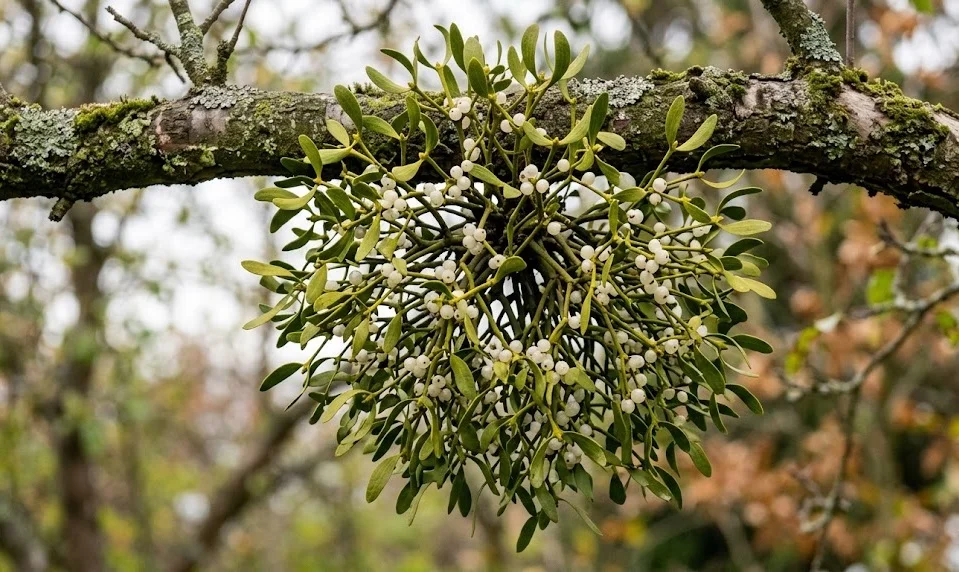

The successful propagation of white mistletoe is a rewarding challenge that requires patience and a precise understanding of its unique germination requirements. Unlike most plants that grow in soil, mistletoe must be “planted” directly onto the living bark of a suitable host tree to survive. This process, often referred to as inoculation, mimics the natural dispersal method performed by birds in the wild. By carefully selecting the right seeds and host branches, a gardener can introduce this iconic evergreen into their landscape with a high success rate.
Seed collection and preparation techniques
The first step in propagating white mistletoe is the collection of ripe berries, which usually occurs between late winter and early spring. It is essential to wait until the berries are fully translucent and slightly soft to the touch, indicating that the embryo inside is mature. Berries collected too early in the winter often fail to germinate because the internal structures are not yet fully developed. Once harvested, the berries should be used as soon as possible, as they do not store well over long periods.
Preparing the seeds involves removing the sticky pulp, known as viscin, which surrounds the green embryo. This viscin is nature’s glue, designed to anchor the seed to the host branch even in heavy rain or wind. While some gardeners prefer to squeeze the seed directly onto the branch, others find that cleaning away some of the excess pulp can help the embryo breathe. However, at least some of the sticky substance must remain to ensure the seed stays in place during the germination phase.
Selecting the healthiest seeds is a professional skill that comes with experience. One should look for large, bright green embryos within the berries, as these have the highest energy reserves for the initial growth phase. Any seeds that appear brown or shriveled should be discarded immediately, as they are likely non-viable. Gathering berries from several different mistletoe clumps can also increase the genetic diversity of your new plants, which leads to better overall resilience.
Timing the planting is just as important as the quality of the seeds themselves. The best time for inoculation is typically in February or March, just as the host tree is preparing to break its winter dormancy. This timing ensures that the mistletoe embryo will have access to the increasing sap flow of the host shortly after it germinates. If seeds are planted too late in the spring, the heat may dry them out before they can establish a firm connection with the bark.
More articles on this topic
Choosing the ideal branch for inoculation
The success of the propagation process depends heavily on the specific branch chosen for the seed placement. One should look for branches that are roughly two to five centimeters in diameter, as these have bark that is thin enough for the mistletoe to penetrate. Older branches with thick, corky bark are much more difficult for the young parasitic roots to enter. Additionally, young branches are more flexible and can better accommodate the localized swelling that will occur as the mistletoe grows.
Location within the tree canopy is another critical factor to consider during the planting process. It is best to choose branches on the outer parts of the canopy that receive plenty of sunlight throughout the day. Mistletoe is a light-loving plant, and seeds placed in deep shade are likely to fail or grow very slowly. Furthermore, placing the seeds on the underside of a horizontal branch can provide some protection from direct rain and hungry birds while the seed is setting.
The health of the chosen branch must be impeccable to ensure it can support the new parasite for years to come. Avoid branches that show signs of fungal infection, mechanical damage, or heavy competition from other limbs. A vigorous, fast-growing branch will provide a more reliable supply of water and nutrients to the developing mistletoe. It is also wise to select a branch that is easily accessible for future monitoring and maintenance.
Before applying the seed, the bark of the branch should be gently cleaned with a soft cloth to remove any loose debris or moss. Some practitioners suggest making a very shallow, V-shaped nick in the bark to help the seed settle, but this is often unnecessary and can introduce pathogens. The natural stickiness of the viscin is usually sufficient to hold the seed in place if the surface is clean. Applying several seeds to the same area can increase the chances of at least one successful establishment.
More articles on this topic
The process of natural germination
Once the seed is attached to the host, the process of germination begins almost immediately, though it is very slow to the naked eye. Under the influence of light, the green embryo begins to elongate and produce a small, green hypocotyl. This structure is phototropic, meaning it grows away from the light and towards the dark surface of the bark. It is a fascinating biological mechanism that ensures the plant moves toward its host rather than away from it.
As the hypocotyl reaches the bark, it expands at the tip to form a flattened attachment disc. This disc firmly glues the young plant to the tree and begins the process of chemical and mechanical penetration. The mistletoe produces enzymes that soften the host’s bark, allowing the primary haustorium to push its way into the living tissue. This phase is the most critical and can take several months to complete successfully.
During the first year, you might not see any significant leaf growth at all. The young mistletoe focuses all its energy on establishing its internal connection with the host’s xylem, or water-conducting tissue. It is not uncommon for the seed coat to fall away, leaving only a tiny green nub on the branch. This is perfectly normal, and the gardener should resist the urge to touch or interfere with the developing plant during this fragile time.
The first pair of true leaves typically appears in the second year after inoculation. These leaves are very small and often go unnoticed unless the branch is inspected closely. At this stage, the plant is still highly vulnerable to environmental stressors like extreme cold or prolonged drought. However, once the first leaves are fully expanded, the mistletoe begins to supplement its nutrient intake with its own photosynthetic energy.
Management of young plants
After the first leaves appear, the young mistletoe requires minimal intervention, but regular monitoring is still essential. It is important to ensure that the surrounding host foliage does not completely shade out the new growth. Occasionally, you may need to prune back a few nearby leaves or small twigs of the host tree to maintain an “island” of light. This helps the young plant grow more robustly and encourages the characteristic branching pattern.
Protecting the young plant from physical disturbance is another key task during the first few seasons. Birds may try to peck at the succulent new growth, and heavy winds can sometimes dislodge a poorly attached seedling. In some cases, a small piece of light mesh can be used to protect the site, though this is rarely necessary in a garden setting. The goal is to allow the plant to harden off naturally while ensuring it isn’t accidentally knocked off during routine tree maintenance.
As the plant enters its third and fourth years, it will begin to branch more significantly and take on a more recognizable shape. You will notice the branch where the mistletoe is attached starting to swell slightly as the host responds to the parasitic presence. This swelling is a sign of a healthy and vigorous connection, indicating that the mistletoe is successfully drawing resources. At this point, the plant is much more resilient and can handle most weather conditions.
Finally, a professional gardener should keep a record of the inoculation dates and the success rates of different host trees. This information is invaluable for future propagation efforts and helps in understanding the specific preferences of your local mistletoe variety. Successful propagation is a long-term commitment that adds a unique vertical dimension to the garden. With proper care and the right start, these young plants will eventually become beautiful, berry-laden spheres that last for decades.