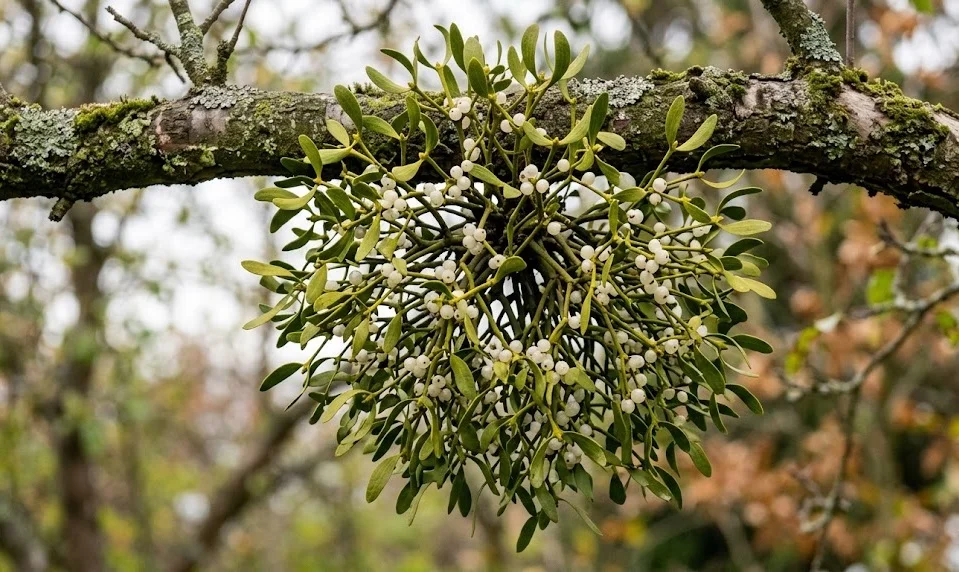

Maintaining the health of white mistletoe requires a deep understanding of its unique hemiparasitic nature within the garden ecosystem. This plant does not grow in soil but instead draws water and essential minerals directly from its host tree while producing its own energy through photosynthesis. To keep it thriving, one must primarily focus on the health of the host tree, as the mistletoe is entirely dependent on the tree’s vascular system for survival. Regular observation of the evergreen leaves and the integrity of the branch attachment point is the foundation of professional care.
Understanding the biological needs of the plant
The biological cycle of this fascinating plant is intricately linked to the seasonal rhythms of the host it inhabits. Unlike typical garden plants, it does not require traditional soil maintenance or direct weeding around its base. Instead, the gardener must ensure the host tree remains vigorous enough to support both itself and the additional burden of the parasite. This involves monitoring the sap flow and ensuring that the host tree is not under significant environmental stress.
Professional care involves recognizing that mistletoe acts as a nutrient sink within the canopy. It tends to accumulate minerals like potassium and phosphorus at higher concentrations than the surrounding tree tissues. This means the overall nutritional profile of the host must be managed with precision. If the host tree shows signs of chlorosis or stunted growth, the mistletoe will eventually suffer as the nutrient supply becomes restricted.
Water transport is perhaps the most critical aspect of the relationship between the mistletoe and its host. The mistletoe maintains a lower leaf water potential than the host tree to ensure a constant flow of moisture towards its own tissues. During periods of extreme heat, the mistletoe continues to transpire even when the tree tries to conserve water. This can lead to localized branch dieback if the water balance is not carefully monitored and supplemented when necessary.
Long-term care also involves observing the structural changes at the site of infection where the haustorium enters the wood. As the mistletoe grows, it causes a localized swelling in the host branch, which can eventually become a point of mechanical weakness. A professional gardener will periodically check the weight of the mistletoe clumps to ensure they do not threaten the limb’s stability. Pruning away excessive growth is sometimes necessary to keep the relationship symbiotic rather than destructive.
More articles on this topic
Monitoring the host tree compatibility
Selecting and maintaining the right host is the first step in successful mistletoe management. While white mistletoe can grow on a variety of deciduous trees, it shows a strong preference for apple, lime, and poplar species. The care routine must be tailored to the specific needs of the host species to ensure longevity. If the host is a fruit tree, special attention must be paid to how the mistletoe affects the annual fruit yield.
Compatibility is not just about the species of the tree but also about the age and structural health of the individual specimen. Younger trees may struggle with a heavy mistletoe load, while older, established trees can host several clumps without significant issues. It is important to evaluate the bark texture of the host, as this influences how well the mistletoe can establish its connection. Smooth-barked trees often provide a better surface for the initial attachment of the parasitic roots.
Environmental conditions around the host tree also play a significant role in the mistletoe’s vitality. Trees located in open, airy positions with plenty of light are generally better hosts than those in dense, shaded forests. The mistletoe needs sufficient airflow to prevent the buildup of moisture around its base, which could lead to rot. Ensuring the host tree has enough space to expand its canopy will indirectly benefit the mistletoe’s growth.
Gardeners should also consider the genetic resilience of the host tree when planning long-term care. Some individual trees within a species may show higher tolerance to the parasitic draw of the mistletoe. Observing which branches remain productive despite the presence of the mistletoe can help in making management decisions. Maintaining a diverse range of host trees can also prevent a single tree from being overwhelmed by too many parasitic plants.
More articles on this topic
Balancing growth and ecological impact
White mistletoe serves as a vital resource for local biodiversity, providing food and nesting sites for various bird species. Care should be taken to preserve this ecological balance while preventing the mistletoe from becoming too invasive. Managing the spread requires a delicate touch to avoid harming the host tree’s natural architecture. Many professionals choose to keep only a few well-placed clumps to maintain the aesthetic and ecological value.
The growth rate of mistletoe is relatively slow during the first few years as it establishes its internal connection. Once the haustorial system is fully integrated, the external foliage will begin to expand more rapidly. During this phase, it is crucial to monitor the size of the clumps in relation to the diameter of the host branch. If the mistletoe diameter exceeds the branch thickness significantly, the risk of wind damage increases.
Ecological care also means considering the role of birds in the mistletoe’s lifecycle and spread. Birds like the mistle thrush are essential for seed dispersal, but they can also lead to an over-saturation of the garden with new seedlings. By strategically managing existing clumps, you can influence where new seeds are likely to be deposited. This proactive approach ensures that the mistletoe remains a beautiful feature rather than a management problem.
Furthermore, the presence of mistletoe can alter the light levels reaching the inner parts of the host tree’s canopy. This can lead to changes in the growth patterns of the host’s own leaves and secondary branches. A professional approach involves selective thinning of the mistletoe foliage if it starts to shade out too much of the host. Keeping the canopy open allows both the parasite and the host to photosynthesize effectively throughout the season.
Managing canopy density for optimal health
High canopy density can sometimes trap humidity, which is not ideal for the leathery leaves of the white mistletoe. To ensure optimal health, the gardener should encourage a structure that allows for good light penetration and air movement. This often involves pruning the host tree’s own branches that may be crowding the mistletoe clumps. A well-spaced canopy reduces the risk of fungal pathogens affecting either the host or the parasite.
When managing density, it is important to understand the branching pattern of the mistletoe itself. It typically follows a dichotomous branching habit, meaning each stem divides into two new shoots every year. This predictable growth allows the gardener to estimate the future size of the plant with high accuracy. Thinning out older, more congested parts of the clump can rejuvenate the plant and improve its visual appearance.
The density of the host’s foliage also determines how much sunlight reaches the mistletoe during the summer months. While mistletoe is evergreen, it still relies heavily on the light it receives when the host tree is in full leaf. If the host tree is too dense, the mistletoe may become leggy and lose its characteristic spherical shape. Strategic thinning of the host’s outer branches can help direct more light to the interior where the mistletoe is located.
Air circulation is equally important for preventing the accumulation of soot and dust on the evergreen leaves. Clean leaves are essential for efficient photosynthesis, especially during the winter when light levels are low. In urban environments, mistletoe clumps can sometimes become covered in pollutants, which hinders their growth. Ensuring a breezy, open environment helps keep the foliage clean and functional throughout the year.
Environmental factors affecting development
Temperature and humidity are key environmental drivers that dictate the success of mistletoe in a specific location. White mistletoe is quite hardy, but it prefers regions with moderate winters and warm summers. It is particularly sensitive to extreme drying winds, which can desiccate its succulent leaves faster than the host can provide water. Creating windbreaks or planting hosts in sheltered locations can mitigate these risks.
Soil moisture levels around the host tree are indirectly the most important factor for the mistletoe. Even though the mistletoe never touches the soil, it feels the effects of drought through the host’s vascular tension. During dry spells, the host tree may limit the water available to its upper branches, which directly stresses the parasite. Keeping the root zone of the host tree mulched and well-hydrated is a fundamental part of mistletoe care.
Light quality also changes depending on the surrounding environment and the orientation of the host. Mistletoe growing on the southern side of a tree usually develops more robustly and produces more berries than those on the northern side. When caring for multiple plants, one might notice that those in direct sun have thicker, more yellow-green leaves. Understanding these subtle variations helps in assessing whether a plant is thriving or merely surviving.
Local microclimates can also influence the timing of the mistletoe’s flowering and berry production. In warmer garden pockets, the berries may ripen earlier and stay on the plant longer into the winter. Frost pockets, however, can be dangerous if the temperature drops too rapidly before the plant has acclimated. Monitoring these local variations allows the professional gardener to anticipate the needs of the plant and provide timely care.
Professional assessment of infestation levels
Regularly assessing the level of mistletoe infestation on a host tree is vital for maintaining a healthy balance. While one or two clumps are usually harmless, a high density can severely drain the tree’s resources and lead to its decline. A professional assessment involves counting the number of infections and evaluating their size relative to the host’s biomass. If the mistletoe constitutes more than twenty percent of the green mass, intervention may be required.
The location of the mistletoe on the tree is just as important as the total number of clumps. Infections located on the main trunk or primary scaffold branches are more concerning than those on small, outer twigs. Trunk infections can disrupt the flow of nutrients to the entire canopy and are much harder to manage without damaging the tree. Assessments should prioritize identifying these high-impact locations for long-term monitoring.
Health assessments should also take into account the annual growth increment of the host tree. If the tree’s new growth is significantly shorter than in previous years, the mistletoe load might be too high. A healthy host should still be able to produce vigorous new shoots despite the presence of the parasite. Comparing the growth of infested branches with non-infested ones provides a clear picture of the mistletoe’s impact.
Documentation of the assessment helps in tracking the progression of the mistletoe over several years. High-resolution photographs can be used to compare the size and berry production of the clumps from one season to the next. This historical data is invaluable for making informed decisions about pruning or host replacement. A systematic approach ensures that the mistletoe remains a managed part of the landscape.
Long term sustainability in the garden
Ensuring the long-term presence of white mistletoe requires a strategy that looks decades into the future. Since the mistletoe is only as permanent as its host, the gardener must plan for the eventual aging and replacement of the host tree. This might involve planting new host trees in advance and inoculating them when they reach a suitable size. Sustainability in this context means managing a continuous cycle of host and parasite life.
The genetic diversity of both the mistletoe and the host trees contributes to the overall resilience of the garden. Using seeds from local, healthy mistletoe populations can ensure that the plants are well-adapted to the local climate. Similarly, choosing diverse host species prevents the rapid spread of host-specific diseases that could wipe out the entire collection. Diversity is the key to a robust and self-sustaining ecosystem.
Educational management is also a part of long-term sustainability, especially in public or community gardens. Visitors should be informed about the parasitic nature of the plant and its ecological benefits to prevent accidental damage. Proper signage or guided tours can explain why certain clumps are pruned while others are left to grow. Public awareness fosters appreciation for this unique plant and supports its preservation.
Ultimately, the care of white mistletoe is an art of moderation and observation. By respecting the delicate link between the host and the parasite, the gardener can enjoy the unique beauty of this plant for many years. It requires a move away from traditional gardening methods toward a more holistic, ecosystem-based approach. When managed with professional care, mistletoe becomes a timeless and enchanting element of any horticultural collection.