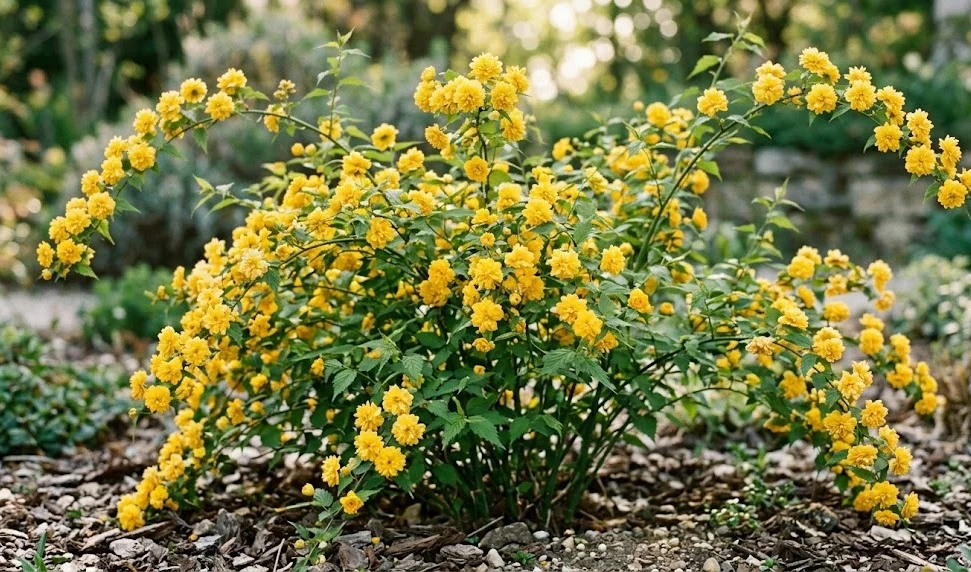

The Japanese kerria is a remarkably cold-hardy shrub, but providing professional winter care ensures that it emerges in the spring with its vigor and blooming potential fully intact. While it can survive significant freezing temperatures, the combination of cold winds and fluctuating moisture levels can still pose a threat to its delicate green stems. Successful overwintering involves a series of strategic steps taken in the late autumn to prepare the plant for the dormant season. By focusing on root protection and stem health, you can guarantee a spectacular golden display when the warmth finally returns.
Assessing cold hardiness and preparation
This species is generally rated for hardiness down to USDA Zone 4 or 5, meaning it can withstand temperatures well below zero degrees Celsius. You should identify your local hardiness zone to understand the specific level of winter stress your plants are likely to face. In warmer regions, the plant may remain semi-evergreen, while in colder climates, it will drop all its leaves and enter a deep dormancy. Understanding this natural cycle is the first step in providing the appropriate level of winter protection.
Late autumn preparation begins with a thorough inspection of the shrub’s overall health before the first hard freeze. You should remove any diseased or damaged wood that might serve as an entry point for pathogens during the damp winter months. It is also a good time to check that the plant is structurally sound and not leaning excessively, which could make it vulnerable to snow loads. A clean and healthy plant is much better equipped to handle the stresses of the coming season.
Hydration remains a critical factor even as the plant enters its dormant phase. You should continue to provide supplemental water during a dry autumn until the ground actually freezes solid. Desiccation, or drying out, is a major cause of winter dieback, especially when the roots cannot draw moisture from frozen soil while the stems are exposed to wind. Ensuring the plant enters the winter with fully hydrated tissues is a simple but effective professional secret for success.
Avoid any heavy pruning or late-season fertilization that might stimulate new, tender growth in the weeks leading up to winter. These soft shoots will not have enough time to “harden off” or develop a protective layer of bark before the cold hits. You want the plant to focus its energy on strengthening its existing structure and storing nutrients in its root system. A well-timed transition into dormancy is essential for the long-term survival of the Japanese kerria.
More articles on this topic
Protecting the root system
The roots of the Japanese kerria are the most sensitive part of the plant when it comes to extreme temperature fluctuations. You should apply a fresh, thick layer of organic mulch around the base of the shrub in late autumn after the ground has cooled but before it freezes. A depth of three to four inches of wood chips, shredded bark, or straw provides an excellent insulating blanket for the soil. This layer helps to keep the soil temperature more consistent, preventing the damaging cycle of freezing and thawing.
Proper mulching also serves to retain vital moisture in the soil throughout the winter months. Even in a dormant state, the roots require a baseline level of hydration to maintain their cellular integrity. The mulch acts as a barrier, reducing the amount of moisture lost to the cold, dry air that often accompanies winter weather. Be sure to pull the mulch back a few inches from the main stems to prevent moisture from being trapped against the bark, which can cause rot.
In particularly cold regions or for young, newly planted shrubs, you might consider an extra layer of protection such as mounding soil or compost around the crown. This “hilling up” technique is commonly used for roses and works equally well for protecting the base of a Japanese kerria. The mound should be about six to eight inches high and can be removed in the early spring once the danger of severe frost has passed. This extra effort provides a safety net for the most critical part of the plant’s anatomy.
Maintaining a healthy soil structure throughout the year also contributes to better winter root survival. You will find that well-drained soil is less prone to “frost heaving,” where the expansion of freezing water pushes the plant out of the ground. If your soil is prone to this issue, adding organic matter to improve drainage is a long-term solution you should implement during the growing season. A stable root environment is the foundation of a resilient and long-lived garden shrub.
More articles on this topic
Managing snow and ice loads
The elegant, arching canes of the Japanese kerria are flexible, but they can still be damaged by the weight of heavy, wet snow or ice. You should monitor the plant after significant winter storms and gently brush away any excessive snow accumulation. Use a soft broom or your hands to lift the branches from underneath, being careful not to snap them in the cold, brittle air. Removing the weight early prevents the stems from becoming permanently deformed or breaking under the strain.
If your garden is located in an area prone to frequent heavy snow, you might consider providing some light structural support for the winter. You can loosely tie the main stems together with soft garden twine to help them support each other against the weight. This “bundling” technique should be done carefully to avoid restricting airflow or damaging the green bark. It is a temporary measure that can be easily undone once the spring thaw begins.
Ice storms are particularly dangerous because the weight is much greater and the ice is harder to remove without causing damage. You should never try to chip or scrape ice off the branches, as this will almost certainly tear the bark and damage the underlying tissue. The best approach is to let the ice melt naturally, even if it means the branches are bent to the ground for a short time. Most healthy Japanese kerria shrubs have a surprising amount of “memory” in their wood and will return to their original shape once the weight is gone.
For specimens planted near roof lines or walkways, you must be aware of the danger of falling snow or ice from buildings. You should avoid planting this shrub in “snow dump” zones where it will be repeatedly crushed by falling drifts. If a plant is already in such a location, a temporary wooden A-frame structure can be placed over it to deflect the falling snow. Protecting the physical integrity of the stems ensures that you will have a full and beautiful display the following spring.
Transitioning to spring growth
As the days begin to lengthen and the soil starts to warm, you should carefully monitor your Japanese kerria for the first signs of life. You will see the buds on the green stems begin to swell and take on a more vibrant appearance even before the first leaves emerge. This is the time to remove any winter protection, such as mounds of soil or extra heavy mulch, to allow the ground to warm up. Be ready to provide temporary protection if a sudden late spring frost is predicted after the buds have started to open.
Once the danger of severe freezing has passed, you should perform a “spring cleaning” of the shrub to remove any winter damage. Look for stem tips that have turned brown or shriveled and prune them back to the first set of healthy, green buds. You may also find some stems that have been broken by snow or wind that need to be cleaned up with sharp, sterilized pruners. This early intervention ensures that the plant’s energy is directed into healthy new growth and flower production.
The early spring is also the perfect time to evaluate how well the plant survived the winter and adjust your care routine for the future. If you notice significant dieback, it might be a sign that the plant needs a more sheltered location or better hydration during the autumn. Keeping a garden journal can help you track these patterns and make informed decisions about your landscape management. Every winter is a learning experience that makes you a more effective and professional gardener.
Finally, remember that the Japanese kerria is a tough survivor that has evolved to handle the changing seasons with grace. You will find that even if it suffers some minor winter damage, it is usually quick to recover and push out vigorous new growth. Your role in the overwintering process is to minimize the stresses and provide the best possible conditions for the plant to rest. With proper care, your Japanese kerria will remain a reliable and stunning highlight of your garden for many years to come.