
Preparing coltsfoot for the winter months is a straightforward yet critical process that ensures the plant’s survival and early spring performance. As a hardy perennial native to temperate climates, coltsfoot has evolved efficient mechanisms to withstand freezing temperatures and dormant periods. However, providing a little extra care during the transition into winter can protect the rhizomes from extreme fluctuations and set the stage for a vigorous return. A professional approach to overwintering focuses on protecting the underground structures while preparing the site for the upcoming flowering season.
The biology of dormancy
Dormancy in coltsfoot is triggered by the shortening days and cooling temperatures of late autumn. During this time, the plant begins to withdraw nutrients and moisture from its large leaves and transports them down into the thick, creeping rhizomes. This process is essential for the plant to build up the energy reserves needed to produce flowers in the very early spring, often while the ground is still cold. Understanding that the plant is not “dying” but merely shifting its energy underground helps the gardener appreciate the importance of the autumn care routine.
The rhizomes themselves are remarkably frost-tolerant, but they are not entirely indestructible. They are the storage organs of the plant, containing high concentrations of carbohydrates and specialized proteins that act as a natural antifreeze. As long as the soil does not freeze solid for extended periods at the depth where the rhizomes are located, the plant will remain healthy. In regions with exceptionally harsh winters, the primary goal of overwintering is to ensure the soil temperature remains relatively stable.
Snow cover is actually one of the best natural insulators for coltsfoot during the winter months. A thick layer of snow protects the ground from the drying effects of cold winds and helps maintain a more consistent temperature in the root zone. In areas without reliable snow, the plant is more vulnerable to “frost heaving,” where the repeated freezing and thawing of the soil can push the rhizomes toward the surface. This exposure can lead to desiccation or physical damage, which is why artificial protection is often recommended in these climates.
By late winter, the coltsfoot is already biologically “awake,” even if there is no sign of growth above the surface. The flower buds are fully formed within the rhizomes and are just waiting for the first slight increase in soil temperature and day length to push through the crust. This internal clock is highly sensitive and allows the plant to get a head start on the growing season before its competitors. Managing the overwintering process correctly ensures that this delicate timing is not disrupted by environmental stress.
More articles on this topic
Autumn cleanup and protection
The first step in the overwintering process is a thorough cleanup of the coltsfoot patch once the first hard frost has killed back the foliage. Removing the dead, brown leaves is important not just for aesthetics, but also for sanitation purposes. Old foliage can harbor fungal spores or provide hiding spots for pests like slugs that might emerge early in the spring. Carefully raking away the debris and adding it to a hot compost pile reduces the risk of disease carryover into the next growing season.
Once the area is cleared, applying a light layer of organic mulch can provide the necessary insulation for the rhizomes. Straw, shredded leaves, or a thin layer of well-rotted compost are all excellent choices for this purpose. Avoid using heavy wood chips or thick mats of wet leaves, as these can create a barrier that is difficult for the delicate flower stalks to penetrate in the spring. A layer of about five to eight centimeters is usually sufficient to buffer the soil against the worst of the winter cold.
In professional settings, it is also wise to check the moisture levels of the soil before the ground freezes. If the autumn has been exceptionally dry, providing a final deep watering can help the plant enter dormancy in a hydrated state. Desiccation is a common cause of winter kill in many perennials, as the roots continue to lose some moisture even when the plant is dormant. A well-hydrated rhizome is much more resilient to the stresses of freezing temperatures than one that is already struggling with water loss.
Finally, take the time to inspect any physical barriers or edging that you have installed to contain the coltsfoot. Winter is a good time to make repairs or adjustments to these structures when the foliage is out of the way. Ensuring that the barriers are intact and at the correct depth will prevent the rhizomes from “escaping” into unwanted areas during their late-winter expansion. This proactive maintenance saves a significant amount of work once the busy spring season begins in earnest.
More articles on this topic
Managing winter moisture and drainage
While coltsfoot loves moisture, excessively wet and cold soil during the winter can lead to rhizome rot. If the planting site is in a low-lying area where water tends to collect and freeze, it can deprive the roots of oxygen and invite anaerobic pathogens. Ensuring that the subsoil has adequate drainage is the best long-term solution to this problem. In the short term, creating small diversion channels or slightly mounding the soil over the coltsfoot patch can help shed excess surface water during winter thaws.
The freeze-thaw cycle is particularly challenging for the soil structure and the plants within it. When the water in the soil freezes, it expands, and when it thaws, it can leave behind large pores or even cause the soil to become “soupy.” This instability can damage the fine feeder roots that the coltsfoot depends on for nutrient uptake. A good layer of mulch, as mentioned earlier, helps minimize these fluctuations by slowing down the rate at which the soil temperature changes.
In urban or roadside settings, winter care also involves protecting the coltsfoot from the effects of de-icing salts. Runoff from roads and sidewalks can carry high concentrations of salt into the soil, which can be toxic to the rhizomes and interfere with their ability to absorb water. If the patch is located near a treated area, installing a temporary burlap screen or a low plastic barrier can help divert the salty slush away from the plants. Rinsing the area with fresh water during a mid-winter thaw can also help leach away some of the accumulated salts.
Observation is a key part of professional winter management, even when the plants seem to be doing nothing. After a particularly heavy storm or a period of unusual weather, take a walk through the site to check for any issues. Look for signs of erosion, disturbed mulch, or standing water that might need to be addressed. Being present and attentive throughout the winter ensures that you can catch and correct small problems before they impact the health of the colony in the spring.
Preparing for spring emergence
As the winter begins to wane, the focus of the overwintering process shifts toward preparing the site for the arrival of the first flowers. In late February or early March, depending on your climate, it is often beneficial to lightly rake back some of the mulch from the center of the patch. This allows the sun to warm the soil surface more quickly, signaling to the rhizomes that it is time to send up the flower stalks. Be careful not to disturb the soil too deeply, as you might accidentally snap off the tender buds that are just below the surface.
If you have used a particularly thick or heavy mulch, you may need to remove a portion of it entirely to ensure the flowers can emerge unimpeded. Coltsfoot flowers are relatively small and delicate when they first appear, and they can sometimes struggle to push through a dense layer of matted straw or leaves. Once the flowers have finished blooming and the leaves begin to appear, the mulch can be redistributed or replenished to help manage weeds and moisture. This targeted approach to mulch management respects the plant’s unique growth habit.
Early spring is also the best time to perform a quick soil test if you haven’t done one recently. Knowing the nutrient status of the soil before the main growing season begins allows you to plan your fertilization strategy accurately. If the test indicates a need for lime or a specific mineral, these can be applied just as the ground thaws so they can be carried down to the root zone by spring rains. This early intervention provides the plants with everything they need for a successful and vibrant season.
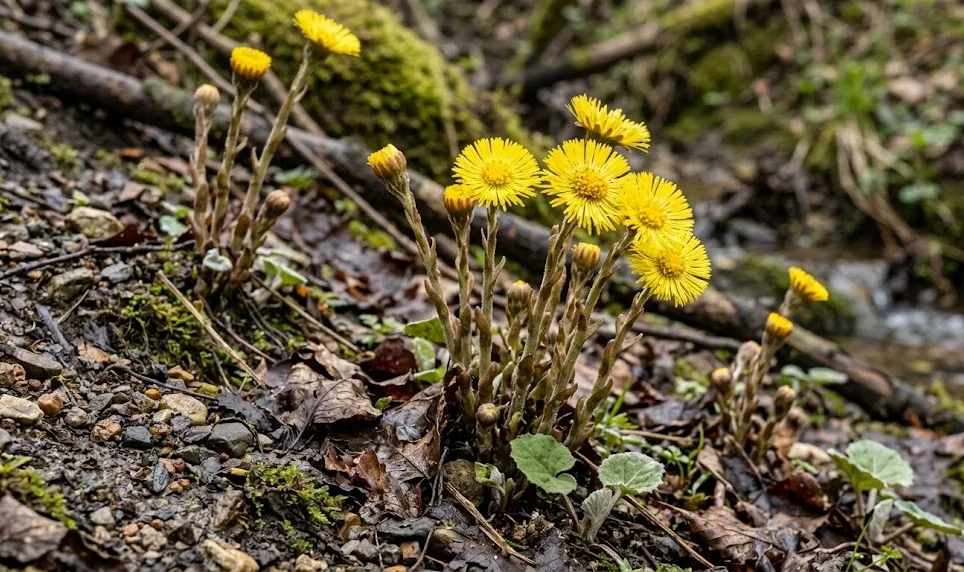
The appearance of the first golden coltsfoot flowers is the ultimate reward for a well-managed overwintering process. These resilient blooms often appear while there is still snow on the ground, providing a vital early food source for pollinators like honeybees and bumblebees. By taking the time to protect the rhizomes and manage the site throughout the winter, you ensure that this cycle of renewal continues year after year. Professional care is about working with the plant’s natural rhythm to achieve the best possible results.