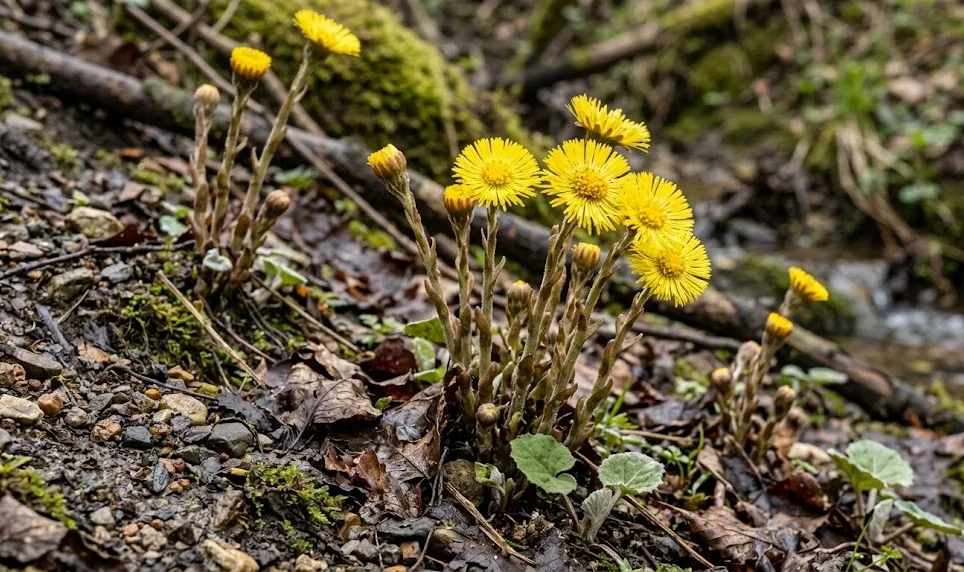

Managing the health and vitality of coltsfoot requires a deep understanding of its unique growth cycle and ecological niche. This early-blooming perennial is often one of the first signs of spring, showing its golden flowers well before any foliage appears on the landscape. To keep the plant thriving in a garden or professional setting, one must balance its aggressive spreading nature with its specific soil requirements. Proper care ensures that the plant remains a beneficial addition to the herb garden rather than an unmanageable weed.
Understanding the growth cycle
The growth cycle of coltsfoot is distinctive because the flowering stems emerge directly from the rhizomes in late winter or early spring. These stems are covered in small scales and lack true leaves, which only begin to develop after the flowers have faded and set seed. Observing this transition is vital for the gardener, as it dictates the timing of various maintenance tasks throughout the season. Failure to monitor these early signs can lead to missed opportunities for controlling the plant’s spread or harvesting the flowers at their peak medicinal potency.
Once the flowers have withered, the plant redirects its energy into the development of its large, heart-shaped leaves. These leaves can grow quite large and are responsible for the photosynthetic activity that sustains the underground rhizome system for the following year. It is during this leafy stage that the plant requires the most consistent care in terms of monitoring for environmental stressors. Understanding that the foliage is the powerhouse of the plant helps in making decisions about when to provide additional resources or when to intervene with pruning.
The root system of coltsfoot is comprised of extensive creeping rhizomes that can reach deep into the soil profile. These roots are incredibly resilient and allow the plant to survive in challenging environments where other species might struggle. Because of this, care must be taken to ensure the plant does not encroach upon neighboring species that are less competitive. A professional approach involves creating physical barriers or choosing planting locations where the spread can be naturally contained by landscape features.
Seasonal transitions bring about changes in how coltsfoot interacts with its surrounding ecosystem. During the height of summer, the large leaves provide significant ground cover, which can help suppress other weeds but also requires adequate moisture to prevent wilting. As autumn approaches, the plant begins to senesce, sending nutrients back down into the rhizomes for winter storage. Recognizing these shifts allows the gardener to adjust their management strategies to align with the plant’s natural biological rhythm.
More articles on this topic
Soil quality and preparation
The foundation of successful coltsfoot management lies in providing a soil structure that mimics its natural habitat on riverbanks and disturbed sites. This plant particularly enjoys heavy, clay-based soils that retain moisture but still offer enough structure for rhizome expansion. If the soil is too sandy or drains too quickly, the plant may struggle to maintain the vigor needed for early spring flowering. Amending the soil with organic matter can help improve the texture and water-holding capacity if the natural conditions are not ideal.
Maintaining a specific pH level is another critical aspect of caring for this species, as it generally prefers neutral to slightly alkaline conditions. Regular soil testing can reveal if the ground has become too acidic, which might inhibit the plant’s ability to take up essential minerals. If necessary, applications of lime can be used to bring the pH back into the optimal range for sustained health. Professionals often find that keeping the soil chemistry stable leads to much more consistent growth patterns over several seasons.
Compaction is often an issue in professional agricultural settings, but coltsfoot is surprisingly adept at navigating through tight soil structures. However, to see the best results, ensuring that the soil is not overly packed allows the rhizomes to breathe and expand without excessive resistance. Periodic aeration around the perimeter of the colony can stimulate new growth and prevent the center of the patch from becoming stagnant. This practice also improves the infiltration of rainwater and any applied nutrients.
Drainage, while often secondary to moisture retention for this plant, must still be managed to avoid waterlogged conditions that lead to root rot. While coltsfoot loves damp ground, standing water for extended periods can deprive the rhizomes of oxygen and invite anaerobic pathogens. Creating a slight slope or ensuring that the subsoil is not completely impermeable helps maintain the right balance. Observing how the site handles heavy rainfall provides valuable data on whether further drainage modifications are required.
More articles on this topic
Weeding and competition management
Managing competition is essential because, while coltsfoot is vigorous, it can still be crowded out by highly aggressive invasive grasses in its early stages. Keeping the area immediately surrounding the coltsfoot patch clear of tall weeds ensures that the low-growing flowers receive enough sunlight in the spring. Once the large leaves develop, they usually provide enough shade to suppress most competitors naturally. However, early season intervention is key to establishing a dominant and healthy colony.
Identifying the specific weeds that threaten the coltsfoot patch requires a keen eye for local flora. Perennial grasses with deep taproots or similar rhizomatous habits can become intertwined with the coltsfoot, making them difficult to remove later. Hand-pulling these competitors while they are still young prevents them from establishing a foothold in the middle of the patch. Consistency in this task reduces the overall workload as the season progresses and the coltsfoot canopy closes.
The use of mulches can be a double-edged sword when caring for coltsfoot due to its unique flowering habit. A thick layer of heavy wood chips might prevent the delicate flower stalks from emerging easily in the late winter. Instead, a light layer of leaf mold or straw is often preferred, as it protects the soil surface without creating a physical barrier. This organic layer eventually breaks down and feeds the soil, supporting the plant’s nutritional needs.
In professional landscapes, creating a clear boundary or “no-man’s land” around the coltsfoot patch helps prevent it from escaping into unwanted areas. This can be achieved through regular mechanical edging or by burying deep plastic root barriers. Monitoring these boundaries throughout the growing season ensures that no stray rhizomes have bypassed the defenses. This proactive approach saves significant time and effort that would otherwise be spent on eradicating the plant from lawns or flower beds.
Nutritional balance and health
Providing the right balance of nutrients is crucial for a plant that spends so much energy on early season reproduction. While coltsfoot is not a heavy feeder compared to many garden vegetables, it does benefit from a baseline level of fertility. A slow-release organic fertilizer applied in the autumn can provide the necessary boost for the following spring’s flower production. Avoid over-fertilizing with high-nitrogen products, as this can lead to excessive foliage at the expense of overall plant hardiness.
Micronutrients also play a significant role in the physiological processes of the plant, including enzyme activation and chlorophyll production. If the leaves show signs of chlorosis or unusual spotting, it may indicate a deficiency in minerals like magnesium or iron. Foliar sprays or soil drenches with chelated minerals can quickly correct these issues during the active growing phase. A healthy plant is much more capable of resisting pests and environmental stressors than one that is nutritionally starved.
Observing the color and texture of the leaves provides immediate feedback on the plant’s nutritional status and overall health. Deep green, firm leaves indicate that the plant is successfully absorbing nutrients and has adequate water. On the other hand, stunted growth or pale leaves should prompt a review of the current care regimen. Adjusting the maintenance schedule based on these visual cues is a hallmark of professional horticultural practice.
Long-term health also depends on the age of the colony, as older patches can sometimes become overcrowded and less productive. Thinning out the rhizomes every few years can rejuvenate the patch and encourage more vigorous growth. This process involves carefully removing a portion of the older root mass to make room for younger, more active sections. Such rejuvenation ensures that the coltsfoot remains a productive part of the garden for many years to come.
Harvesting for medicinal use
If coltsfoot is being grown for its traditional medicinal properties, the timing and method of harvest are critical components of its care. The flowers should be gathered as soon as they open but before they begin to turn into seed heads. This ensures that the concentration of active compounds is at its peak and prevents the plant from self-seeding excessively. Using sharp shears to take only the flower heads leaves the rest of the stem to wither naturally.
The leaves are also frequently harvested, but this should only be done once they have reached their full size and maturity. Taking too many leaves too early in the season can weaken the plant by reducing its ability to photosynthesize and store energy. A sustainable approach involves harvesting no more than one-third of the foliage from any single plant. This allows the colony to recover quickly and maintain its vigor for the remainder of the growing season.
Proper drying and storage are the final steps in the care process for those utilizing the plant’s harvest. The plant material should be dried in a cool, dark place with good airflow to prevent the growth of mold or the degradation of essential oils. Once fully dry, storing the herbs in airtight glass containers protects them from moisture and light. Professionals always label their harvests with the date and location to ensure quality control and traceability.
Ethical harvesting practices are essential, even when dealing with a plant that grows as readily as coltsfoot. If gathering from wild-simulated patches, one must ensure that the environment is free from pollutants like heavy metals or pesticides. Since coltsfoot often grows in industrial or roadside areas, soil testing is recommended to ensure the harvested material is safe for use. Caring for the plant also means caring for the purity of the products it yields.
Environmental stressors and adaptations
Coltsfoot is a remarkably hardy plant, but it can still be affected by extreme weather events or sudden environmental changes. Late spring frosts can sometimes damage the developing leaves, although the early flowers are surprisingly resistant to cold. If a severe freeze is predicted after the leaves have emerged, temporary cover can provide the necessary protection. Understanding the local microclimate helps the gardener anticipate these challenges and respond accordingly.
Drought stress is another factor that can impact the longevity of the coltsfoot patch during the hot summer months. While the deep rhizomes offer some protection, prolonged lack of water will cause the large leaves to collapse and eventually die back prematurely. Providing supplemental irrigation during these periods keeps the plant active and prevents it from entering an early, forced dormancy. This is particularly important if the plant is being grown in a location with limited natural groundwater.
Urban environments present unique stressors, such as salt runoff from roads in the winter or compacted soil from foot traffic. Coltsfoot is often chosen for these areas because of its tolerance for poor conditions, but it still requires some level of protection. Placing the plants away from direct salt spray or installing barriers can mitigate the chemical stress on the rhizomes. Even the toughest plants benefit from a management plan that acknowledges the realities of their surroundings.
Air quality and light pollution are often overlooked factors in the care of perennial plants in agricultural settings. While coltsfoot is generally unfazed by urban air, excessive dust or pollutants can coat the leaves and reduce photosynthetic efficiency. Occasionally rinsing the foliage with clean water can help maintain healthy gas exchange for the plant. By addressing these subtle environmental factors, the gardener ensures that the coltsfoot can thrive even in less-than-ideal circumstances.
Long-term maintenance strategies
Developing a long-term strategy for coltsfoot care involves balancing its benefits with its potential to become invasive. Regular monitoring of the site throughout the year allows for early detection of any issues, whether they be health-related or related to uncontrolled spread. A professional maintenance log can help track the timing of flowering, leaf development, and any interventions taken. This data becomes invaluable over time for refining the care protocol for a specific site.
Integrating coltsfoot into a larger polyculture or a medicinal garden requires careful planning to ensure harmony between species. It works well as a ground cover under taller, deep-rooted shrubs that do not compete for the same soil space. By understanding the architectural role the plant plays in the landscape, care becomes a matter of managing interactions rather than just focusing on a single species. This holistic view is essential for sustainable and professional garden management.
Education and awareness are also part of the long-term care for this plant, especially in public or shared spaces. Providing information about its ecological role as an early nectar source for bees can help others appreciate its presence. When people understand the value of the plant, they are more likely to support the management efforts required to keep it healthy. Care, in this sense, extends beyond the soil and into the community that interacts with the landscape.
Finally, always be prepared to adapt the care plan as the environment changes over the years. Climate shifts or changes in nearby land use can significantly alter the conditions that the coltsfoot patch faces. A successful gardener remains observant and flexible, willing to change their watering, fertilizing, or pruning habits to meet the plant’s evolving needs. This commitment to ongoing adjustment ensures that the coltsfoot remains a vibrant and controlled part of the agricultural environment.