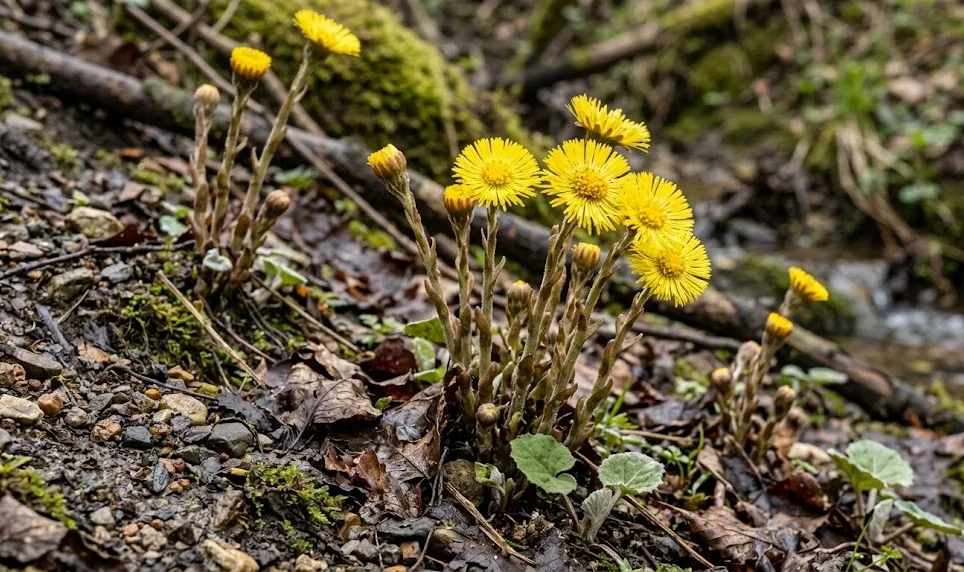

Optimizing the light environment for coltsfoot is a key factor in ensuring its long-term health and the quality of its medicinal properties. As a pioneer species, coltsfoot is adapted to a range of light conditions, but it performs best when its specific physiological needs are met throughout the season. From the early spring flowers that crave the first warmth of the sun to the large summer leaves that fuel the underground rhizomes, light plays a fundamental role in every stage of the plant’s life. Understanding these requirements allows the professional grower to select the best sites and manage the surrounding vegetation for maximum benefit.
Sunlight and early spring flowering
The flowering phase of coltsfoot is highly dependent on light, as the plant uses the sun’s energy to trigger the emergence of its golden blooms from the cold soil. In the late winter and early spring, coltsfoot thrives in full sun, which helps warm the ground and provides the necessary cues for the flower stalks to rise. Because this happens before many trees and shrubs have leafed out, the plant is often able to capture direct sunlight even in areas that will later be quite shaded. This “window of opportunity” is a critical part of the plant’s reproductive strategy.
A lack of sufficient sunlight during this early period can lead to delayed flowering or fewer blooms overall. If the site is heavily overshadowed by evergreen trees or permanent structures, the soil may remain too cold for too long, pushing the flowering period back and potentially missing the window for early-season pollinators. In professional agricultural settings, choosing a south-facing slope or an open area with no obstructions to the south and east will provide the best results. The intensity of the early spring sun is rarely too much for the resilient flower stalks.
The flowers themselves are heliotropic, meaning they track the movement of the sun across the sky throughout the day. This behavior maximizes the amount of solar radiation they receive, which helps maintain the temperature of the floral reproductive organs. This warmth is not only beneficial for the development of the seeds but also makes the flowers more attractive to insects seeking a heat source in the chilly spring air. Observing this movement provides a fascinating glimpse into the plant’s sophisticated adaptation to its light environment.
Once the flowers have been pollinated and begin to set seed, their light requirements remain high to ensure the seeds mature quickly and effectively. The feathery seed heads, or “clocks,” need to dry out in the sun and wind so they can be carried away to new locations. If the environment is too dark and damp, the seeds may rot or fail to disperse properly, limiting the plant’s ability to colonize new ground. Proper light management during this phase is therefore essential for both the current health of the patch and its future expansion.
More articles on this topic
Foliage development and photosynthesis
After the flowers have faded, the coltsfoot redirects its energy into producing its large, heart-shaped leaves, which have their own specific relationship with light. While the flowers love full sun, the leaves are surprisingly adaptable and can thrive in conditions ranging from full sun to partial shade. In fact, in very hot climates, a bit of afternoon shade can be beneficial, as it prevents the large leaves from losing too much moisture through transpiration. This flexibility is one reason why coltsfoot is such a successful and widespread species.
The size and thickness of the leaves are often a direct reflection of the light levels they receive during their development. In high-light environments, the leaves tend to be smaller, thicker, and more leathery, with a dense covering of white hairs on the underside to reflect excess radiation. In more shaded locations, the leaves will grow much larger and thinner to maximize their surface area for light capture. This plastic growth response allows the plant to optimize its photosynthetic rate regardless of the specific site conditions.
Photosynthesis is the engine that drives the growth of the underground rhizome system, and light is the primary fuel for this process. The leaves must capture enough energy during the summer months to store a sufficient amount of carbohydrates for the following year’s early flowering. If the coltsfoot is grown in too much shade, such as under a dense forest canopy, the rhizomes may eventually become depleted, leading to a decline in the health of the colony over several years. A professional grower always monitors the vigor of the leaves to ensure they are getting the light they need to function efficiently.
Managing the surrounding vegetation is a key part of maintaining the correct light levels for the coltsfoot foliage. Tall weeds or fast-growing shrubs can quickly overshadow the relatively low-growing coltsfoot, robbing it of the light it needs to thrive. Regular pruning of nearby plants or occasional mowing of the surrounding grass can help maintain the open, sunny conditions that the plant prefers. This active management ensures that the coltsfoot remains the dominant ground cover in its designated area.
More articles on this topic
Light and medicinal potency
For those growing coltsfoot for its medicinal properties, the light environment can have a significant impact on the concentration of active chemical compounds within the plant. Research suggests that the production of secondary metabolites, which often provide the plant’s therapeutic effects, is influenced by the intensity and quality of the light it receives. Plants grown in brighter, more stressful environments often produce higher levels of these compounds as a way to protect themselves from UV radiation and other environmental factors.
The timing of harvest in relation to the light of the day is also a traditional consideration for herbalists and professional growers alike. Some believe that harvesting the leaves in the early morning, once the dew has dried but before the sun is at its full intensity, results in the highest quality material. This is because the plant’s metabolic activity changes throughout the day in response to light and temperature cycles. While scientific evidence on the exact timing varies, consistency in harvesting practices is always a hallmark of a professional operation.
If the coltsfoot is being grown in a controlled environment, such as a greenhouse or a high tunnel, managing the light spectrum becomes an important tool. Using specialized glazing or supplemental lighting can help replicate the high-UV environment of the plant’s natural habitat, potentially enhancing its chemical profile. However, for most outdoor growers, the goal is simply to ensure the plants have access to clean, unobstructed natural sunlight. The natural variation in light levels throughout the season provides all the complexity the plant needs.
Ultimately, the light requirements of coltsfoot are a balance between its need for energy and its need for protection. By understanding the different roles that light plays during the flowering and foliage phases, the grower can create an environment that supports the plant’s full potential. Whether the goal is ecological restoration, soil stabilization, or medicinal harvest, proper light management is a fundamental pillar of successful coltsfoot care. A well-lit patch is a healthy, vibrant, and productive part of any agricultural landscape.

