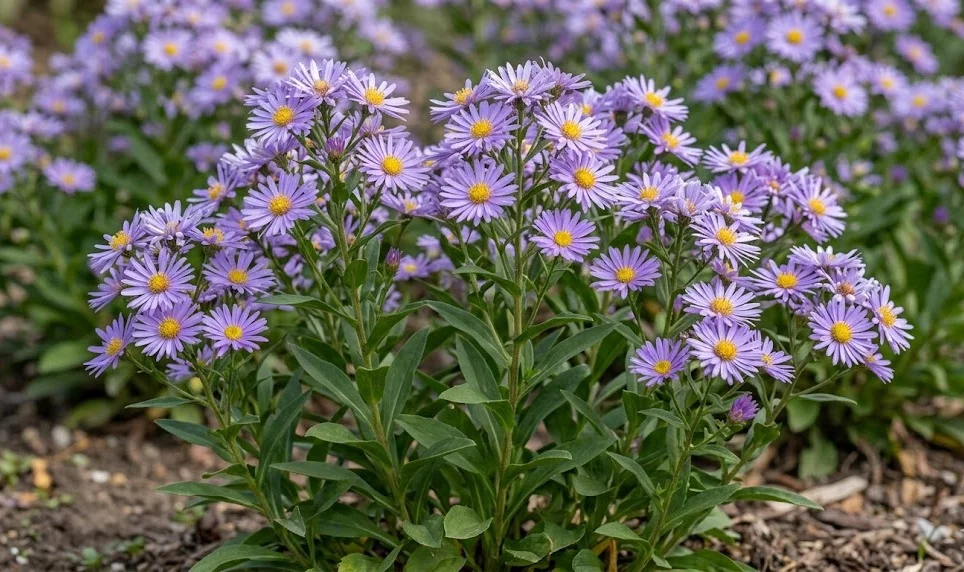

Italian aster is a hardy perennial in many temperate gardens, but winter success depends heavily on drainage and crown health. Cold alone is not usually the main danger; prolonged wetness around the roots and crown is often more damaging. A plant that enters winter firm, well-rooted, and not overfed has the best chance of returning strongly in spring. Sensible autumn care makes overwintering far more reliable.
Preparing the plant in autumn
As flowering ends, Italian aster gradually shifts energy back into its crown and roots. This natural process should not be interrupted by late feeding. Fertiliser applied too late can encourage soft shoots that are vulnerable to frost. Let the plant slow down naturally as temperatures fall.
Deadheading can be done after flowering if a tidy appearance is desired. However, it is not always necessary to cut everything immediately. Some stems can provide winter structure and slight protection for the crown. They may also catch leaves or snow, which can buffer the base of the plant.
Remove any diseased foliage before winter. Leaves affected by mildew or other fungal problems should not remain packed around the crown. Good sanitation reduces the amount of disease material carried into the next season. Dispose of badly infected plant waste responsibly.
Autumn is also a good time to assess drainage. If the plant struggled during wet weather, winter may worsen the problem. Improving the site before severe cold arrives can be useful. In difficult soil, lifting and replanting on a slight mound may save the clump.
More articles on this topic
Protecting the crown and roots
The crown is the most important part of the overwintering plant. It must remain alive, firm, and free from persistent rot. Avoid burying it under heavy wet mulch. Protection should insulate without trapping too much moisture.
A light mulch of compost, leaf mould, or fine bark can be used in colder gardens. Keep the material loose and avoid piling it directly onto the crown. The purpose is to moderate temperature changes, not suffocate the plant. In wet climates, mineral mulch may be safer than dense organic material.
Snow cover can sometimes protect perennials by insulating them from extreme temperature swings. Problems arise when freeze-thaw cycles combine with waterlogged soil. Roots may be damaged if saturated ground repeatedly freezes. Good drainage reduces this risk significantly.
Do not cut the plant down too aggressively in late autumn if the site is exposed. Leaving short stems can mark the plant’s position and protect emerging buds. Final cleanup can be done in early spring. This approach is especially useful in mixed borders where crowns are easily damaged by tools.
More articles on this topic
Overwintering container plants
Container-grown Italian asters need more protection than plants in open ground. Their roots are exposed to colder temperatures because pots freeze from the sides. They can also dry out during winter winds. A potted plant should never be forgotten once flowering has ended.
Move containers to a sheltered position after the plant becomes dormant. A cold frame, unheated greenhouse, wall base, or protected patio corner can be suitable. The aim is not warmth, but reduced exposure to soaking rain and hard freezing winds. Too much warmth can disturb dormancy.
The potting mix should remain slightly moist, not wet and not bone dry. Check containers during dry winter spells because rain may not reach sheltered pots. Water sparingly when needed, preferably on milder days. Avoid watering before severe frost if the compost is already damp.
Raise pots on feet to improve drainage. This prevents the base from sitting in cold water. Wrapping the pot with insulating material can help in severe climates. The crown should still have airflow, so do not seal the whole plant in plastic.
Spring recovery after winter
In spring, Italian aster should begin producing fresh shoots from the crown. Remove old stems carefully once new growth is visible. Cutting too low before seeing the buds can risk crown damage. Use clean, sharp secateurs for a neat finish.
Check for winter losses by examining the crown. Healthy growth should be firm and show living buds or shoots. Soft, rotten sections should be removed if only part of the clump is affected. If the entire crown is mushy, the plant has likely failed due to wet conditions.
Spring is also the best time to divide congested plants. Division refreshes old clumps and gives the strongest pieces more space. Replant divisions into improved soil with good drainage. Water them in well but avoid keeping the soil saturated.
Do not rush fertilising as soon as growth appears. Wait until the plant is actively growing and the soil has warmed. A light compost mulch is usually enough at first. The goal is steady recovery, not forced growth.