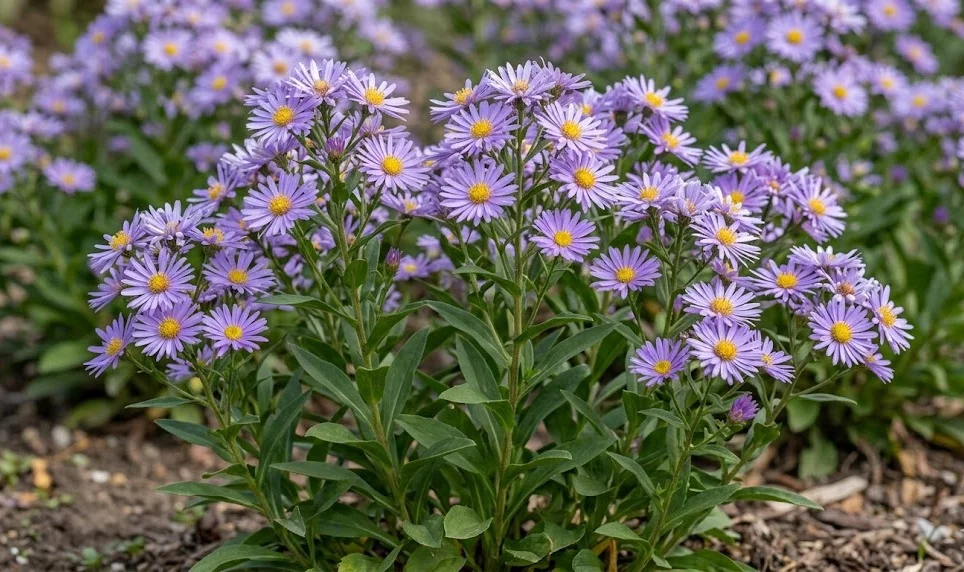

Italian aster is one of those dependable perennial flowers that rewards careful placement more than constant intervention. It forms tidy clumps, carries daisy-like blooms in late summer and autumn, and brings valuable colour when many borders are beginning to fade. Its natural character suits sunny, airy gardens where the soil drains well and the gardener avoids excessive feeding. With thoughtful care, it can remain productive, graceful, and floriferous for many years.
Choosing the right garden position
Italian aster performs best in a bright, open position where it receives plenty of direct sunlight. A sunny border encourages compact growth, strong stems, and generous flowering. In too much shade, the plant may stretch, lean, and produce fewer blooms. Good light also helps the foliage dry quickly after rain, which reduces the risk of fungal problems.
The ideal site is warm but not suffocating, especially in regions with humid summers. Air movement around the clump is important because dense, still conditions can encourage mildew. Avoid placing the plant tightly between shrubs that trap moisture around the leaves. A border edge, gravel garden, cottage-style bed, or sunny herbaceous planting often suits it well.
Soil drainage matters just as much as sunlight. Italian aster dislikes sitting in heavy, wet ground for long periods, particularly during winter. If the soil is clayey, improving structure before planting is far better than trying to correct problems later. Grit, compost, and gentle mounding can all help create a healthier root zone.
This perennial also benefits from thoughtful spacing. Crowded plants compete for light, water, and nutrients, and they create a humid microclimate around the foliage. Leaving enough room around each clump allows the plant to keep its natural shape. It also makes maintenance easier when deadheading, dividing, or inspecting for pests.
More articles on this topic
Preparing healthy soil
Italian aster prefers moderately fertile soil rather than overly rich ground. Excessive fertility may produce soft, leafy stems that are more likely to flop. A balanced soil with good mineral content, organic matter, and drainage gives the best results. The aim is steady growth, not lush and vulnerable growth.
Before planting, loosen the soil deeply enough for roots to spread without resistance. Remove perennial weeds because they are harder to control once the aster is established. Work in mature compost if the soil is poor, sandy, or compacted. Avoid fresh manure, as it can be too strong and may promote weak growth.
A slightly alkaline to neutral soil is usually suitable, though Italian aster can tolerate a reasonable range. What it cannot tolerate well is stagnant moisture around the crown. Raised planting areas can be useful in gardens where winter wet is a recurring issue. Even a small elevation can improve drainage around the root system.
Mulching can be helpful, but it should be used with care. A thin layer of compost or fine bark helps conserve moisture and suppress weeds. However, mulch should not be piled against the crown, because constant dampness there can lead to rot. Leave a small breathing space around the base of each plant.
More articles on this topic
Watering for steady growth
Once established, Italian aster is relatively tolerant of dry spells. It is not a plant that enjoys waterlogged soil or constant pampering. During the first growing season, however, regular watering helps the root system settle into the surrounding soil. Deep watering is more useful than frequent light sprinkling.
Watering should be guided by weather, soil type, and plant age. Sandy soil dries quickly and may require more attention during summer heat. Heavier soil holds moisture longer, so it should be checked before adding more water. The top layer may look dry while deeper soil remains damp enough.
The best time to water is usually early in the morning. This allows any splashed foliage to dry during the day. Wet leaves overnight can increase the likelihood of fungal diseases. Watering directly at soil level is better than spraying over the plant.
Mature clumps often cope well with moderate drought, but prolonged dryness can reduce flowering quality. If buds form during a dry period, the plant may bloom less generously. A careful soak during long dry spells supports stronger flowering without making the soil soggy. Consistency is especially important in container-grown specimens.
Feeding without weakening the plant
Italian aster does not require heavy feeding to flower well. In fact, too much nitrogen can be counterproductive. It can encourage tall, soft shoots with fewer flowers and weaker resistance to weather. A restrained feeding approach keeps the plant balanced.
In most garden soils, a spring application of compost is enough. This improves soil life and slowly releases nutrients without forcing rapid growth. If the soil is very poor, a low-nitrogen organic fertiliser can be applied lightly. The goal is to support flowering and root health rather than produce excessive foliage.
Avoid repeated high-nitrogen fertilisers during the growing season. These are more suitable for leafy vegetables than for sturdy perennial flowers. If the plant appears pale, first check drainage, root competition, and soil moisture before assuming it needs food. Nutrient problems are often connected to soil conditions rather than simple deficiency.
Container plants may need more regular feeding because nutrients wash out of pots. Use a balanced liquid feed at reduced strength during active growth. Stop feeding late in the season so the plant can harden before winter. Overfed container asters are more likely to become floppy and vulnerable.
Seasonal maintenance and flowering care
Italian aster begins its main ornamental performance in late summer and autumn. During this period, regular observation helps keep the plant attractive. Remove faded flowers if you want a tidier appearance and a longer display. Deadheading can also reduce unwanted self-seeding in some garden situations.
Supporting stems may be useful in windy or very fertile sites. A discreet ring support placed early in the season works better than tying up collapsed stems later. Plants grown in leaner soil and full sun usually stand more naturally. Good spacing also helps the stems remain upright.
Some gardeners lightly pinch young shoots in late spring to encourage bushier growth. This can produce a more compact plant with more flowering points. However, hard or late pinching may delay blooming too much. The technique should be gentle and suited to the local growing season.
After flowering, the spent stems can be left for a while if they still provide structure. Seed heads may offer seasonal interest and some value to wildlife. In very tidy borders, stems can be cut back once flowering is finished. In colder areas, leaving some stems until spring can help protect the crown.
Preventing common cultivation problems
The most common problems often come from poor air movement, excess moisture, or overcrowding. Powdery mildew can appear when plants are stressed by drought, humidity, or dense planting. It is better prevented through good cultivation than treated after it spreads. Sun, spacing, and sensible watering are the strongest defences.
Root and crown problems usually develop in poorly drained soil. Italian aster may survive a wet summer but struggle through a wet winter. If the plant declines repeatedly, the site may be unsuitable. Replanting into a raised, better-drained position often solves the issue more effectively than chemicals.
Pests are usually not severe, but young shoots can attract aphids. These may distort tender growth if numbers build up quickly. Encouraging beneficial insects and avoiding excessive nitrogen can keep infestations manageable. A strong jet of water can remove small colonies without harming the plant.
Division also helps prevent decline. Older clumps can become congested and flower less strongly. Dividing every few years refreshes the plant and improves airflow through the planting. Replant the healthiest outer pieces and discard tired, woody centres.
Long-term garden value
Italian aster is especially useful because it bridges the gap between summer abundance and autumn structure. Its flowers combine well with ornamental grasses, sedums, salvias, and late-season daisies. The cool tones of its blooms can soften warm autumn planting schemes. It also gives pollinators a valuable nectar source late in the season.
The plant suits naturalistic, cottage, prairie-inspired, and mixed perennial borders. It is not a high-maintenance specimen that demands constant attention. Instead, it rewards gardeners who understand its preference for sun, drainage, and moderate fertility. This makes it a practical choice for sustainable planting designs.
Over time, a well-grown clump gains character without becoming overly coarse. Its flowering stems can add rhythm through a border when repeated in small groups. Group planting often looks more effective than scattering single plants too widely. Repetition also improves the visual strength of late-season colour.
For the best results, think of Italian aster as a plant of balance. Give it enough light, but not cramped heat. Give it enough water, but never stagnant soil. Give it enough nutrients, but not so much that it loses its natural firmness.