
Pruning the mock orange is an essential skill for any gardener who wishes to maintain a healthy and aesthetically pleasing shrub. Because this plant is a vigorous grower, it can quickly become overgrown or unruly if left to its own devices for several years. Strategic cutting back not only shapes the plant but also stimulates the production of new wood, which is where the flowers form. By following a consistent pruning schedule, you can ensure that your mock orange remains a manageable and beautiful part of your landscape for decades.
Timing the annual prune
The most critical rule for pruning a mock orange is to always perform the task immediately after the flowering season has ended. This shrub produces its blossoms on “old wood,” which means the flower buds for next year are formed during the current summer. If you prune in the late winter or early spring, you will be cutting off the very buds you have been waiting all year to see. Waiting until the petals have fallen ensures you get the full floral display while giving the plant time to recover.
Pruning in early to mid-summer gives the shrub the remainder of the growing season to produce new, healthy shoots. These fresh stems will have plenty of time to mature and harden off before the arrival of the first winter frosts. This timing aligns with the plant’s natural growth cycle, allowing it to heal its wounds while the sap is still flowing actively. If you miss this window, it is often better to wait until the following year rather than pruning late in the autumn.
Routine maintenance pruning should be done every year to keep the shrub from becoming a tangled mess of branches. This involves removing the spent flower heads and thinning out any thin, weak growth that has appeared during the spring. By doing a little bit of work each year, you avoid the need for drastic, stressful “emergency” pruning later on. This consistent approach leads to a much more stable and predictable plant that fits perfectly into your garden design.
While the post-flowering window is the main time for structural work, you can remove dead, diseased, or broken branches at any time. These “three Ds” of pruning should be addressed as soon as they are noticed to prevent further issues from developing. Removing a dead branch in the middle of winter will not harm the plant and can actually prevent pests from moving into the wood. For all other types of shaping and thinning, however, stick strictly to the summer schedule for the best results.
More articles on this topic
Thinning and shaping techniques
The goal of thinning a mock orange is to improve air circulation and light penetration throughout the entire structure of the shrub. You should start by identifying the oldest, thickest stems, which often have flaky bark and produce fewer flowers. Using sharp loppers, cut about one-third of these oldest branches right back to the ground or to a main structural limb. This “one-third rule” is a classic horticultural technique that keeps the plant young and vigorous without shocking it.
After removing the oldest wood, turn your attention to any branches that are crossing or rubbing against each other. When branches rub, they create wounds in the bark that can become entry points for various diseases and pests. Choose the healthier or better-positioned branch of the two and remove the other one completely. This opens up the center of the shrub and creates a much cleaner, more organized skeletal frame.
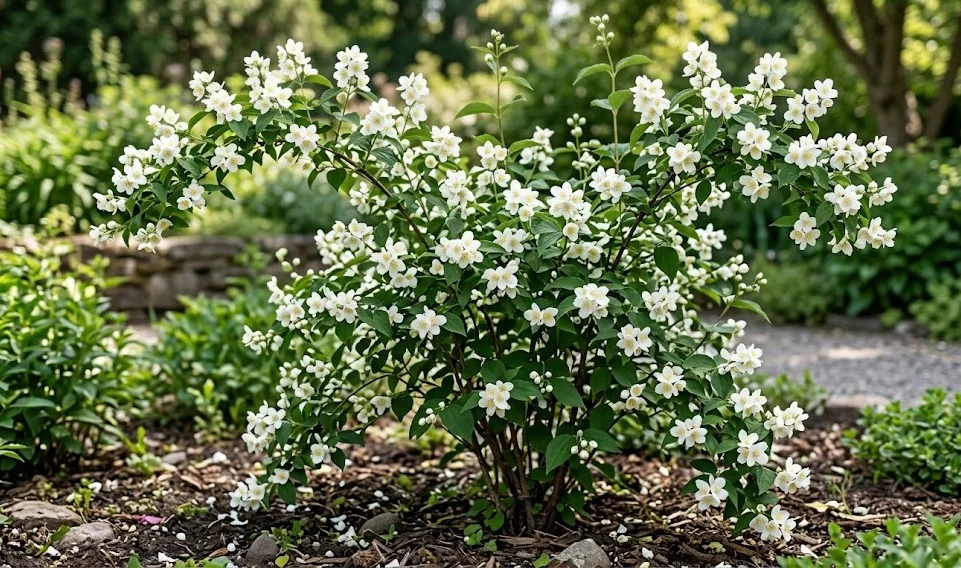
Shaping the exterior of the shrub should be done with a light hand to maintain its natural, fountain-like form. Avoid using hedge trimmers to create a flat or rounded “ball” shape, as this results in a dense outer shell of foliage and a dead interior. Instead, use hand pruners to cut individual branches back to a healthy side bud or a junction. This selective approach preserves the graceful arching habit that makes the mock orange so visually appealing in a garden.
Always step back frequently during the pruning process to view the shrub from a distance and check its overall balance. It is very easy to get “lost” inside the branches and accidentally remove too much from one side. By looking at the whole plant from several angles, you can ensure that the final result is symmetrical and aesthetically pleasing. Remember that you can always cut more off later, but you can’t put a branch back once it has been removed.
More articles on this topic
Heavy rejuvenation pruning
If you have inherited a mock orange that has been neglected for many years, a more aggressive approach may be necessary. An overgrown shrub often becomes a tall, woody mass with foliage and flowers only at the very top. In these cases, you can perform a “rejuvenation prune” where the entire plant is cut down to within six to twelve inches of the ground. This sounds drastic, but the mock orange is remarkably resilient and will respond with a flush of healthy new growth.
Rejuvenation pruning is best performed in the late winter while the plant is still fully dormant. Cutting the plant back so severely during the growing season can be very stressful and may even lead to the death of the shrub. By doing it in the winter, the plant can use all its stored energy reserves in the roots to push out new shoots as soon as spring arrives. You will sacrifice the flowers for one or perhaps two seasons, but the long-term result is a completely revitalized plant.
Once the new shoots begin to emerge from the base in the spring, you will need to thin them out to prevent overcrowding. Select the strongest, best-spaced stems to become the new structural frame of the shrub and remove the rest. This selection process ensures that the “new” plant has a good shape from the very beginning. Provide extra water and a light feeding during this first year of recovery to support the rapid development of the new canopy.
After a rejuvenation prune, it usually takes about three years for the mock orange to return to its full flowering glory. However, the new wood will be much more productive and the flowers will often be larger and more fragrant than before. This technique is a powerful tool for saving old, sentimental plants that have simply grown beyond their space. With a bit of bravery and the right timing, you can give an old shrub a completely new lease on life.