
Perennial baby’s breath is valued for its airy clouds of tiny flowers, finely branched stems, and remarkable ability to soften the appearance of borders and bouquets. Although the plant looks delicate, an established specimen is surprisingly resilient when its basic growing requirements are respected. Success depends less on intensive maintenance than on providing excellent drainage, abundant sunlight, and enough space for the extensive root system. With thoughtful placement and restrained care, the plant can flower generously for many years.
Understanding its natural growth habit
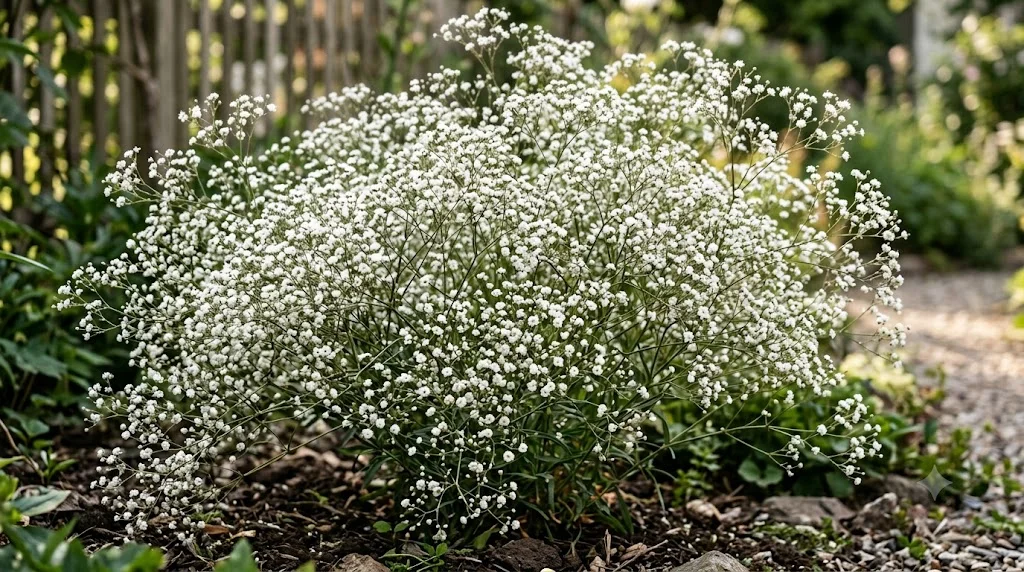
Perennial baby’s breath develops into a broad, rounded mound rather than a narrow upright clump. Mature plants may spread considerably, with hundreds of slender flowering branches arising from a sturdy crown. The stems create a transparent effect, allowing neighboring plants and garden structures to remain visible through the flowers. This growth habit makes accurate spacing important from the beginning.
Below the soil, the plant forms a deep, fleshy taproot that gives it considerable drought resistance once established. This root does not tolerate frequent disturbance, waterlogged ground, or careless transplantation. Young plants may initially appear modest above ground while directing much of their energy into root formation. Gardeners should therefore avoid judging long-term vigor solely by first-season growth.
Flowering usually begins in early or midsummer, depending on climate, cultivar, and spring temperatures. The individual blooms are small, but their enormous number creates the familiar mist-like display. Single-flowered forms often have a lighter and more natural appearance, while double-flowered cultivars produce denser clusters. Both types benefit from open air circulation around the stems.
The foliage remains relatively unobtrusive, consisting of narrow, gray-green to blue-green leaves. This restrained foliage allows the flowers to dominate visually without creating a heavy mass. After flowering, the plant may become less decorative unless faded stems are trimmed. Its seasonal rhythm should be considered when combining it with later-flowering perennials.
More articles on this topic
Choosing the right soil and planting position
The ideal soil is loose, sharply drained, and moderately fertile rather than rich and moisture-retentive. Sandy loam, gravelly soil, and light calcareous ground are especially suitable. Heavy clay can hold too much winter moisture around the crown and taproot, creating conditions in which decay develops rapidly. Improving drainage before planting is far more effective than trying to rescue a struggling mature plant.
Perennial baby’s breath generally performs best in neutral to alkaline soil. In strongly acidic ground, growth may remain weak even when drainage and sunlight appear adequate. Garden lime can be incorporated when a soil test confirms low pH, but excessive liming should be avoided. The objective is a balanced, calcium-friendly root environment rather than an artificially extreme alkaline condition.
Raised beds, sloping borders, gravel gardens, and the upper edge of retaining walls are often excellent locations. These positions allow surplus rainwater to move away from the root zone instead of accumulating around the crown. A slight elevation of the planting area can make a major difference in regions with wet winters. Flat, compacted sites should be corrected before planting.
The planting position should also allow room for mature spread and access for maintenance. Crowding the plant against a path may result in brittle flowering stems being stepped on or broken. Placing it behind aggressive perennials can lead to competition during the establishment period. A permanent, open location is especially valuable because mature specimens dislike being moved.
More articles on this topic
Managing temperature, wind, and air circulation
Established perennial baby’s breath tolerates cold winters well when the soil remains well drained. Low temperature alone is rarely the main cause of winter loss. Repeated freezing and thawing in saturated soil is far more dangerous because it weakens the crown and damages the fleshy root. A dry, stable winter root zone greatly improves survival.
In hot summer regions, the plant usually copes well with heat if its roots have developed deeply. Intense heat combined with stagnant humidity, however, may reduce flower quality and encourage stem or crown problems. Open planting arrangements allow moisture to evaporate quickly after rain or irrigation. Good air movement is therefore part of disease prevention as well as general care.
Strong wind can flatten or twist mature flowering stems, especially when rain has made them heavy. A naturally sheltered but sunny position is preferable to an enclosed, humid corner. Low supports can be installed early in the season before the branching stems expand. Once the plant is fully open, inserting supports often damages the fragile framework.
Wind protection should not involve surrounding the plant with dense shrubs or solid barriers that restrict air circulation. A permeable fence, widely spaced perennials, or distant shrubs can reduce the force of prevailing winds without trapping damp air. The plant should still receive sunlight from several directions. Balanced shelter produces sturdier growth than either complete exposure or excessive enclosure.
Supporting healthy flowering
Generous flowering begins with moderate, steady growth rather than rapid production of soft foliage. Excess nitrogen encourages long, weak stems that may bend under the weight of the flowers. It can also reduce the open, finely branched character for which the plant is valued. A restrained feeding program is usually more successful than repeated fertilization.
Removing faded flowering stems after the first major display can improve the plant’s appearance and may stimulate a lighter second flush. The cut should remove spent branching growth without injuring the central crown. Plants growing in warm climates with a long autumn often respond more strongly than those in short-season areas. Even when reblooming is limited, trimming prevents untidy seed heads from dominating the border.
Flower quantity may decline when the plant receives insufficient sun, excessive moisture, or too much fertilizer. A shaded specimen often develops looser stems and fewer flowering branches. Persistent wetness can weaken the root system before visible symptoms appear above ground. Correcting environmental causes is more effective than applying additional plant food.
Cultivars differ in flower fullness, stem strength, height, and bloom timing. Compact selections are useful near paths or in smaller gardens, while tall forms create a larger cloud-like effect in deep borders. Double-flowered cultivars may require more support because their flower clusters hold additional water after rain. Choosing a cultivar suited to the available space reduces future maintenance.
Maintaining the crown and root zone
The crown should remain near soil level and must not be buried beneath repeated layers of compost or mulch. Organic matter piled against the base retains moisture and can encourage rot. A thin mineral mulch of gravel or small stone is often more appropriate. It keeps the surface open, reduces mud splash, and allows water to drain freely.
Weeding around young plants requires care because the crown and upper root system can be damaged by deep cultivation. Hand pulling is safest when weeds are small and the soil is slightly moist. A hoe should be used shallowly and kept away from the plant base. Once mature, the broad canopy suppresses many low-growing weeds naturally.
Compacted soil near the root zone should be prevented rather than corrected later. Repeated foot traffic compresses air spaces and slows water movement through the ground. Positioning stepping stones before planting can provide maintenance access without damaging the soil structure. This is especially useful in intensively planted cottage-style borders.
The plant’s deep root system means that sudden decline may be difficult to reverse. By the time upper stems wilt severely, root damage may already be extensive. Regular observation of crown firmness, stem color, and drainage conditions can reveal problems earlier. Preventive care is therefore particularly important with this long-lived but disturbance-sensitive perennial.
Combining perennial baby’s breath with other plants
The plant pairs well with roses because its fine white flowers soften the heavier forms of rose blooms. It also complements ornamental grasses, coneflowers, salvias, and other sun-loving perennials. The best companions prefer similarly well-drained soil and do not require constant irrigation. Shared cultural needs are more important than appearance alone.
Avoid placing it beside vigorous spreaders that invade the crown or compete aggressively for water during establishment. Dense ground covers can also trap moisture around the base. A visible ring of open soil or gravel around the crown is beneficial. This space makes monitoring, watering, and pruning considerably easier.
Its pale flowers are useful for connecting stronger colors within a border. White forms calm combinations of red, orange, purple, and deep pink, while pale pink cultivars blend naturally with softer palettes. Because the flowering stems are visually transparent, they can overlap neighboring plants without completely obscuring them. This makes the plant especially valuable in layered planting designs.
The post-flowering appearance should be balanced with plants that become prominent later in the season. Sedums, asters, ornamental grasses, and late salvias can take over visually after the baby’s breath is trimmed. This succession prevents a noticeable gap in the border. Good companion planting therefore considers both simultaneous flowering and seasonal change.
Long-term care and rejuvenation
A well-sited plant may remain productive for many years with minimal intervention. Its longevity depends largely on undisturbed roots, dry winter conditions, and careful pruning. Frequent division is neither necessary nor desirable because the taproot responds poorly to disturbance. The best rejuvenation strategy is usually to preserve favorable growing conditions.
Older plants may develop a woody or open center as peripheral stems become more vigorous. Moderate cutting after flowering can help maintain a balanced outline, but severe cutting into old crown tissue may not produce reliable regrowth. Replacement plants should be established before a declining specimen is removed. This maintains continuity in an important planting scheme.
Self-sown seedlings may appear around single-flowered forms when seed heads are left to mature. These seedlings can vary in height, density, and flower form, particularly near named cultivars. Unwanted seedlings are easiest to remove while their taproots are still small. Selected young plants should be moved early, before they become deeply anchored.
Seasonal records can help refine care in local conditions. Noting flowering dates, storm damage, irrigation frequency, and winter survival makes it easier to identify recurring problems. Small adjustments in drainage, support, or pruning timing often produce significant improvements. Perennial baby’s breath rewards attentive observation more than intensive treatment.