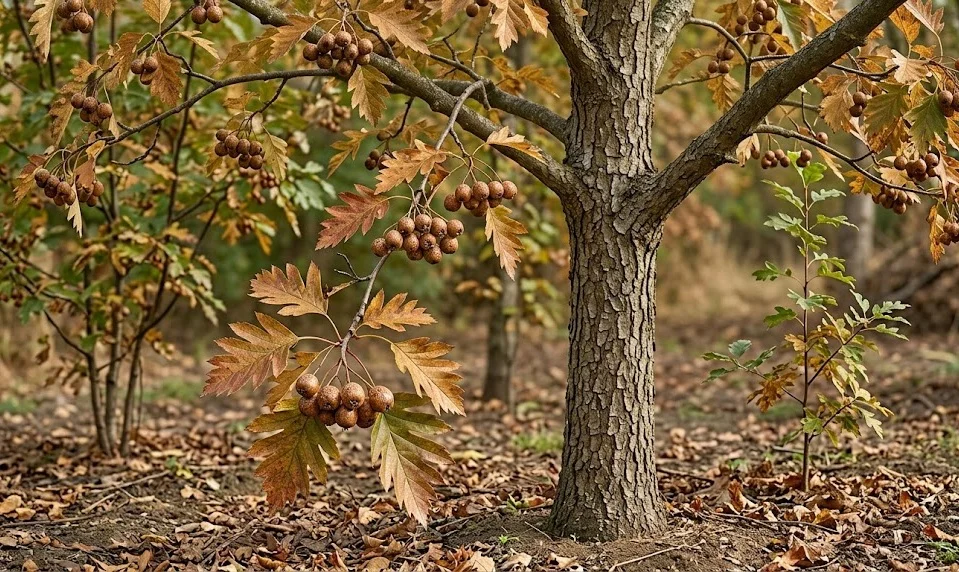

The interaction between light and the wild service tree is one of the most important factors determining its growth habit and reproductive success. As a species that naturally occurs in both open woodland and forest edges, it has developed a sophisticated ability to manage varying levels of solar radiation. Professionals must understand these light requirements to place the tree in a location where it can thrive without becoming stressed. Light not only fuels photosynthesis but also serves as a critical signal for the tree’s seasonal rhythms and structural development.
Solar radiation and photosynthetic efficiency
The wild service tree is generally categorized as a light-demanding species, meaning it performs best when it receives a significant amount of direct sunlight. Full sun exposure ensures that the tree can maximize its photosynthetic rate, leading to faster growth and more robust wood development. When light is abundant, the tree’s large, lobed leaves can produce the maximum amount of energy needed for both maintenance and expansion. This energy is essential for the tree to build the dense, high-quality timber for which it is renowned.
While the tree prefers full sun, it is remarkably tolerant of partial shade, especially in its younger years. In a natural forest setting, saplings often grow in the filtered light beneath a broken canopy, waiting for a gap to open up. During this phase, the tree may grow more slowly and focus on building a strong root system rather than rapid upward height. This adaptability allows the wild service tree to persist in competitive environments where more shade-intolerant species might fail to establish.
The quality of the light is just as important as the quantity, as different wavelengths trigger various physiological responses. The blue spectrum of light is particularly important for regulating the tree’s growth habit and ensuring it does not become too “leggy” or stretched. Red light, on the other hand, plays a key role in the timing of flowering and the development of the fruit in late summer. A professional gardener considers these nuances when evaluating the light environment of a potential planting site.
Excessive shade can lead to a variety of health issues, including a weakened immune system and a sparse, unattractive canopy. In low-light conditions, the tree may become more susceptible to fungal leaf spots and other diseases that thrive in damp, stagnant environments. Furthermore, a lack of light will significantly reduce or even eliminate the tree’s ability to produce flowers and fruit. If a mature tree finds itself increasingly shaded by neighboring buildings or larger trees, it may begin a slow decline in vigor.
More articles on this topic
Strategic placement for optimal growth
When selecting a site for a wild service tree, the path of the sun throughout the day and the seasons should be carefully mapped. A location that receives at least six to eight hours of direct sunlight during the peak growing season is considered ideal for most specimens. Southern or western exposures are often preferred as they provide the most intense light for the longest duration each day. However, in very hot climates, a bit of afternoon shade can help prevent leaf scorch and reduce water stress.
The shadow cast by the tree itself is also a factor that must be considered in the overall landscape design. As the tree matures and its broad, rounded crown expands, it will create a significant area of shade beneath it. This can affect the growth of other plants in the garden and should be planned for by selecting shade-tolerant companion species. A professional approach involves visualizing the tree’s footprint twenty or thirty years into the future to ensure it remains a positive feature of the site.
In professional forestry, the spacing between trees is calculated to ensure that each specimen receives an adequate share of the available light. If the trees are planted too closely together, they will compete for the upper light, leading to tall, thin trunks with very few lower branches. Proper spacing encourages the development of a balanced crown that can withstand wind and snow loads more effectively. Thinning of surrounding vegetation may be necessary as the tree grows to maintain its access to the sky.
Reflected light from nearby surfaces can also influence the tree’s growth and health in an urban or garden setting. Light-colored walls or large bodies of water can bounce additional solar radiation onto the tree, effectively increasing the light intensity it receives. While this can be beneficial in cooler climates, it can also increase the risk of heat stress during a summer heatwave. Understanding these local light dynamics allows for more precise management of the tree’s water and nutrient needs.
More articles on this topic
Light and the reproductive cycle
The flowering and fruiting of the wild service tree are directly linked to the amount of light the canopy receives. The delicate white flower clusters typically appear in late spring on the branches that are most exposed to the sun. If the tree is growing in heavy shade, it may produce few or no flowers, which in turn means no fruit production for the season. For those who value the tree for its decorative berries or for wildlife support, ensuring high light levels is the primary management goal.
Once the flowers have been pollinated, the developing fruit requires consistent sunlight to ripen and develop its full flavor profile. The sugars that give the berries their characteristic taste are produced through photosynthesis in the surrounding leaves. A tree with a well-lit canopy will produce larger, more numerous, and more nutritious fruit than one hidden in the shadows. This is why commercial or conservation-focused plantings are always located in the sunniest areas available.
The timing of leaf drop in the autumn is also influenced by the changing light levels as the days get shorter. The tree perceives the decrease in day length through light-sensitive proteins in its leaves, which triggers the onset of dormancy. This ensures that the tree is prepared for the coming winter long before the first hard frost arrives. Any artificial light pollution, such as bright streetlights near the tree, can potentially interfere with this natural process and should be considered during site selection.
Ultimately, managing the light environment is one of the simplest yet most effective ways to influence the health of a wild service tree. By providing the tree with the energy it needs to thrive, a gardener ensures its longevity and its ability to contribute to the local ecosystem. Whether in a large forest or a private garden, the wild service tree will always reach for the sun, and our job is to make sure it can find it. A professional understanding of light requirements is the key to unlocking the full potential of this magnificent species.