
The relationship between sunlight and the physiological health of these tulips is a fundamental aspect of their cultivation. You must provide them with a location that receives ample direct sunlight during their most active growing and blooming phases. Sunlight is the primary driver of the photosynthesis needed to build up the bulb’s energy reserves for the following year. A professional understanding of light levels will help you choose the best site for a long-lived and productive tulip colony.
In their native habitats, these plants are often found on open, sun-drenched hillsides where they face little competition for light. You should aim to replicate this by avoiding planting them in the deep shade of buildings or large, dense evergreens. At least six hours of direct sunlight per day is generally considered the minimum for healthy growth and vibrant flowering. The quality of the light is just as important as the quantity, with morning sun being particularly beneficial.
The intensity of the light also influences the physical form and behavior of the plant. You will notice that in high-light conditions, the foliage remains compact and the flower stems are short and sturdy. In contrast, tulips grown in too much shade often become “leggy” as they stretch toward the light source. This elongation can lead to weak stems that are easily damaged by wind or heavy rain, detracting from the garden’s professional appearance.
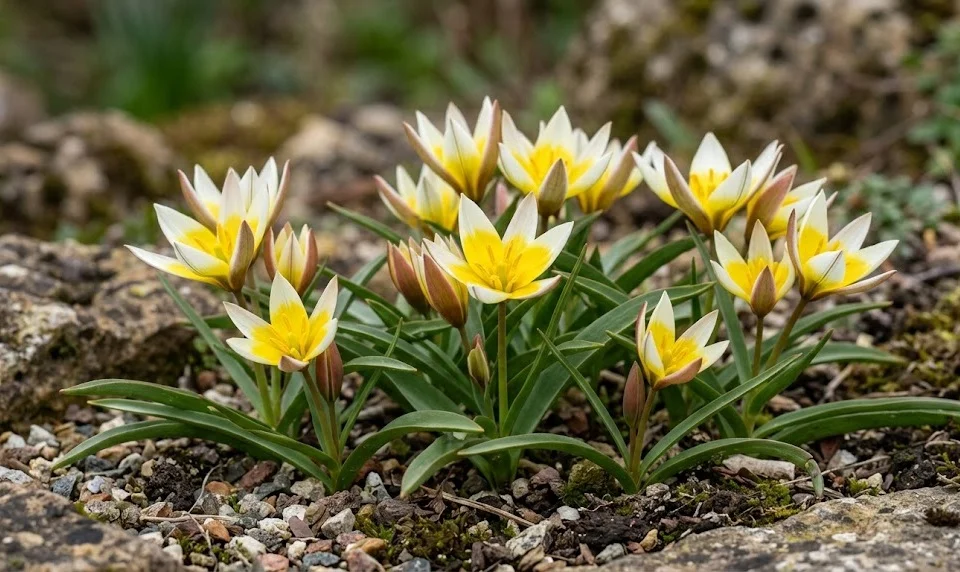
Light levels also play a role in the timing of the bloom and the opening of the individual flowers. You will observe that the star-shaped blooms only fully expand when the sun is shining directly on them. On cloudy or rainy days, the petals often remain closed or only partially open to protect the reproductive organs. This phototropic behavior is a fascinating characteristic that highlights the plant’s deep connection to its light environment.
Optimal sun exposure
For the most prolific flowering, you should position your tulips in a spot that receives full sun throughout the spring. This is the time when the days are lengthening and the sun is gaining strength, providing the energy needed for rapid growth. You should consider the angle of the sun at this time of year, as shadows from trees and structures will be longer than in mid-summer. A site that is sunny in May might be shaded in July, which is actually ideal for this species.
More articles on this topic
Full sun exposure also helps to warm the soil quickly in the early spring, which can lead to an earlier bloom. You will find that bulbs planted on south-facing slopes or against light-colored walls often emerge several days before those in cooler spots. This early start can be a great advantage in regions with short growing seasons or unpredictable spring weather. A professional gardener uses these microclimatic advantages to extend the season of interest in the landscape.
During the peak of the day, high-intensity sunlight can sometimes cause the flowers to fade more quickly. You might consider providing a very light, dappled shade during the hottest afternoon hours to prolong the life of the petals. However, this should never come at the expense of the overall light budget the plant needs for its health. Balancing the need for energy with the desire for a long-lasting display is a subtle art in garden design.
If you are gardening in a very hot climate, light management becomes even more critical. You should ensure that the soil remains relatively cool, perhaps by using light-colored gravel to reflect some of the sun’s heat. The goal is to provide the leaves with the light they need while protecting the bulbs from overheating. This professional nuance ensures that the tulips can complete their cycle before the extreme heat of summer sets in.
Impact of shade on flowering
Planting these tulips in significant shade is one of the most common reasons for a lack of flowers. You will find that while the bulbs may produce leaves for a year or two, they will eventually dwindle and disappear. Without enough light, the plant cannot produce enough sugars through photosynthesis to form a new flower bud inside the bulb. This energy deficit is a downward spiral that leads to the eventual death of the plant.
More articles on this topic
Shady conditions also tend to stay cooler and damper for longer periods, which increases the risk of fungal diseases. You should be aware that mold and rot thrive in the low-light, high-humidity environments often found under dense canopies. If you must plant in a partially shaded area, you should ensure that the drainage is absolutely impeccable to compensate. However, it is always better to move the bulbs to a sunnier location if they are failing to thrive.
The color of the flowers can also be affected by the amount of light the plant receives. You might notice that the yellow and white tones are less vibrant and the “halo” effect is less distinct in shaded positions. Sunlight is necessary for the development of the pigments that give these tulips their characteristic two-tone appearance. For the most visually striking results, you should always prioritize the sunniest spots in your garden.
If you have a garden that is becoming shadier over time due to the growth of trees, you may need to adjust your planting plan. You should consider thinning out the lower branches of nearby trees to allow more light to reach the ground during the spring. This practice, known as “crown lifting,” is a professional way to manage light levels in established landscapes. Maintaining the light balance is a dynamic part of long-term garden maintenance.
Sunlight and bulb health
The period after the flowers have faded is perhaps the most important time for light exposure. You should ensure that the green leaves receive maximum sunlight so they can perform the vital task of “recharging” the bulb. This is when the plant is essentially manufacturing the food it will live on for the rest of the year and into next spring. Any shade during this critical window will directly reduce the quality of next year’s display.
Gardeners often make the mistake of tying the leaves together or hiding them under other plants to tidy up. You should avoid this practice, as it reduces the surface area exposed to the sun and interferes with photosynthesis. Instead, leave the foliage to grow naturally in full sun until it has completely turned yellow and brittle. This professional patience is the key to having a bulb collection that gets better and more impressive every year.
The orientation of your garden beds can also influence how the light is distributed among the individual plants. You should try to orient your drifts of tulips so that they don’t shade each other out as they grow. Lower-growing bulbs should always be placed on the sunnier side of taller perennials or structures. A thoughtful layout ensures that every single plant has access to the energy it needs to succeed.
Finally, you should remember that light is the primary signal that tells the plant when to grow and when to rest. The changing day length and light intensity help to regulate the entire lifecycle of the bulb. By providing the correct light environment, you are essentially speaking the plant’s biological language. Respecting the light requirements is the most fundamental step in professional tulip care.