
Understanding the specific light requirements of the Japanese painted fern is essential for achieving the intense metallic coloration that makes this plant so famous. In its native woodland habitats, this species grows under the canopy of larger trees, receiving a soft, filtered version of the sun’s energy. If given too much light, the delicate fronds will quickly scorch and turn a dull brown, losing their aesthetic appeal. Conversely, if the shade is too deep, the plant may survive, but the stunning silver and burgundy pigments will fail to develop fully.
Dappled shade is the gold standard for this particular fern, providing a balance of light and protection throughout the day. This type of lighting occurs when sunlight filters through the leaves of overhead trees, creating a moving pattern of light and shadow on the ground. In such an environment, the fern receives enough energy to maintain its metabolic processes without being subjected to the direct heat of the sun. Most professional gardeners aim for a location that mimics the “edge of the forest” where the light is bright but indirect.
The intensity of the sun varies significantly depending on your geographical location and the time of day. In northern climates, the sun is less intense, and the Japanese painted fern may be able to tolerate a bit of direct morning light. However, in southern regions, even an hour of direct summer sun can be enough to damage the foliage permanently. Identifying the “hot spots” in your garden during the peak of summer will help you avoid placing these sensitive plants in harm’s way.
Seasonal changes also play a role in the light levels your garden receives, as the angle of the sun shifts throughout the year. A spot that is perfectly shaded in May might be in full sun by July as the sun moves higher in the sky. It is a good practice to observe your proposed planting site at different times of the day and across different months before committing the plant to the ground. This careful observation ensures that the fern remains in its ideal lighting “sweet spot” for the entire growing season.
The impact of light on foliage color
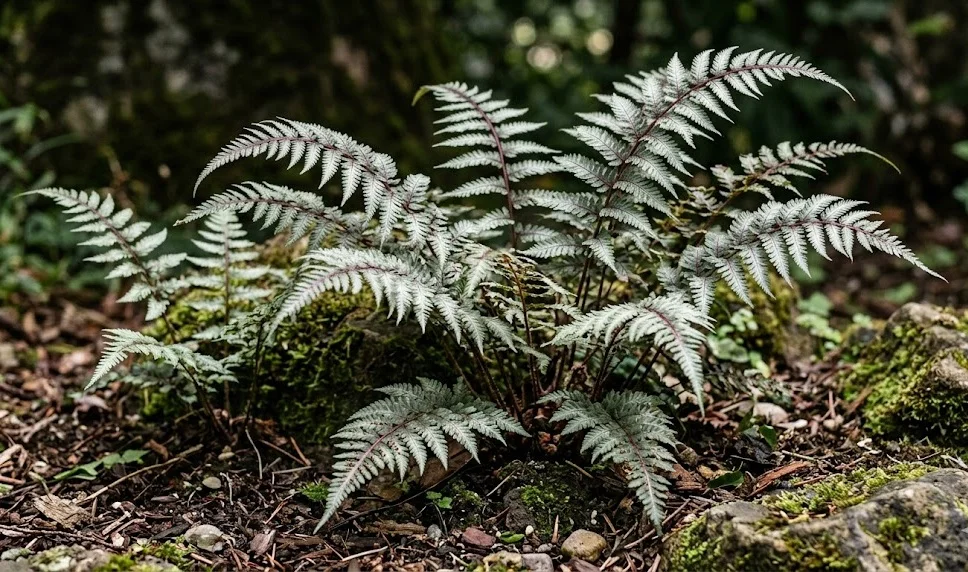
One of the most fascinating aspects of the Japanese painted fern is how its leaf color responds directly to the quality and duration of light it receives. The silver, metallic sheen is actually a result of light reflecting off specialized cells on the surface of the fronds. If the plant is kept in very deep shade, it will often produce more chlorophyll to compensate for the low light, causing the leaves to turn a more generic green. To keep those silver tones bright, the plant needs a certain amount of indirect “luminescence” from the sky.
More articles on this topic
The burgundy or purple center of the fronds is also influenced by the lighting conditions in the garden. This anthocyanin pigment is often produced as a way for the plant to protect itself from light stress, but it also adds incredible depth to the plant’s appearance. In the right amount of light, the contrast between the dark midribs and the silver edges becomes much more pronounced. Achieving this high-contrast look is the primary goal for many enthusiasts who want their ferns to stand out in a shaded bed.
Sunscald is the negative consequence of getting the light balance wrong and is characterized by bleached, papery patches on the leaves. These damaged areas can no longer photosynthesize and eventually turn brown and brittle, ruining the look of the mound. Once a frond is scorched, it cannot be “healed,” and the only solution is to prune it away and adjust the lighting for the rest of the plant. Using companion plants to cast a little extra shade can be a quick fix for a fern that is getting too much light.
Morning sun is generally much safer than afternoon sun because the air temperature is lower and the light is less intense. Many gardeners find that two to three hours of soft morning light followed by a day of shade produces the best results. This early “wake-up call” provides the energy needed for growth while the afternoon shade protects the plant during the hottest part of the day. If you notice your fern’s colors are fading, try finding a spot with just a tiny bit more indirect brightness.
Adapting to challenging lighting environments
In many modern gardens, creating perfect dappled shade can be difficult, especially in newer developments with few mature trees. In these cases, you can use artificial structures or other plants to create the necessary shade for your Japanese painted ferns. Large shrubs, garden walls, or even decorative lattice panels can provide the “solid” shade that protects the ferns from the midday sun. Positioning the ferns on the north side of a house or tall fence is another effective strategy for managing light levels.
More articles on this topic
Reflected light is a hidden danger that can sometimes cause issues even in a shaded area. Light bouncing off white walls, large windows, or light-colored paving can increase the light intensity and heat around the plant significantly. If your ferns are planted near such surfaces, they may require more frequent watering or extra protection to cope with the increased stress. Choosing dark-colored mulches or planting near natural stones can help absorb some of this extra energy instead of reflecting it back onto the leaves.
For those with very deep, “heavy” shade, such as under dense evergreens or in narrow alleyways, the Japanese painted fern can still be a viable option. While it may not reach its peak coloration, it is more shade-tolerant than many other ornamental perennials. In these low-light situations, the plant’s growth will be slower, and the mound may be slightly less dense than one grown in brighter conditions. You can brighten up these dark corners by using the fern’s natural silver tones to reflect whatever small amount of light is available.
Ultimately, the Japanese painted fern is a flexible plant that will tell you exactly what it needs through its appearance. If the leaves are reaching and the colors are dull, it needs more light; if the leaves are curling and browning at the edges, it needs more shade. By paying attention to these visual cues, you can move your plants or adjust their surroundings to create the perfect environment. This intuitive approach to light management is what separates a successful gardener from a frustrated one.