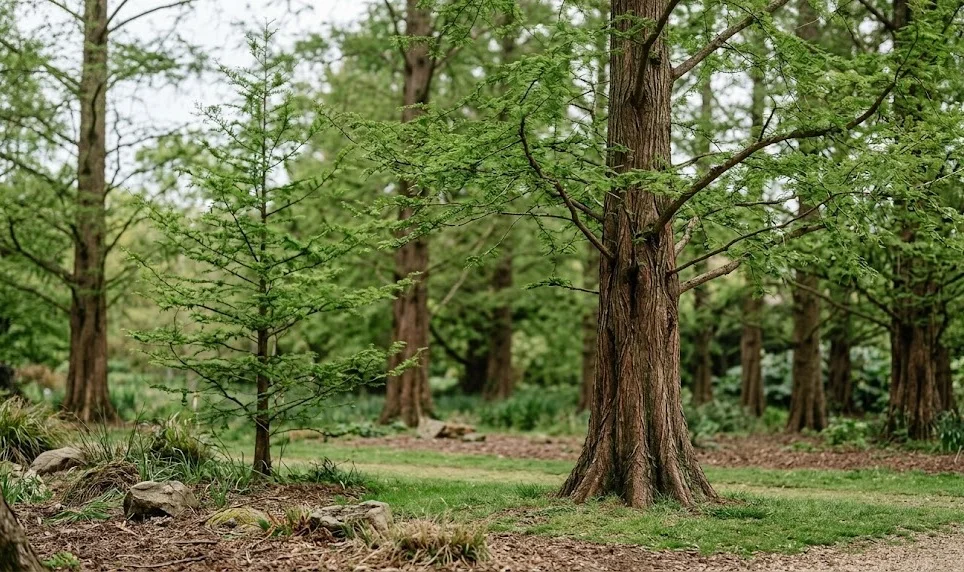

The dawn redwood is a heliophilic species, meaning it has a profound and non-negotiable requirement for full sunlight to thrive. In its natural environment, it occupies the highest levels of the forest canopy or grows in open river valleys where it can bask in unobstructed light. Understanding the nuances of its light needs is essential for any professional landscape design or gardening project involving this monumental tree. A lack of adequate solar energy will not only slow its growth but also significantly compromise its health and structural integrity over time.
To achieve its legendary growth rate and maintain its dense, pyramidal form, a dawn redwood should receive at least six to eight hours of direct sunlight every day. This light fuels the intense photosynthetic activity required to support its rapid vertical expansion and the production of its delicate, feathery foliage. Trees planted in shaded or semi-shaded locations often become “leggy,” with sparse needle growth and weak, overextended branches as they stretch toward the light. Providing a prominent, open position is the most important gift a gardener can give to this species.
The quality of light is just as important as the quantity, with the intense full sun of mid-day providing the most beneficial energy for the tree’s metabolic processes. While it can tolerate a small amount of morning or late-afternoon shade, any significant obstruction will result in a thinning of the canopy on the shaded side. This can lead to an asymmetrical and aesthetically displeasing silhouette that is difficult to correct once the tree has reached a certain size. Proper siting should always take into account the movement of the sun throughout the seasons and the growth of neighboring trees.
In urban and suburban landscapes, the shadows cast by buildings and other structures can present a challenge for the dawn redwood. A site that appears sunny in the height of summer may be deeply shaded during the spring and autumn when the sun is lower in the sky. It is crucial to evaluate the light patterns of a potential planting site over an extended period to ensure long-term success. A tree that starts in full sun but is eventually shaded out by a new building or a faster-growing neighbor will inevitably enter a state of decline.
Impacts of shade on growth and health
When a dawn redwood is deprived of sufficient light, it undergoes a series of physiological changes that weaken its overall resilience. The most immediate sign of light stress is a reduction in needle density, as the tree sheds foliage that is no longer producing enough energy to justify its maintenance. This leads to a transparent-looking canopy that lacks the vibrant, lush appearance characteristic of a healthy specimen. Over time, the lack of energy reserves makes the tree more susceptible to pests, diseases, and environmental stressors.
More articles on this topic
Shade also has a significant impact on the development of the tree’s wood and its overall structural strength. Light-starved trees often produce wood that is less dense and more prone to breakage during storms or heavy snow. The lack of energy also limits the tree’s ability to develop a robust root system and the flared buttress that provides essential stability for such a tall species. A dawn redwood grown in the shade is not just smaller and less attractive; it is also a significantly greater liability in the landscape.
Phototropism, the natural tendency of plants to grow toward the light, can cause significant structural issues in dawn redwoods planted in uneven light. If the tree is shaded on one side, it will lean and grow more vigorously toward the open light source, leading to a permanent tilt. This leaning not only ruins the tree’s iconic symmetry but also creates an unbalanced weight distribution that can lead to uprooting or trunk failure as it matures. Correcting this through pruning is difficult and often results in further stress to the tree.
Furthermore, light plays a critical role in the timing of the tree’s seasonal transitions and its preparation for winter. The shortening days of autumn serve as a primary signal for the tree to begin its dormancy process and the spectacular color change of its needles. In heavily shaded environments, these signals can be muffled or delayed, potentially leaving the tree vulnerable to early autumn frosts. Consistent and unobstructed light ensures that the tree’s biological clock remains synchronized with the natural environment.
Strategies for optimizing light exposure
For those working with existing landscapes where light may be limited, there are several professional strategies to improve the dawn redwood’s situation. Selective thinning or “limbing up” of neighboring trees can allow more sunlight to reach the dawn redwood’s canopy throughout the day. This proactive management of the surrounding vegetation ensures that the high-value specimen remains the focal point of the garden and receives the energy it needs. It is often a necessary ongoing task as the entire landscape matures and evolves.
More articles on this topic
The orientation of the tree relative to other landscape features should also be carefully considered to maximize its light intake. Planting on a south-facing slope or in a large, open lawn area provides the best possible exposure in the northern hemisphere. Avoiding the northern side of tall buildings or dense evergreen windbreaks prevents the tree from being trapped in a “light shadow” for most of the day. A thoughtful and professional site analysis is the foundation of a landscape that supports the health of this prehistoric giant.
Reflected light can also provide a small but beneficial boost to trees planted near light-colored structures or over open water. While not a replacement for direct sunlight, this additional illumination can help keep the lower branches of the tree more vibrant and productive. This is one of the reasons why dawn redwoods planted near pond edges or large swimming pools often look particularly lush and healthy. Taking advantage of these micro-environmental factors can enhance the success of the tree in more challenging sites.
Ultimately, the light requirements of the dawn redwood are a reflection of its ancient heritage and its role as a canopy-dominating species. By providing it with the full, unobstructed sun it craves, you enable it to reach its legendary heights and maintain its stunning, prehistoric beauty. The sight of a dawn redwood glowing in the full light of a summer afternoon is a testament to the power of the sun and the skill of the gardener. Respecting its need for light is the first and most important step in a successful partnership with this remarkable tree.