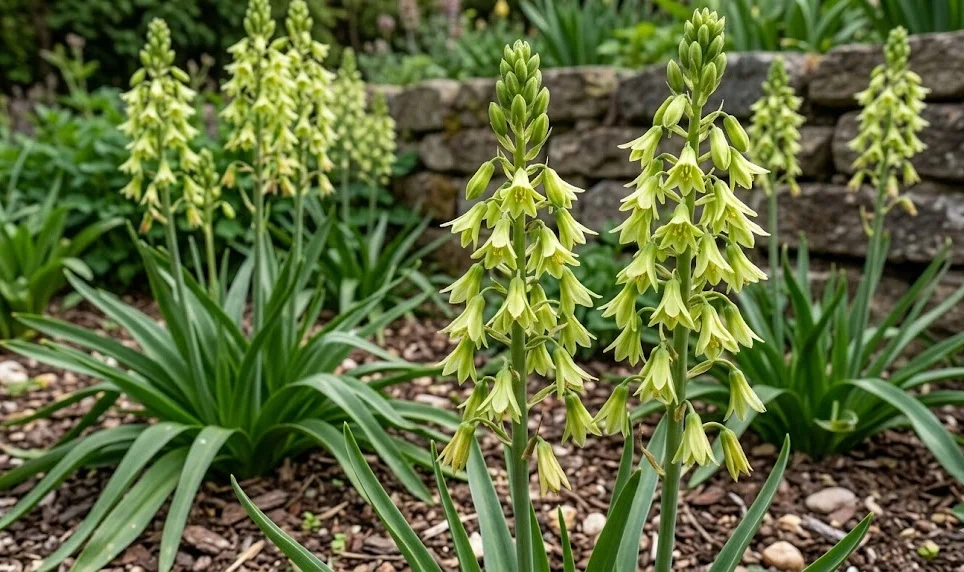

Green-flowered giant chincherinchee needs abundant light to build a strong bulb, produce compact foliage, and develop a substantial flower spike. Bright conditions are especially important during active growth, although the leaves may need protection from sudden exposure to intense midday sun. Too little light commonly results in leaning, elongated growth and unreliable flowering. The best position combines several hours of gentle direct sun with strong ambient light and good air circulation.
Light requirements change slightly according to climate and growing environment. Winter sun behind glass is usually less intense than summer sun outdoors. A position that is ideal in January may become excessively hot in late spring. Seasonal adjustment prevents both weak growth and scorching.
The plant naturally directs its leaves and flower stems toward the strongest light source. This response is useful, but it can create unbalanced growth in a pot placed far from a window. Regular observation reveals whether the plant is receiving light evenly. Severe leaning is often a sign that the location is too dim.
Light cannot compensate for poor roots or saturated soil. A plant in full sun may still decline if the bulb is rotting. Similarly, increasing fertiliser will not correct growth weakened by shade. All major cultural factors must remain in balance.
Providing light indoors
Place actively growing plants near a south-, southeast-, or southwest-facing window where possible. An east-facing position can also work well if the room remains bright throughout the day. Northern windows are usually inadequate unless supplemented with grow lights. Curtains, neighbouring buildings, and roof overhangs can reduce usable light substantially.
More articles on this topic
The pot should stand close enough to the window to benefit from direct or strongly filtered light. Light intensity drops rapidly with distance, even when the room appears bright to human eyes. Avoid placing the plant in a dark corner for decorative purposes. Temporary display is acceptable, but long-term cultivation requires a genuinely bright position.
Artificial lighting can maintain compact growth during dark winters. Use a horticultural lamp positioned according to the manufacturer’s recommended distance. The light period should be consistent and long enough to support active foliage. Excessively distant lamps provide little benefit, while very close lamps may heat or scorch leaves.
Clean dust from leaves gently so the surface can intercept light efficiently. Support the leaves while wiping to avoid cracking them. Do not apply leaf-shine products, as they can interfere with natural gas exchange. Clean windows and lamp covers also improve the amount of light reaching the plant.
Managing direct sunlight
Morning and late-afternoon sun are generally well tolerated. These periods provide useful intensity without the extreme heat associated with midday exposure. In mild climates, the plant may also accept stronger sun when acclimatised gradually. Adequate root moisture helps foliage tolerate bright conditions.
More articles on this topic
Sudden movement from indoor shade to intense outdoor sun can cause sunburn. Damaged areas appear pale, bleached, or dry and do not recover. Introduce direct exposure over several days, beginning with short periods. New leaves formed under brighter conditions will be better adapted.
Very strong summer sun can overheat dark containers and damage roots. Shade the pot itself or place it inside a lighter outer container while keeping the leaves in bright light. Ensure that decorative covers do not trap drainage water. Root-zone temperature is as important as leaf exposure.
During flowering, extreme heat may shorten bloom life even when light levels are suitable. Provide slight afternoon protection during hot spells. A bright, airy location with filtered midday sun often maintains flowers longer. Avoid moving the plant repeatedly once the stem has oriented toward the light.
Recognising light-related problems
Insufficient light produces long, narrow leaves that bend or flop easily. The flower stem may lean strongly and require support. Flowering can be delayed, reduced, or absent if the bulb cannot replenish its reserves. Moving the plant gradually to a brighter position improves future growth.
Pale green foliage does not always indicate light deficiency. Excessive sun, root problems, nutrient imbalance, or natural ageing can produce similar symptoms. Examine the pattern and timing of colour change. Leaves that stretch toward a window strongly suggest inadequate intensity.
Sun scorch usually affects the side facing the strongest light. The damaged tissue becomes dry and sharply defined rather than soft and spreading. Once scorch occurs, remove only leaves that are severely damaged or beginning to decay. Healthy green portions should remain to feed the bulb.
Balanced light encourages upright leaves, a sturdy flower stalk, and even development around the plant. Minor leaning is natural and not necessarily harmful. Support may still be needed for an unusually tall stem. Consistent bright conditions remain the most reliable foundation for flowering.