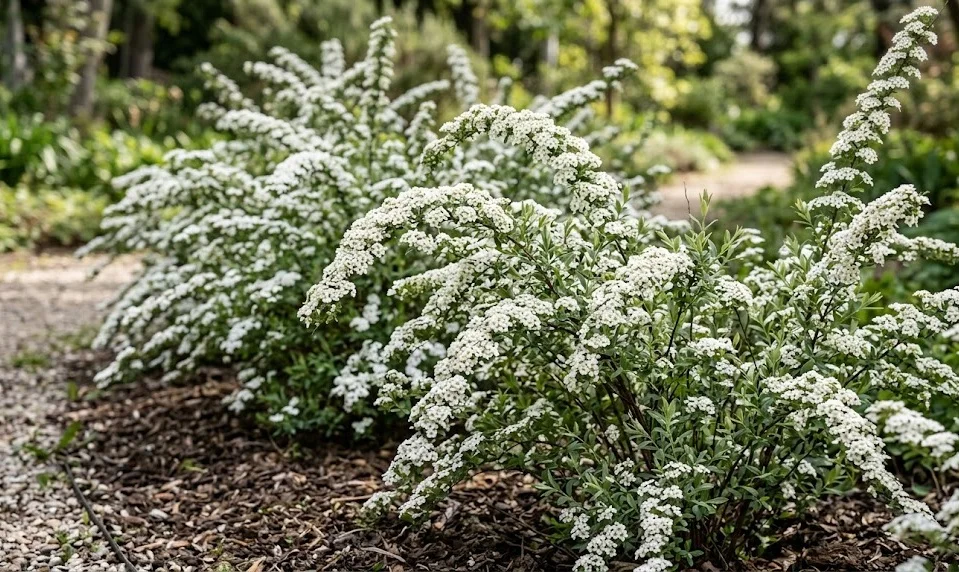

Protecting your garland spirea from biological threats is a vital part of maintaining a beautiful and professional-looking landscape. While this species is generally robust, it can still fall victim to a variety of fungal, bacterial, and insect-related issues under certain conditions. Most of these problems can be managed effectively if they are caught early and treated with the appropriate methods. Understanding the symptoms and life cycles of common pests will allow you to keep your shrubs healthy and vibrant year after year.
Common fungal issues
Powdery mildew is perhaps the most frequent fungal problem that affects the foliage of the garland spirea. It appears as a white, flour-like coating on the surface of the leaves, especially during humid summer weather. While it rarely kills the plant, it can significantly detract from its beauty and cause the leaves to curl or drop early. Improving air circulation by proper spacing and thinning out the center of the bush is the best preventative measure.
Leaf spot diseases can also occur, presenting as small brown or black circular markings on the foliage. These spots can eventually merge, causing entire leaves to turn yellow and fall off the stems. This usually happens in seasons with excessive rainfall or when the plant is watered from overhead late in the day. Keeping the area under the shrub clear of fallen, infected leaves is crucial for preventing the fungus from overwintering.
Root rot is a much more serious fungal threat that usually stems from poor drainage or overwatering in heavy soils. If the roots stay submerged in water, they begin to decay, and the plant will start to wilt even if the soil is wet. Once root rot has taken hold, it is often too late to save the individual shrub, making prevention the only real solution. Ensure your planting site is well-drained and avoid keeping the soil consistently saturated.
Rust is another fungal disease that might occasionally appear, characterized by orange or yellow pustules on the undersides of the leaves. It thrives in cool, moist conditions and can spread rapidly through wind-borne spores if left untreated. If you spot these symptoms, removing the affected branches immediately can help stop the spread to the rest of the garden. Using a specialized fungicide can also be effective if the outbreak is widespread across multiple plants.
More articles on this topic
Bacterial threats
Fire blight is a bacterial disease that can be particularly devastating to members of the rose family, including the spirea. It causes the tips of the branches to turn black and shrivel as if they had been scorched by fire. The bacteria enter through the flowers or fresh wounds and can move quickly down into the main structure of the plant. If you notice these symptoms, you must act quickly to prune out the infected wood several inches below the visible damage.
To prevent the spread of fire blight, it is absolutely essential to disinfect your pruning tools after every single cut. Dipping your shears in a solution of bleach or rubbing alcohol will kill any bacteria lingering on the blades. Avoid pruning during wet weather, as the bacteria are easily moved around by splashing raindrops. Keeping your plants healthy and unstressed makes them less susceptible to these types of aggressive bacterial infections.
Crown gall is another bacterial issue that results in woody, tumor-like growths forming at the base of the plant or on the roots. These galls interfere with the plant’s ability to transport water and nutrients, leading to stunted growth and general decline. The bacteria live in the soil and usually enter through wounds caused by lawn mowers or insects. Unfortunately, there is no effective chemical cure for crown gall, so preventing injury to the stems is your best defense.
Bacterial leaf scorch can sometimes be mistaken for drought stress, as it causes the edges of the leaves to turn brown and dry. However, unlike drought, the damage often has a distinct yellow halo between the dead tissue and the healthy green part. This disease is typically spread by leafhoppers and other insects that feed on the plant’s sap. Managing the insect population in your garden can help reduce the transmission of these harmful bacteria.
More articles on this topic
Aphids and mites
Aphids are small, soft-bodied insects that often cluster on the tender new growth and flower buds of the spirea. They suck the sap from the plant, which can cause the leaves to become distorted, sticky, and covered in black sooty mold. While a few aphids are usually not a major problem, a large infestation can weaken the shrub and attract ants. You can often wash them off with a strong stream of water from a garden hose if the numbers are low.
Spider mites are nearly invisible to the naked eye but can cause significant damage during hot, dry periods. They live on the undersides of the leaves and spin tiny webs while they feed on the plant’s juices. Affected foliage will look speckled or dusty and may eventually turn a dull bronze or gray color. Increasing the humidity around the plant or using a targeted miticide can help bring these pests under control quickly.
Scale insects are another common pest that looks like small, stationary bumps on the stems and branches of the shrub. They protect themselves with a hard outer shell, making them difficult to treat with standard contact insecticides. These pests slowly drain the energy of the plant and can cause entire branches to die back over time. Applying horticultural oil during the dormant season is one of the most effective ways to smother scale insects and their eggs.
Thrips are tiny, slender insects that feed on the flower petals, causing them to look streaked, browned, or deformed. This can be especially frustrating since the spring bloom is the primary reason many people grow the garland spirea. While they are difficult to see, you can detect them by shaking a flower over a piece of white paper. Maintaining a diverse garden with natural predators like ladybugs is often the best long-term strategy for keeping thrips in check.
Biological control methods
Encouraging natural predators is one of the most professional and sustainable ways to manage pests in your garden. Ladybugs, lacewings, and hoverflies are all voracious consumers of aphids and other small, harmful insects. By avoiding broad-spectrum pesticides, you allow these “good bugs” to establish a population that keeps the pest levels naturally low. Planting a variety of flowering perennials nearby can provide the nectar these beneficial insects need to survive.
Birds are another fantastic biological control for larger pests like caterpillars and beetles that might chew on your spirea. Providing bird baths and nesting sites nearby will encourage them to spend more time in your garden hunting for insects. Many songbirds rely heavily on high-protein insect snacks to feed their young during the spring and summer. This natural cycle reduces the need for human intervention and creates a more balanced ecosystem around your home.
Using biological sprays that contain specific bacteria or fungi can target pests without harming beneficial insects or the environment. For example, products containing Bacillus thuringiensis (Bt) are very effective against leaf-eating caterpillars but are safe for bees and humans. These treatments work by interfering with the pest’s digestive system once they ingest the treated foliage. It is a precise way to handle a specific problem while maintaining the overall health of the garden.
Nematodes are microscopic worms that can be added to the soil to control pests that spend part of their life cycle underground. They are particularly useful for managing beetle larvae or other root-feeding insects that are hard to reach with traditional sprays. These beneficial organisms are easy to apply through a watering can and will continue to work as long as the soil remains moist. This underground defense system protects the most vulnerable part of your garland spirea from hidden threats.
Chemical interventions
Sometimes a pest or disease outbreak becomes so severe that chemical intervention is the only way to save the plant. When using chemicals, it is critical to identify the exact problem first to ensure you are using the correct product. Always read and follow the manufacturer’s instructions to the letter to avoid harming yourself or the surrounding environment. Targeted applications are much better than spraying the entire garden “just in case” a problem exists.
Fungicides are most effective when used as a preventative measure rather than a cure for an existing infection. If you know that powdery mildew is a yearly problem in your area, start treating the plant before the symptoms appear. These products create a protective barrier on the leaf surface that prevents fungal spores from germinating. Regular applications may be necessary during periods of high humidity or frequent rainfall to maintain this protection.
Systemic insecticides are absorbed by the plant and provide long-lasting protection against sucking insects like scale or aphids. These are often applied as a soil drench, allowing the roots to take up the chemical and distribute it throughout the branches. This method is very effective for large shrubs where it is difficult to reach every single leaf with a spray bottle. However, be cautious when using them near flowering plants to ensure you do not negatively affect pollinators.
Horticultural oils and insecticidal soaps are excellent “soft” chemical options that work by contact. They are particularly effective against soft-bodied pests and have the advantage of having very low toxicity to mammals and birds. These products must be applied directly to the insects to work, so thorough coverage of the stems and leaves is necessary. They are a great middle ground for gardeners who want results without the heavy environmental impact of synthetic chemicals.