
Managing the moisture and nutrient levels for these specialized bulbs is a balancing act that changes with the seasons. During the active growth period in early spring, you must ensure the soil stays consistently moist but never waterlogged. As the temperatures rise and the plants prepare for dormancy, you should gradually reduce your intervention to match their natural cycle. Professional care involves observing the plant’s reaction to the environment and providing only what is necessary for optimal health.
The foundation of a good watering routine is understanding the physical properties of your garden soil. You should check the moisture levels a few centimeters below the surface before deciding to add more water. Over-watering is a much more common mistake than under-watering, especially in the early spring when the air is still cool. Proper drainage is your best ally in preventing the stagnant conditions that lead to bulb rot and other fungal issues.
Fertilization should be handled with a “less is more” philosophy to prevent weak, spindly growth. You should avoid high-nitrogen fertilizers that encourage excessive foliage at the expense of flower quality and bulb strength. Instead, look for balanced formulas or those slightly higher in potassium and phosphorus to support the reproductive structures. Applying nutrients at the right time ensures they are available when the plant needs them most during its brief window of activity.
Rainfall often provides enough moisture for these hardy plants, especially in temperate climates with wet springs. You should only intervene with manual watering if the weather becomes unseasonably dry and the foliage begins to show signs of wilting. Observing the local weather forecast allows you to coordinate your efforts with natural events for maximum efficiency. A professional gardener works with nature rather than trying to override it with constant artificial inputs.
Establishing a watering routine
The most critical time for watering begins when the first green shoots break through the soil surface. You should monitor the weather closely during this phase, as the developing leaves and flowers require a steady supply of hydration. If the spring is dry, a deep soaking once a week is much more effective than frequent light sprinkles. This encourages the roots to grow deeper into the soil in search of moisture and stability.
More articles on this topic
As the flowers open, you should be careful to apply water directly to the soil rather than over the blooms. Wetting the petals can cause them to spoil prematurely or attract unwanted fungal pathogens. Morning is the ideal time for watering, as it allows the foliage to dry off quickly in the sun. This simple timing adjustment is a professional secret for maintaining the pristine appearance of your floral display.
Once the blooming period has finished, the plant’s demand for water begins to taper off significantly. You should continue to provide moderate moisture as long as the leaves remain green and functional. This is the time when the bulb is actively storing energy for the following year, and water is necessary for the transport of nutrients. However, you must be careful not to keep the soil saturated as the plant prepares to shut down.
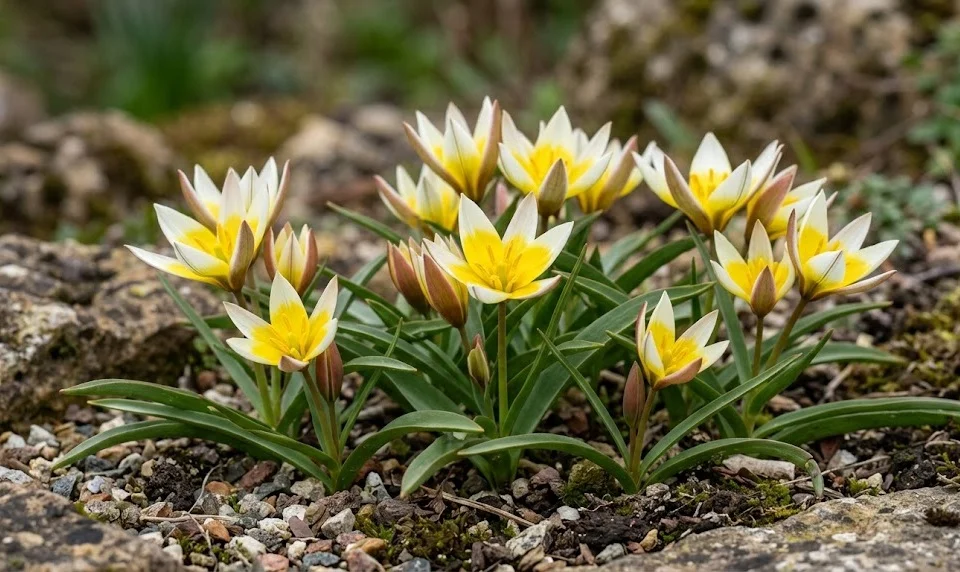
The transition to summer marks the end of the watering season for these specific tulips. You should almost entirely stop irrigation in the areas where the bulbs are located once the foliage has yellowed. This mimics the dry summer conditions of their native habitats and prevents the dormant bulbs from rotting in warm, wet soil. Respecting this dry period is essential for the long-term health and survival of your tulip colony.
Drainage importance
Excellent drainage is not just a preference for these bulbs; it is a fundamental requirement for their survival. You should ensure that the planting site does not hold standing water even after the heaviest rainstorms. If you find that your soil is naturally heavy, you must take active steps to improve its structure. Adding coarse materials like horticultural grit or expanded clay pebbles can create the necessary macropores for water movement.
More articles on this topic
Raised beds are an excellent professional solution for gardens with poor natural drainage. You should consider building up the soil level by even ten or fifteen centimeters to keep the bulbs above the water table. This elevation also helps the soil warm up faster in the spring, which can lead to earlier and more vigorous blooming. A well-drained site provides a safety margin during unusually wet winters or springs.
The presence of organic matter can be a double-edged sword when it comes to drainage and bulb health. While some humus is good for soil structure, too much can act like a sponge and hold onto excessive moisture. You should aim for a mineral-rich soil that feels gritty rather than spongy to the touch. This professional balance ensures that the roots have access to air as well as moisture, which is vital for preventing rot.
You can test the drainage of a potential planting site by digging a small hole and filling it with water. You should observe how long it takes for the water to disappear completely; it should be gone within an hour or two. If the water lingers for many hours or days, you must either find a different location or commit to significant soil modification. Never compromise on drainage if you want your tulips to return year after year.
Nutrient requirements during growth
These tulips are adapted to relatively low-nutrient environments, so they do not require heavy feeding. You should focus on providing a slow-release source of minerals that becomes available as the soil warms up. A light application of a specialized bulb fertilizer in late winter or very early spring is usually sufficient. This timing ensures the nutrients are in the root zone just as the plant begins its most active growth phase.
Phosphorus is particularly important for bulb plants as it supports strong root development and flower production. You should look for fertilizers with a higher middle number in the N-P-K ratio to provide this essential element. Potassium also plays a role in overall plant health and helps the bulb resist diseases and extreme temperatures. A balanced approach to nutrition prevents the common problem of “all leaves and no flowers.”
You should avoid applying fertilizer directly onto the emerging foliage, as the concentrated salts can cause chemical burns. Instead, scatter the granules evenly around the base of the plants and lightly scratch them into the surface. If the soil is dry, a light watering after application will help dissolve the nutrients and carry them down to the roots. This careful application method ensures the plant gets the benefits without any collateral damage.
During the peak of the blooming season, you should generally refrain from adding more fertilizer. The plant is already using the energy it stored in the bulb from the previous year, so late applications won’t help the current flowers. Instead, focus on maintaining the health of the leaves so they can perform photosynthesis efficiently. Proper nutrition is a long-term strategy that pays dividends in the health of future growing seasons.
Selecting the right fertilizers
When choosing a fertilizer, you should always read the label to understand the source and concentration of the nutrients. Organic options like bone meal are popular among professionals because they release nutrients slowly and improve soil biology. However, you should be aware that bone meal can sometimes attract digging animals like dogs or raccoons. Synthetic slow-release granules offer a more controlled and less disruptive way to provide essential minerals.
Liquid fertilizers are useful for providing a quick boost if the plants appear particularly stunted or pale. You should dilute these according to the manufacturer’s instructions and apply them every two weeks during the leaf-growth phase. This method is especially effective for bulbs grown in containers where nutrient reserves are limited. However, for ground-planted tulips, a granular approach is usually more practical and cost-effective.
You should avoid using “weed and feed” products or those designed specifically for lawns near your tulips. These often contain herbicides that can severely damage or kill the bulbs if they come into contact with the soil. Always use products that are labeled for use on ornamental flowers or specifically for bulbs. Taking the time to select the correct product shows a professional level of care for your garden’s health.
Soil testing can take the guesswork out of fertilization and save you money in the long run. You should consider having your soil analyzed every few years to identify any specific mineral deficiencies. This allows you to tailor your fertilization program to the exact needs of your garden environment. Knowledge is the most powerful tool in a professional gardener’s arsenal when it comes to plant nutrition.
Post-bloom feeding practices
The period immediately following the bloom is the most critical time for the future of the bulb. You should resist the urge to tidy up the garden by removing the green leaves, as this is when the “recharging” happens. Providing a final light feeding of a potassium-rich fertilizer now can help the bulb build up its energy reserves. This ensures that the embryonic flower for next year has all the resources it needs to develop properly.
As the foliage begins its natural decline, you should monitor the soil to ensure it doesn’t dry out too quickly. While you are reducing watering, a little moisture is still needed to process the nutrients being sent down to the bulb. You should treat the leaves with respect, keeping them free of pests and diseases until they turn yellow. This “post-game” care is what separates the expert gardener from the casual hobbyist.
If you are growing your tulips in a mixed border, you should be careful that the surrounding plants don’t starve them. Larger perennials can be heavy feeders that quickly deplete the soil of the nutrients the tulips need during their recharge phase. You might need to provide a targeted application of fertilizer specifically for the bulbs in these crowded settings. Managing the competition for resources is a key part of professional garden maintenance.
Once the foliage has completely withered and turned brown, you should stop all feeding and watering. The bulb has now finished its work for the season and is ready to enter its dormant state. Any additional nutrients applied now will simply wash away or potentially encourage late-season fungal growth. Following the natural rhythm of the plant is the ultimate secret to successful watering and fertilization.